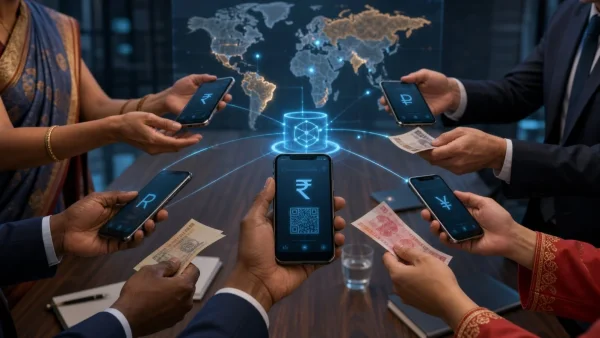
The idea of a common BRICS currency has generated plenty of headlines in recent years: a single monetary unit for a bloc seeking to reduce its dependence on the US dollar.
But India appears to be taking a considerably more cautious approach.
As 2026 BRICS chair, New Delhi is emphasising practical financial cooperation—particularly greater use of national currencies and cheaper cross-border payments—rather than attempting to create a single currency for economies as different as India, China, Brazil, Russia and South Africa. Current BRICS discussions are also looking at linking fast-payment systems and potentially central-bank digital currencies (CBDCs).
That distinction matters.
India isn’t saying “no” to BRICS financial cooperation. It is effectively saying: let’s make the existing systems work before inventing a new currency.
Why Doesn’t India Want a Common BRICS Currency?
Creating a shared currency is not simply a matter of printing new notes with a BRICS logo.
A genuine common currency generally requires an extraordinary degree of economic and monetary coordination.
Consider the differences between BRICS economies.
They have different:
inflation rates;
interest-rate policies;
exchange-rate regimes;
fiscal positions;
capital controls;
trade structures;
political priorities;
central-bank mandates; and
levels of economic development.
A common currency would therefore raise a rather uncomfortable question:
Who controls it?
Would there be a BRICS central bank?
Who would set interest rates?
How would voting power be distributed?
Would India have the same influence as China?
What happens when one country’s economy needs higher interest rates while another needs lower rates?
These aren’t minor technical details. They are the foundation of monetary sovereignty.
India’s Alternative: Use National Currencies
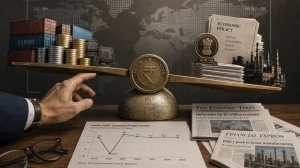
Instead of immediately creating one BRICS currency, India has consistently supported expanding the use of national currencies in cross-border trade.
That approach has precedent within BRICS. Earlier BRICS declarations acknowledged the potential for wider use of national currencies and called for discussions on its feasibility. (Ministry of External Affairs)
The idea is relatively straightforward.
An Indian company could increasingly settle a transaction in rupees.
A Brazilian company could use the real.
A Russian company could use the ruble.
Rather than forcing every transaction through the dollar, countries can develop mechanisms for settling more trade directly.
No BRICS currency. No BRICS central bank. Fewer political headaches. At least in theory.
The Rupee Is Part of India’s Strategy
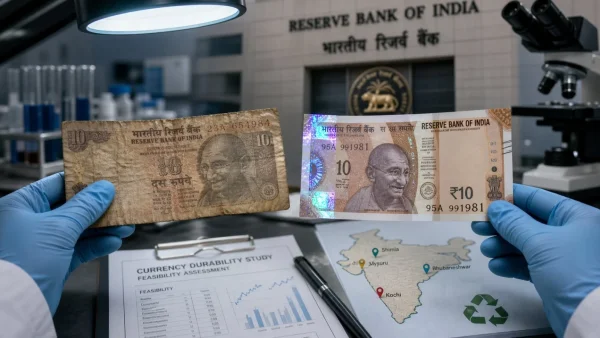
The Reserve Bank of India is also pursuing greater international use of the rupee.
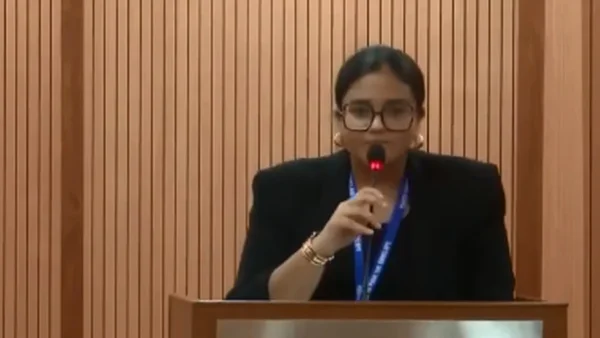
RBI Governor Sanjay Malhotra said recently that the central bank would continue efforts to internationalise the rupee and promote local currencies for cross-border payments and trade.
That is particularly significant.
India’s objective isn’t necessarily to replace the dollar overnight.
It is to create more choices.
If Indian exporters and importers can conduct more transactions directly in rupees or other local currencies, they could potentially reduce conversion costs and dependence on a third currency for some transactions.
BRICS Is Actually Moving Toward Digital Payments
Here’s where the story gets interesting.
While the idea of a physical BRICS currency is being treated cautiously, BRICS members are discussing something arguably more practical:
Connecting their payment systems. The RBI governor has confirmed that BRICS countries are discussing possible linkages between their fast-payment systems and CBDCs.
However, he stressed that these discussions remain at an early stage and that several options are still being considered.
Imagine, eventually, being able to make a cross-border payment using domestic payment infrastructure without relying on a traditional dollar-based intermediary for every transaction.
That’s a very different proposition from creating a new currency.
Why a Common Currency Sounds Easier Than It Actually Is
The European Union offers perhaps the clearest example.
The euro wasn’t created simply because several countries wanted to reduce dollar dependence.
It required years of institutional development, economic convergence efforts, common rules and the creation of the European Central Bank.
Even then, the eurozone has repeatedly demonstrated how difficult a common monetary policy can become when economies move in different directions.
Now imagine attempting something similar across a much more economically and politically diverse BRICS grouping.
Same currency, different economies, different problems. One central bank trying to solve all of them?
Good luck.
And Then There’s China
Any serious discussion about a BRICS currency inevitably runs into the question of China’s economic weight.
China is by far the largest economy within the original BRICS grouping.
That creates an unavoidable concern for countries such as India: Would a “common” currency actually become dominated by one country’s economic power? India has an obvious strategic interest in reducing excessive dependence on the dollar.
But that does not automatically mean New Delhi wants to replace dependence on one major currency with dependence on another.
A system based on multiple national currencies gives countries considerably more monetary autonomy.
What About the US Dollar?
This is where the BRICS currency debate often becomes exaggerated.
BRICS countries are clearly interested in reducing some aspects of dollar dependence.
But de-dollarisation does not automatically mean the dollar disappears.
The dollar remains deeply embedded in global trade, financial markets, reserves and international payments.
Replacing that infrastructure requires much more than announcing a new currency.
The more realistic near-term scenario is therefore:
less exclusive dependence on the dollar + greater use of local currencies + alternative payment channels.
Not:
“Tomorrow the dollar is finished.”
The New BRICS Reality: Infrastructure Before Currency
This may ultimately be India’s most pragmatic position.
Instead of spending years fighting over the design of a hypothetical common currency, BRICS countries can work on things that businesses actually need today:
Cheaper cross-border payments
Faster settlement
Interoperable payment systems
Greater use of local currencies
CBDC interoperability
Reduced transaction barriers
Better financial connectivity
The RBI says reducing the cost of cross-border payments is an area of interest for BRICS, while discussions around payment-system and CBDC linkages are still developing.
So, Is the BRICS Currency Dead?
Not necessarily.
But there is a major difference between:
“The BRICS countries are discussing financial cooperation.”
and
“A BRICS currency is about to be launched.”
The first is real and ongoing.
The second remains far more complicated and uncertain.
India’s current approach suggests that New Delhi prefers incremental financial integration over a politically dramatic common currency project.
A Little BRICS Currency Sarcasm
Politicians:
“Let’s create one currency for BRICS!”
Economists:
“Who controls it?”
Central bankers:
“Who sets interest rates?”
Governments:
“What happens when inflation differs?”
Everyone:
“Hmm…”
India:
“How about we first make cross-border payments cheaper?” Sometimes the boring option is actually the sensible one.
What India’s Position Means for Ordinary Indians
For ordinary consumers, the immediate impact is unlikely to be a new BRICS note appearing in their wallets.
The more meaningful developments could happen behind the scenes.
If payment systems become interoperable and local-currency settlement expands, Indian businesses could potentially gain more options for international transactions.
For exporters and importers, the important questions will be:
How expensive is the transaction?
How quickly does the money settle?
What exchange-rate risk exists?
Which currency is used?
How easily can payments be reconciled?
Those questions matter considerably more to businesses than whether a futuristic BRICS banknote carries five flags.
The Bigger Strategic Message
India’s position represents a middle path.
New Delhi appears interested in reducing unnecessary dependence on the dollar, but it is not rushing toward a common currency that could compromise monetary flexibility.
Instead, India is supporting:
national currencies + payment connectivity + rupee internationalisation + lower transaction costs.
And that may be a much more realistic strategy for the BRICS bloc.
The BRICS financial revolution, if it happens, may not begin with a new note. It may begin with a payment that crosses a border without needing the dollar in the middle.
One important caveat: claims that India has formally “killed” or permanently rejected every possibility of a future BRICS common currency should be treated cautiously. What is clearly documented now is India’s emphasis on national currencies, payment connectivity and practical financial cooperation, rather than an immediate shared currency. (Reuters)