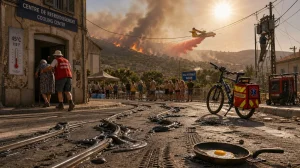
It’s a volatile situation in the south of France right now. We’re looking at a fire surge that has already claimed more than 1,210 hectares in as many places. With the wind up and the underbrush dry, the authorities say the flames are being pushed into new territory, putting even more of a strain on the teams out in the field. No one has been hurt, but it’s far from over.
Winds and heat drive rapid spread
If you ask the officials, they’ll point to the tinder-dry state of things after the recent extreme weather and some gusty days. You have 30C and little in the way of humidity, and the fire is only going to grow. The WMO has put out a word of caution: the heatwave that has taken the lives of over 1,300 in Western Europe has made for a much higher risk of wildfires.
And there’s a chance of more of the same next week, according to the French weather service. That’s why you’ll see the agencies moving to contain what they can before the forecast turns. The Aude is no stranger to this; last year it was home to the biggest fire in the country in a long time.
Major fronts near the Spanish border and Marseille
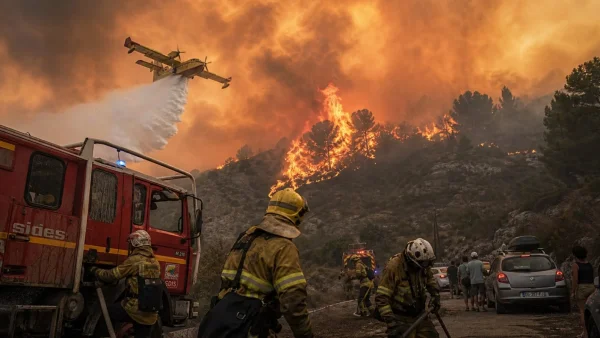
The one making the most noise is in the Aude, not far from the Spanish side, where some 900 hectares are gone. They’ve put down close to 800 men and 150 vehicles to deal with it, though the high winds don’t make for easy work.
Then you have the ones around Marseille. Two of them have been reined in, if not put out completely, the fire services will tell you. Over by Lancon-Provence, a wildfire has run through 260 hectares or so, and there’s a smaller one near Rognac, not far from the airport, that is also being put down.
Here are the numbers we have from the authorities today:
– 1,210 hectares in the south have been scorched
– Some 900 of those in Aude
– 260 in the vicinity of Lancon-Provence
– 800 firefighters and 150 vehicles in Aude
Evacuations, access challenges, and aircraft support
This is an escalation from a rough Wednesday when a different fire in Herault and Aude ran through 800 hectares. With the drought and the wind, the flames were having a field day with the low, dry brush and emergency services had to order some folks to leave.
Some 200 in Pouzols-Minervois and Mailhac were told to go, either to be evacuated or to stay put. ‘The smoke was so thick, so hard to breathe, the firefighters said we should get out,’ says 99-year-old Danielle of Pouzols-Minervois. A source at the prefecture put it like this late on Wednesday: at 11pm (2100 GMT) the fire was ‘contained at times’ but not really in hand.
You can’t get to some of these spots on the ground because of the hills and lack of roads, so they’ve been using water-dumping planes to get to the hotspots. Aude Prefect Alain Bucquet has put in for two more Canadair water-bombers to back up the effort.
‘We want to have this in check in a hurry with the temps and the wind on the up,’ says Bucquet. In the areas that have been hit, you have hundreds of firefighters and their equipment holding the line to keep the towns safe.
Why the risk remains high
The vegetation is ready to go up in a flash after the long, dry run we’ve had, and the wind is doing the rest, fanning embers over the lines. It’s been a test for the Marseille area this week; the two blazes they have in hand are not yet done for.
Head a bit further east and on Wednesday over 2,000 were moved out of six campsites by Frejus when a forest fire made its presence known. The word from on high is to be on guard: the heat is coming back and the fuel is still very dry.
What comes next
The plan is to have the active fronts in a box before the next wave of heat. You don’t want to see any of these jump a road or a ridge, and the towns downwind need to be shielded. So if you are in the area, do as you are told. Things can turn in a matter of minutes.