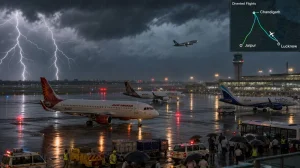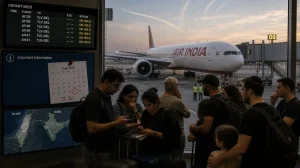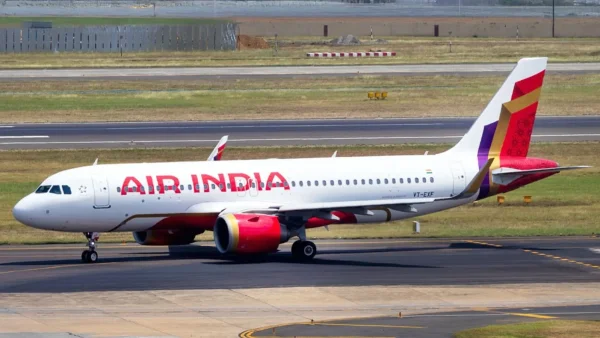
You could say the matter of ramp safety has been put under a microscope following a spate of strong winds at IGI. Three of Air India’s aircraft took a hit from loose equipment at Terminal 2, and with the monsoon on the horizon, the regulator is on the case to find out why the alerts didn’t come through.
What set it off
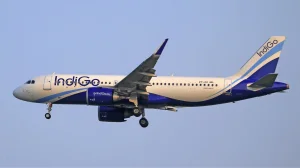
If you ask the people at the airport, it was 4:40 pm on Sunday when the wind picked up at T2 and drove a step ladder and a trestle into three of Air India’s narrowbodies. The gear in question was from IndiGo and Air India Engineering, those in the know will tell you. The planes were taken out of service for a look-see. An IndiGo source put it down to the fact that even though the trestle was tied down, the wind was too much for it. And there was no word of a storm coming, they said.
On repairs and what it means for operations
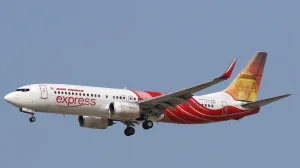
Safety crews and the DGCA are over the affected aircraft now. How long it takes to fix them depends on the damage; we’re told two of the jets should be back in the air this week once some minor work is done. Not so for the third one. It has some serious structural issues and will be on the ground for a few days for a thorough going-over before anyone signs off on it. As for an official comment from Air India, you won’t have found one yet.
The problem with not being warned
In this business, a heads-up isn’t just a formality. You need it to make sure the heavy stuff on the tarmac is lashed down before the wind makes it a liability. When you don’t get that warning, the risk is all over the parking stands, especially on a busy night like that. As we dig in, the brass will have to answer a few things: – Was the bar for wind speed set right – Were the rules for securing gear followed to the letter – Can we keep an eye on the ramp when the weather turns on a dime
A trend that has everyone on edge
There is a pattern here that doesn’t sit well with officials or the competition. Air India has had its share of oddball incidents. Back in January, a brand new A350 from New York, in thick fog, sucked in a baggage container that wasn’t put away properly while it was taxiing at IGIA. Between that and the damage from Sunday, it’s a bit of a headwind for Air India as it tries to show it can be relied upon. With IndiGo running the table on capacity, rivals will be looking to see how fast Air India puts its house in order. Safety and punctuality are what count in this market. It was a mix of IndiGo and Air India engineering equipment this time around, which is a good reminder that keeping the ramp in order is a job for everyone. And with pre-monsoon squalls picking up, the need for some firm standards and a little practice is more pressing than ever.
So what do we see at the ramp from here on?
The DGCA is going to be looking at the fine print – did the chocks and locks hold up to what the wind was doing? A solid early warning is what lets you tie down your gear and keep it from wandering and making contact with a plane, airport people will say. Look for some closer scrutiny on where and how the big support items are left at T2. You’ll need to have the airlines, the engineers and apron control on the same page to stop this from rearing its head in bad weather.
For the passengers, and what’s in store
Since two of the aircraft are due to be back, any hiccups in the network should be minimal. The other one is out for a few. The airlines will do what they can to juggle capacity and cover the important flights, but they have to wait for the green light from the engineers and the regulator first.