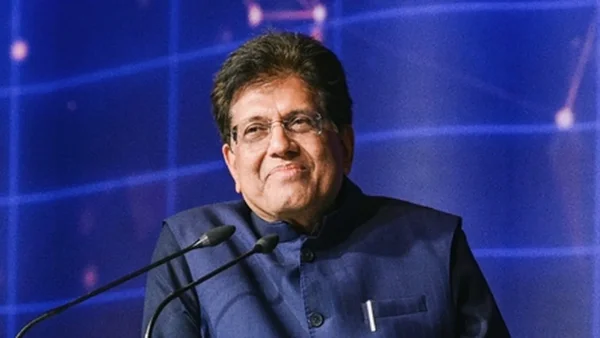
In Mumbai, the minister made his point with some colour. ‘You could end up like Chatur from 3 Idiots if you have blind faith in AI,’ he said with a wry smile. He was telling India’s banks to use artificial intelligence as a lever for growth, not as a crutch, and to be wary of the kind of missteps that come from unthinking reliance on an algorithm.
Why Goyal’s message matters for banks
The Commerce and Industry Minister is pushing for AI to be part of the workflow at all levels, not just in the C-suite. He put it to them: do you in your organisations really know what this technology is for, or are you just using it to make a more sophisticated query of the internet?
He pointed out that while India is home to the second-largest user base of Open AI’s ChatGPT, we aren’t using it to its full potential. ’99 per cent of that is a stand-in for Google,’ he noted. The better your question, the better the answer, but you still have to check it, he told the room.
For Goyal, AI is an edge to be had, not something to be afraid of. Put it to work in every vertical and you can cut down on turnaround times, put a finer point on risk and offer services you couldn’t before. It’s about how well you do it, not the noise around it.
Here is what the minister is asking of financial institutions:
– Make AI part of your infrastructure, not some toy
– Get your people, at all levels, up to speed on what it can and can’t do
– Let it be a driver for both output and employment
– Don’t act on an AI’s word without checking it first
Jobs debate and the Y2K parallel
There is talk of widespread job losses, but the minister doesn’t buy it. He sees a resemblance to the Y2K era, where all the fuss was followed by a software boom. ‘The sky never fell on India’s head,’ he put it, and figures AI will be a net creator of jobs here.
New kinds of work will open up in building and overseeing applied AI, or in dealing with the cyber threats that keep pace with the tech. There is a cat-and-mouse game to be played between those who put these systems in place and the ones who try to get around them.
And no matter how clever the system gets, there is one thing it won’t have: good judgement. ‘At the end of the day, the human mind will be supreme,’ Goyal said, which is why you need a human in the loop when you roll out any AI project.
Use cases with guardrails
Goyal has put some of these to the test himself, having research reports done on the same topic through different platforms. What it comes down to is that you can be more productive with AI, but only if you read over it, spot the mistakes and put in the work to make your prompts count.
His reference to Chatur, the fellow who could recite but didn’t understand, is a way of saying don’t be a robot. For a bank, that means you put in the money for validation and training before you let AI anywhere near credit or compliance.
He is for using AI to make the most of our resources and put people to work. In his view, that is the way to fit in with India’s story so far, where we have seen new technology open up markets, not close them down.
The stage and the stakes
All of this is happening in the context of a worldwide tussle for the upper hand in AI and computing. You have the US, China and Europe throwing billions at it. Goyal’s words are a sign that Indian banks can’t be left behind in terms of what they can do.
He was on hand at the Financial Express Best Banks Awards in Mumbai on June 7, 2026, to put it to the senior bankers and fintech heads in the room. AI is a boardroom issue now, not something for the IT department to handle alone.
It is a top-tier accolade in the industry, with an independent jury from EY India and others looking at three years of RBI data to size up everything from governance to the bottom line for banks, NBFCs and the like.
What comes next for Indian banking
Goyal is redefining what it means to take on AI. It is a matter of change management. You need a plan for how to govern the data and manage the risks so that from the front lines to the top, everyone is on the same page.
He doesn’t want to see these initiatives as experiments that never leave the lab. Pick the ones with a return on investment, put in some controls to catch the bad actors, and make sure you have the ability to clean up after a malicious bot if need be.
The message for the financial system in India is straightforward. Get on with it in a responsible way or you’ll be passed by those with less to think about. Use the tools, but make sure the final say is with a person, not a piece of code.