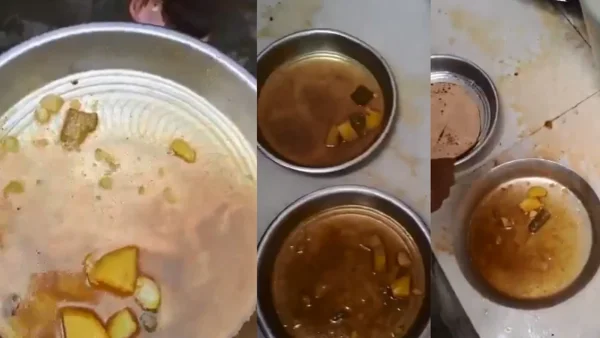
A viral video allegedly from a government school in Uttar Pradesh’s Sitapur district has sparked outrage on social media. The footage appears to show students being served watery potato curry and hard rotis under the Mid-Day Meal (PM POSHAN) scheme.
While the authenticity and circumstances of the video should be verified by the authorities, it has reignited an old debate: Why do reports of poor-quality meals continue to emerge despite thousands of crores being spent on school nutrition every year?
For millions of children, the school meal is not just lunch—it is often the most nutritious meal of the day.
What Is the PM POSHAN (Mid-Day Meal) Scheme?
India’s Mid-Day Meal Scheme, now known as PM POSHAN, is one of the world’s largest school feeding programmes.
Its objectives are to:
Improve children’s nutrition.
Increase school attendance.
Reduce classroom hunger.
Prevent dropouts.
Encourage enrolment, especially among economically weaker families.
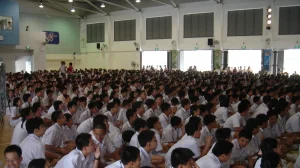
Every school day, crores of children studying in government and government-aided schools receive cooked meals funded jointly by the Centre and the states.
On paper, the scheme is one of India’s biggest social welfare successes.
Then Why Do Such Incidents Keep Surfacing?
Whenever a poor-quality meal goes viral, the immediate reaction is often to blame the cook.
However, education experts say the problem usually lies much deeper.
1. Poor Monitoring
Many schools rely on local kitchens or self-help groups.
If inspections are irregular, food quality can deteriorate without immediate accountability.
2. Limited Budgets
Although governments periodically revise cooking costs, inflation has pushed up the prices of:
Wheat.
Rice.
Vegetables.
Cooking oil.
Pulses.
LPG cylinders.
Schools often struggle to provide nutritious meals within fixed allocations.
3. Supply Chain Issues
Delayed delivery of grains or vegetables can directly affect the quality and variety of meals served.
Some schools also face shortages of kitchen equipment and proper storage facilities.
4. Administrative Gaps
The scheme involves multiple stakeholders:
Central Government.
State Government.
District administration.
School authorities.
Local implementing agencies.
If coordination breaks down at any level, children ultimately bear the consequences.
What Are Governments Doing?
Both the Central and state governments have introduced several measures over the years.
These include:
Nutrition standards for meals.
Social audits.
Surprise inspections.
Community monitoring committees.
Digital attendance and reporting systems in some states.
Food safety guidelines.
Direct monitoring by district officials.
Several states have also partnered with centralized kitchens and NGOs to improve meal quality and consistency.
Despite these efforts, implementation remains uneven across districts.
Why Students Suffer the Most
For many children from economically disadvantaged households, the school meal is not an incentive—it is a necessity.
Studies have consistently shown that nutritious meals improve:
Classroom concentration.
Learning outcomes.
Physical growth.
School attendance.
Overall health.
When meals are poor in quality or quantity, the consequences extend beyond hunger.
A child who is undernourished today may struggle academically tomorrow.
The Bigger Question Isn’t the Menu—It’s Accountability
Every viral video raises familiar questions:
Was this an isolated incident?
Were quality checks conducted?
Were officials informed earlier?
Was action taken against those responsible?
How often are meals inspected?
Without prompt inquiry and corrective action, public confidence in the programme is affected.
A Little Irony
India proudly celebrates achievements in space exploration, digital payments, and global economic growth.
Yet every time images of inadequate school meals emerge, they raise an uncomfortable question:
Can a nation aspire to build world-class talent if some of its youngest students struggle to receive a nutritious lunch?
The contrast is difficult to ignore.
The Bigger Picture
The PM POSHAN scheme has benefited millions of children and remains a cornerstone of India’s school nutrition policy. Isolated incidents should not be used to dismiss the entire programme.
However, every report of substandard meals deserves serious attention because it concerns children’s health, education, and dignity.
If the Sitapur incident is confirmed, it should not become just another viral headline. It should prompt a thorough investigation into what went wrong, whether existing standards were followed, and what corrective measures are needed.
Because for millions of children, a school meal is more than food—it is an investment in their future. Ensuring that it is safe, nutritious, and served with dignity is not charity; it is a public responsibility.