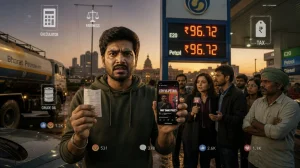
You pull into a petrol pump.
The fuel attendant asks:
“Insurance?”
Not your driving licence.
Not your vehicle registration.
Not even your pollution certificate.
Just one question:
“Is your motor insurance valid?”
If not, the answer could be simple:
“No fuel today.”
What sounds like satire may soon become a real policy experiment after the Supreme Court reportedly asked the Centre to consider a pilot "No Insurance, No Fuel” project, citing concerns that around 56% of vehicles in India are operating without valid insurance.
If implemented, it could fundamentally change how vehicle compliance is enforced in the country.
Why Is the Supreme Court Concerned?
Motor insurance is not merely paperwork.
Under Indian law, every vehicle using public roads must have at least third-party insurance.
The reason is straightforward.
If a vehicle causes an accident, insurance ensures that victims have a financial mechanism for compensation.
When uninsured vehicles are involved, recovering compensation becomes significantly more difficult, often leaving victims to pursue lengthy legal proceedings.
The reported figure—that more than half of India’s vehicles lack valid insurance—raises concerns about both legal compliance and road safety.
The Logic Behind 'No Insurance, No Fuel‘
The proposal is based on a simple idea.
If a vehicle owner cannot legally drive without insurance, then access to fuel could be linked to compliance.
Supporters argue that fuel stations could become effective checkpoints, encouraging owners to renew insurance on time.
Instead of waiting for police checks or accidents, compliance would be enforced during routine refuelling.
In theory, it sounds efficient.
In practice, the questions begin immediately.
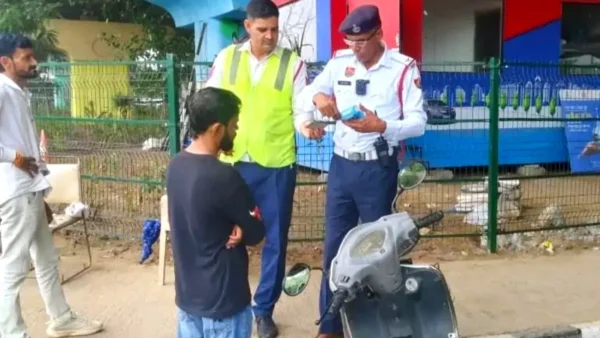
Who Will Check?
This is where the policy becomes complicated.
Will every petrol pump employee have to verify insurance details?
Will pumps require internet connectivity to access government databases?
What happens if the database is temporarily unavailable?
What if a driver’s insurance renewal has been processed but not yet updated online?
And perhaps the biggest question:
Will filling petrol soon require more documentation than boarding a domestic flight?
Will It Actually Work?
Supporters believe the policy could dramatically increase insurance compliance.
India has already linked many public services to digital verification through FASTag, Aadhaar-enabled services, and e-challans.
Adding insurance verification may be technically possible.
Critics, however, warn that implementation could create:
Longer queues at fuel stations.
Technical glitches.
Disputes between customers and petrol pump staff.
Additional compliance burdens for businesses.
There is also concern about how the policy would affect emergency situations or rural areas with limited digital infrastructure.
The Bigger Problem Isn’t Fuel—It’s Enforcement
The proposal also highlights a larger issue.
If 56% of vehicles are indeed uninsured, it raises questions about the effectiveness of existing enforcement mechanisms.
India already has:
Traffic police.
Digital insurance databases.
E-challan systems.
Automatic Number Plate Recognition (ANPR) cameras.
FASTag infrastructure.
So why are so many vehicles still reportedly uninsured?
Some experts argue that improving enforcement through existing systems may be more effective than introducing new restrictions at fuel stations.
A Nudge or a New Headache?
The idea reflects a broader shift in governance: using access to everyday services as a way to encourage legal compliance.
We’ve already seen:
FASTag linked to toll payments.
PAN linked to financial transactions.
Digital verification for various government services.
Now, fuel could become the next compliance checkpoint.
For law-abiding vehicle owners, the change may simply mean keeping insurance renewed.
For habitual defaulters, however, the nearest petrol pump could become an unexpected reminder that ignoring paperwork has consequences.
The Bigger Question
Road safety is not just about helmets, speed limits, or traffic lights.
It is also about ensuring that accident victims are protected financially.
If millions of vehicles are indeed running without valid insurance, policymakers are right to look for solutions.
The real challenge is finding one that improves compliance without turning every fuel station into a mini Regional Transport Office (RTO).
Because while nobody enjoys renewing insurance, discovering that your fuel tank is empty and your policy expired at the same moment might be the most expensive coincidence on the road.