A viral social media post comparing economic indicators from the UPA era with the present NDA government has once again ignited debate over inflation, fuel prices, and the gap between political messaging and everyday reality.
The post contrasts petrol prices, LPG cylinder rates, the rupee’s exchange rate against the US dollar, ethanol blending targets, and even the Prime Minister’s media interactions. While the presentation is political and satirical, it touches on questions many Indians continue to ask:
Has India’s economic progress translated into relief for the common citizen?
The Price That Everyone Notices
Economic growth is measured in GDP, exports, infrastructure, and investment.
But for most households, the economy is measured differently.
It is measured by:
The petrol pump.
The LPG refill.
The grocery bill.
School fees.
Electricity bills.
Monthly savings.
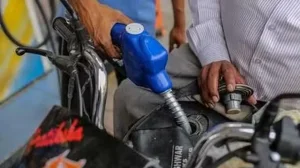
When fuel prices rise, the effects ripple through the economy by increasing transportation and logistics costs, often influencing the prices of many everyday goods.
Petrol Crossed ₹100—Why?
One of the most visible changes over the past decade has been fuel prices.
Several factors contributed:
Higher international crude oil prices during certain periods.
Excise duties imposed by the Centre.
State VAT.
Exchange rate movements.
Global geopolitical disruptions.
The government has argued that tax revenues from fuel helped finance infrastructure projects and welfare programmes, while critics contend that high fuel taxes have placed a significant burden on households and businesses.
The LPG Debate
Domestic LPG prices have also become a politically charged issue.
Successive governments have alternated between subsidies and market-linked pricing.
Supporters of the current system point to targeted subsidies for eligible beneficiaries and the expansion of LPG connections under the Ujjwala scheme.
Critics argue that higher refill costs have made cylinders less affordable for many households, particularly those outside subsidy coverage.
The Rupee and the Dollar
The Indian rupee has depreciated against the US dollar over time.
Currency movements are influenced by multiple factors, including:
Inflation differentials.
Global interest rates.
Oil imports.
Foreign investment flows.
Trade balances.
A weaker rupee makes imports such as crude oil more expensive but can also improve the competitiveness of exports.
Whether depreciation reflects economic weakness or broader global trends depends on the underlying causes and the wider macroeconomic context.
Ethanol: Success Story or Cost Shift?
The government’s ethanol blending programme has significantly expanded over the past decade, with blending levels rising from very low levels to around 20% in many regions.
Supporters argue that ethanol blending:
Reduces crude oil imports.
Supports farmers.
Improves energy security.
Critics point out that ethanol contains less energy than petrol, meaning some vehicles may experience a modest reduction in fuel efficiency. Questions have also been raised about vehicle compatibility and consumer awareness.
The policy continues to be debated on both economic and environmental grounds.
Communication Versus Accountability
Another recurring criticism concerns the Prime Minister’s engagement with the media.
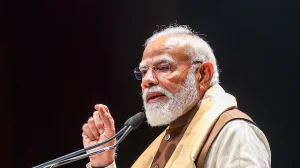
Prime Minister Narendra Modi has communicated extensively through programmes such as Mann Ki Baat, public rallies, interviews, and social media.
Critics, however, have noted the relative rarity of unscripted, open-format press conferences where journalists can ask a broad range of questions. They argue that regular press conferences are an important democratic accountability mechanism.
Supporters respond that the government communicates through multiple platforms and that accountability is also exercised through Parliament, elections, and official briefings.
The Politics of Narratives
Political slogans have become central to modern election campaigns.
Terms such as “Vishwaguru,” “New India,” and “Amrit Kaal” are used to project long-term national ambitions.
Opposition parties often counter these narratives by highlighting inflation, unemployment, and the cost of living, arguing that economic success should be judged by improvements in citizens’ daily lives rather than slogans.
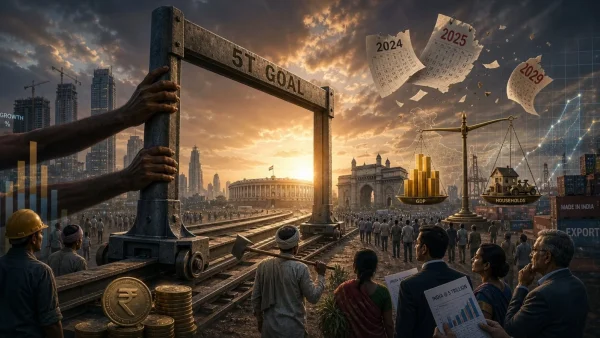
Growth and Ground Reality
India remains one of the world’s fastest-growing major economies, has expanded its highway network, digital payments ecosystem, and manufacturing ambitions.
Yet many households continue to feel pressure from inflation and rising living costs.
This illustrates an important reality: a country can record strong macroeconomic growth while many citizens still experience financial strain. The Bigger Question Every government seeks to define its legacy through ambitious goals and national achievements.
Citizens, however, often judge governments through a simpler lens:
Can I afford fuel?
Is cooking gas within my budget?
Are my savings growing?
Are prices stable?
Is my standard of living improving?
Political narratives may shape headlines, but household economics shape public opinion.
Ultimately, governments are remembered not only for the promises they make, but for how those promises are reflected in the everyday lives of the people they govern.