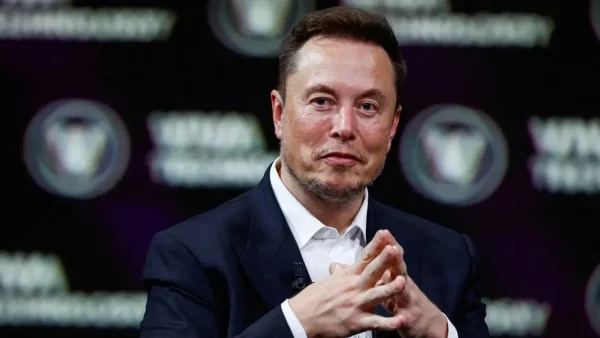
Recently, Elon Musk, the visionary entrepreneur and CEO of two successful companies, Tesla and SpaceX, forecasted in a rather bold manner by suggesting that work and wealth could be differently perceived by society in the next two decades. While speaking at the U.S.-Saudi Investment Forum, this visionary expressed the idea that within the next two decades, AI and robotics would render work entirely optional. Hence, if this forecast comes true, it would truly imply a world where work no longer remains an imposition because sufficing to meet one’s needs is a desirable act, similar to a hobby.
The Future of Work: A Choice, Not a Requirement
Musk had taken into account the fast-paced interruptions expected in AI and robotics that should redefine why a human engages with the world. He compared work with anything one might do during one’s leisure, for example, some sport like playing tennis or gardening. With this change of conception, work becomes a different challenge. Instead of working for survival and sustenance, humanity will enjoy working.
The analogy, drawn by Musk, is interesting: some gardeners grow their vegetables even though they do not need to, and work might become an elective pursuit driven by passion rather than necessity.
AI and Robotics: Redefining Wealth
Musk’s vision goes far beyond merely changing the workforce. AI and robotics’ steady advancement, he predicts, will eventually make mazuma superfluous. According to him, these technologies might make a world of abundance feasible for everybody and the end of poverty. He insists that everyone will eventually own a humanoid robot. These are still in the emergent stage.
Such new technologies predictably alleviate humans from mundane and laborious work to become more inventive. Thus, the word “wealth” is reborn, but, in this case, it might come from resources and time to evolve as a person.
Concerns and Skepticism on Musk’s Vision
Various hurdles are said to confront the hypothetical possibility of making work optional by tomorrow. For others, the idea of having wide automation before the following couple of decades sounds somewhat far-fetched. A great deal of challenges intrinsic to the construction and development of
[general-purpose]
humanoid robots that can perform duties in a contextual environment need to be addressed. Roboticians say smaller machines are simple to build in comparison to their general-purpose counterparts.
Likewise, Musk’s predictions prior to his present moment, say, the deployment of a fleet of shared automatic vehicles or manned deployment to Mars by certain dates, have hit dead ends. While visions see plenty of appeal from where he stands, it seems clear they would require monumental advancements in technology and very basic shifts in society.
Economic Implications: WORK, WORK, AND MORE WORK: THE NEXUS OF EMPLOYMENT AND WEALTH
As AI and robotics become standard in the future, there is no way that employment landscapes remain flat. An increasing number of global firms are letting AI do the job, with the displaced workforce fearing if they are losing their jobs. However, Musk’s stance is the complete opposite as he sees the technology reducing the human necessity to engage in mindless behavior.
This new start-up requires the reconstruction of economic laws. If money winds up becoming useless, then social systems must come together to usher in other forms of value exchange and resource-sharing.
Salvation?
Elon Musk’s future vision is of humanity transcending the conventional economic framework. With more time free to focus on creativity, hobbies, and personal interests, his notions represent a broader movement to seek fulfillment beyond financial gain.
However, this vision entails significant technical and social challenges. Cognizant of these tangles, policymakers must decide the right way forward, ensuring equity in terms of deriving benefit from technological interventions.
We come to the verge of hitherto unknown technological upheavals and Elon Musk throws into the ring the vision where human society employs AI and robotics to strive for the common good. Yet the impediments in this long but thought-provoking future predict a stability of increasing wisdom (or agony) that society may experience.
Conclusively, Musk’s forecasts provide both a prospect and a challenge-to innovate while keeping a critical eye on the consequences. This inititative obligates us to foresee a future where technology works towards the higher aims of humanity-not only those driven by the economy.