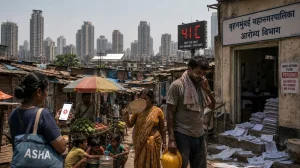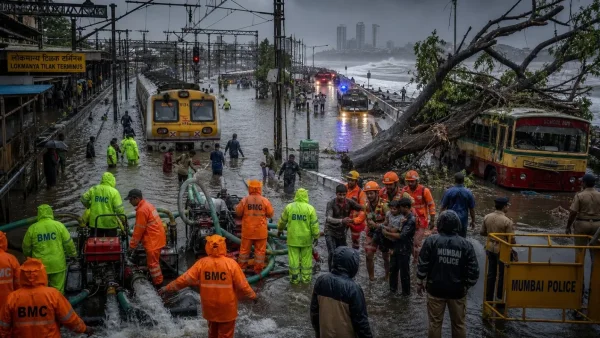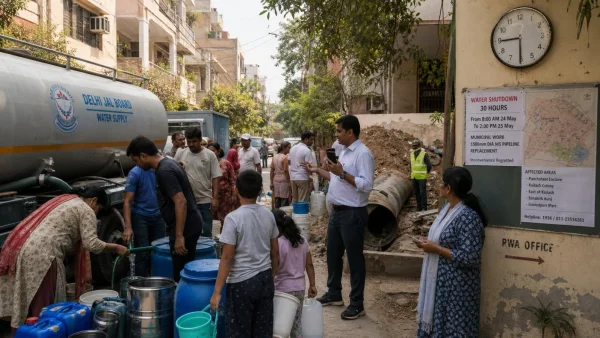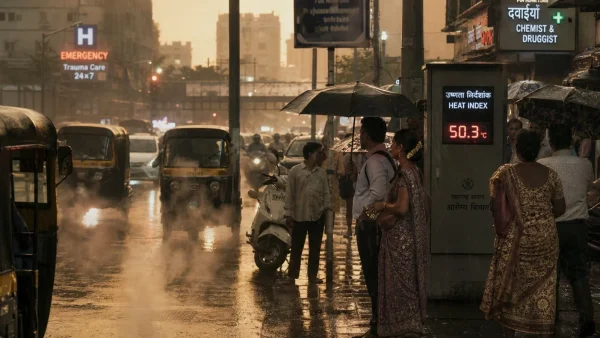
India’s monsoon has arrived, but many city residents are sweating more, not less. As humidity surges, the heat index – the feels-like temperature – is pushing conditions into dangerous territory, prolonging power demand and leaving nights stifling. In late June, Delhi’s heat index peaked at 53 degrees Celsius, underscoring a new, urgent heat threat.
The monsoon paradox and why it matters
Rain can cool the air, yet it also pumps moisture into already dense urban environments. When the air is saturated, sweat cannot evaporate efficiently. The result: people feel far hotter than the number on a weather app suggests.
This discomfort is not a one-off. In July and August, Delhi’s heat index has often exceeded 46-50 degrees Celsius in recent years. A policy brief last September linked these conditions to longer and more intense electricity use as air conditioners work harder and for longer.
Emergency relief is not keeping pace with the problem’s duration. Temporary cooling zones, water distribution, and hospital cool wards, while necessary, hit their limits as humidity stretches discomfort beyond daytime and beyond the summer peak. People need protection round the clock, not only during a heatwave alert.

Humidity is climbing – and the data show it
A nationwide shift is underway. The Council on Energy, Environment and Water analysed heat risk across 734 districts and flagged three trends that demand attention: a rise in warm nights, higher relative humidity across the Indo-Gangetic Plain, and intensified exposure in dense, economically vital cities including Delhi, Mumbai, Ahmedabad, Hyderabad, Bhopal, and Bhubaneswar.
On 24th June, a study by Climate Central found that since the 1970s, India has seen dangerously humid heat days increase from 101 to 141 per year. Globally, the number rose from 10 to 23. The benchmark is a wet-bulb temperature of 25 degrees Celsius or higher, where the body’s ability to cool itself starts to fail.
The increase is not uniform, but it is widespread. The same analysis showed city-level jumps, including Ghaziabad from 99 to 137, Nagpur from 44 to 119, Raipur from 82 to 150, Ahmedabad from 137 to 162, and Jaipur from 55 to 101 over five decades. Scientists attribute the trend to ocean warming that channels moisture inland from the Arabian Sea and the Bay of Bengal.
Nights that refuse to cool
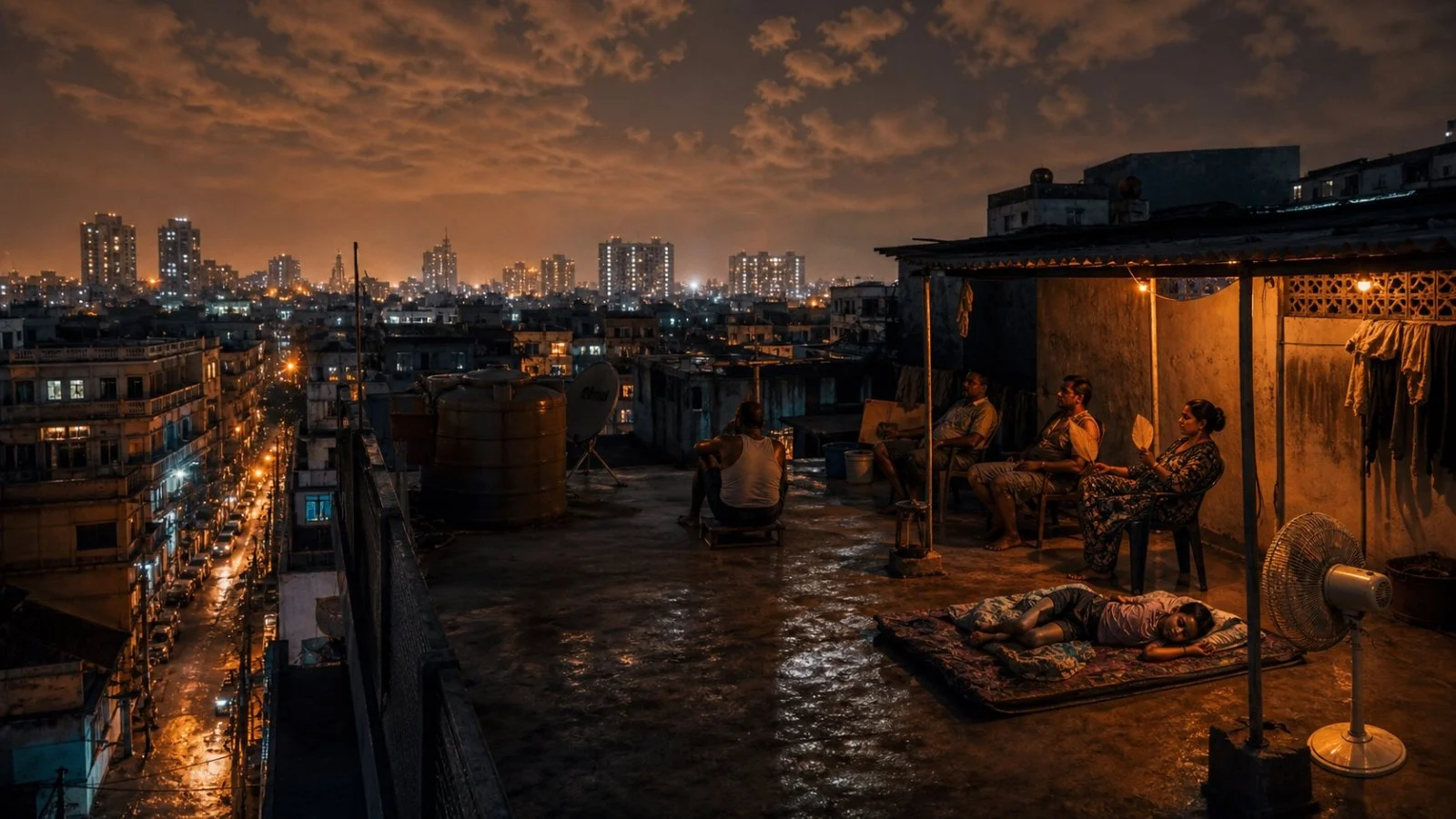
Humid conditions also choke off nighttime relief. When humidity remains elevated without rain, concrete and asphalt release heat slowly. If nighttime temperatures stay high, the next day’s maximum often starts elevated and stays elevated.
A study published in March in Physics and Chemistry of the Earth reported persistent nighttime heat waves in 15 smart cities, including Delhi, Agra, Kanpur, Varanasi, Jhansi, Gwalior, and Kochi. The same analysis found another 16 cities – including Aurangabad, Bhopal, Indore, Nagpur, Raipur, Warangal, and Puducherry – facing persistent compound heat both day and night.
Kashif Imdad, one of the study’s authors, says most urban heat action plans still concentrate on daytime hazards. He calls for cities to build 24-hour response systems, buttress health preparedness, and use passive techniques to cool homes and workplaces, alongside improving natural ventilation, green cover, and reliable electricity.
Inside the city heat trap
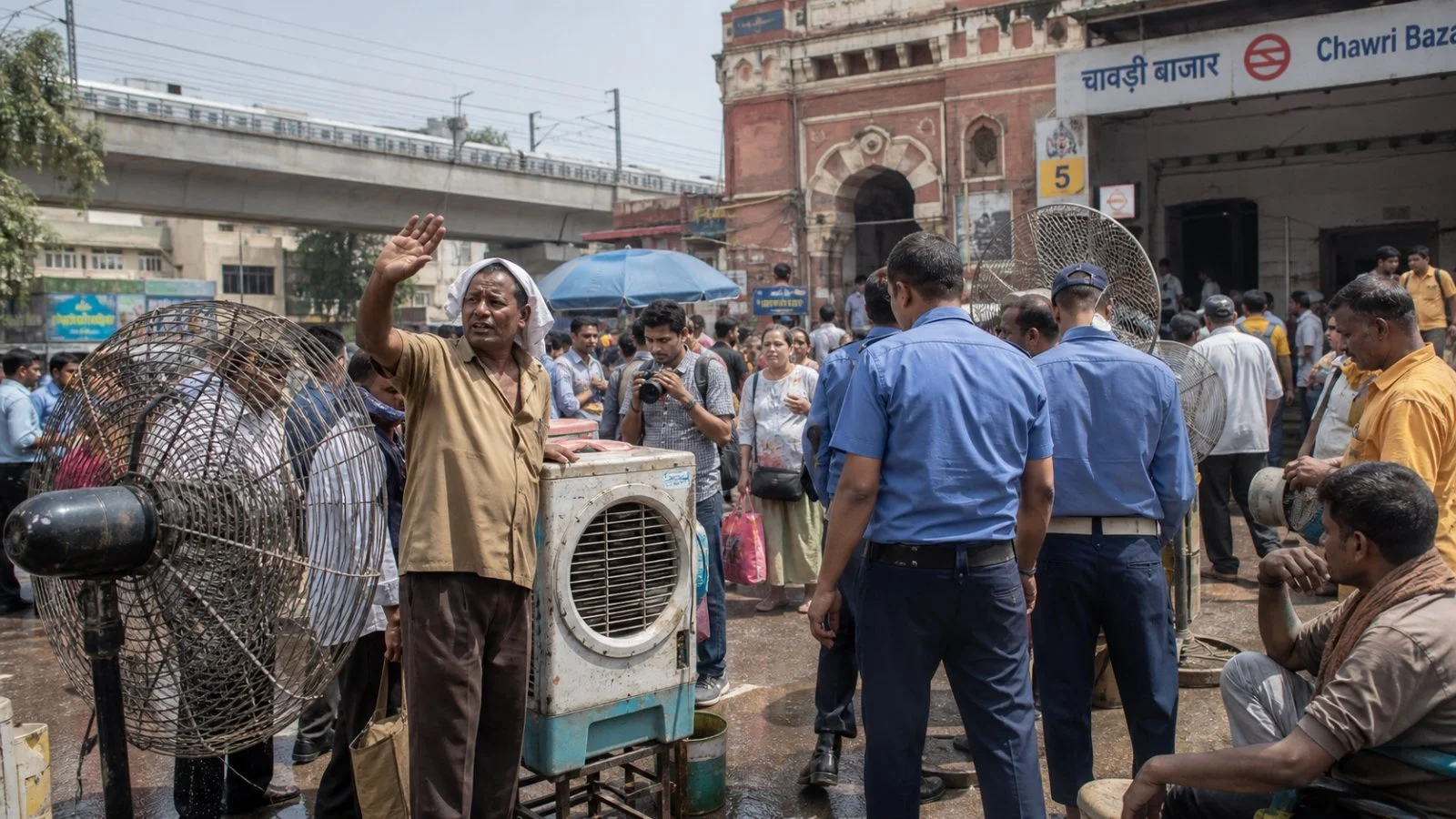
One afternoon outside Jama Masjid metro station, Delhi’s largest cooling zone was packed. Salespeople, daily wagers, a police patrol, tourists, and a waste picker moved between coolers and fans. Amid the crowd, an autorickshaw driver asked for the cooler to be adjusted: ‘When it gets humid, my desert cooler throws warm air.’
That problem is physics, not perception. With high mean temperatures in cities, the Urban Heat Island often overwhelms any drying effect. Humidity hampers sweat evaporation and defeats night cooling, especially when buildings are packed closely and the ‘sky view’ is limited.
Urban form matters. Open unpaved areas shed heat efficiently at night, but concrete beneath trees can trap warmth despite shade. In dry regions, trees cool through evapotranspiration because the air can absorb additional moisture. In humid neighbourhoods, that extra moisture can worsen heat stress near the ground.
Greening, with caution and nuance
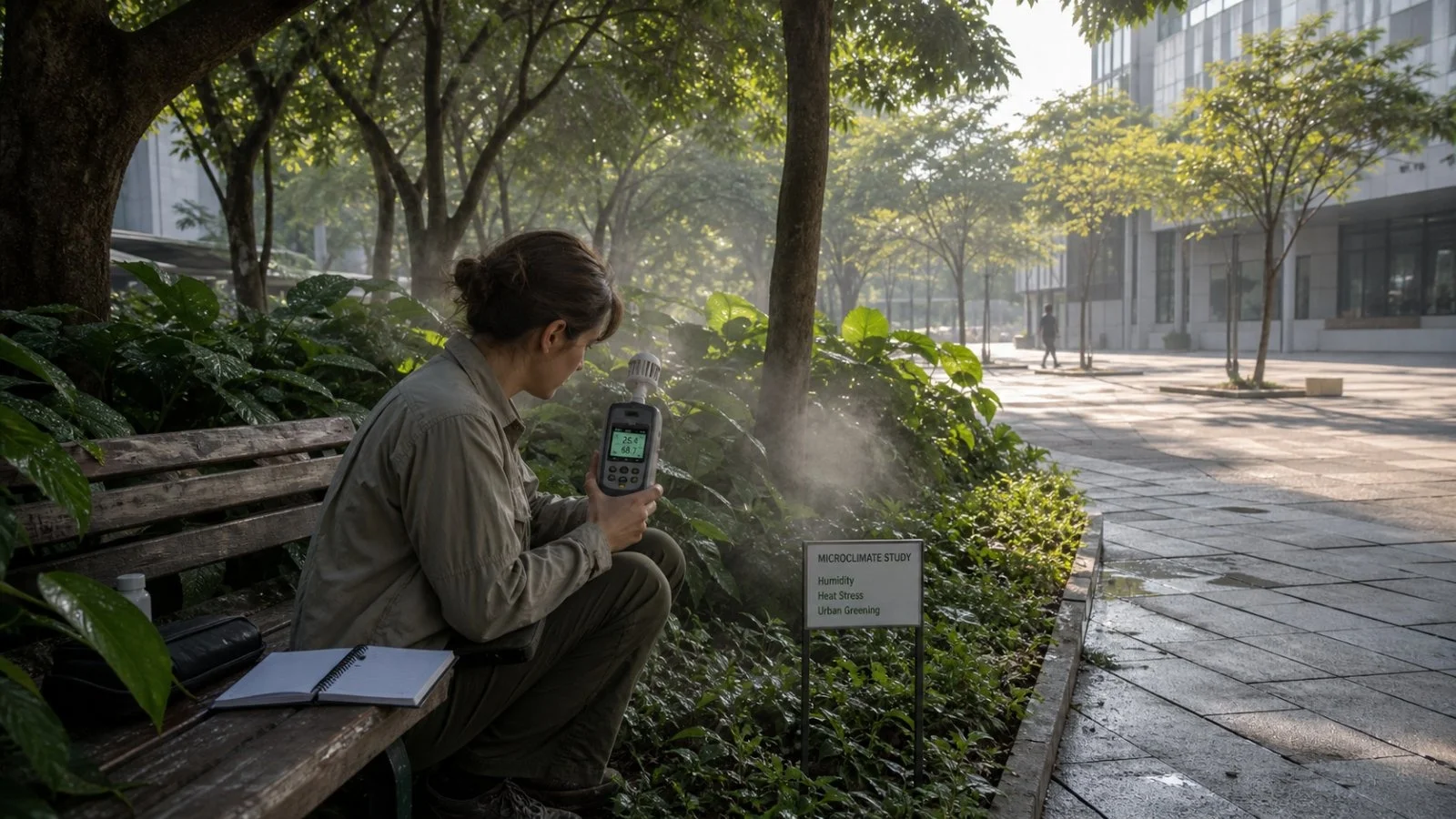
An IIT Gandhinagar study in Nature Communications analysed 138 Indian cities and concluded that vegetation’s effect on heat index depends on climate and urban morphology, not just canopy cover. In humid heat stress zones, greening must blend shade with airflow and moisture management to avoid trapping damp, hot air.
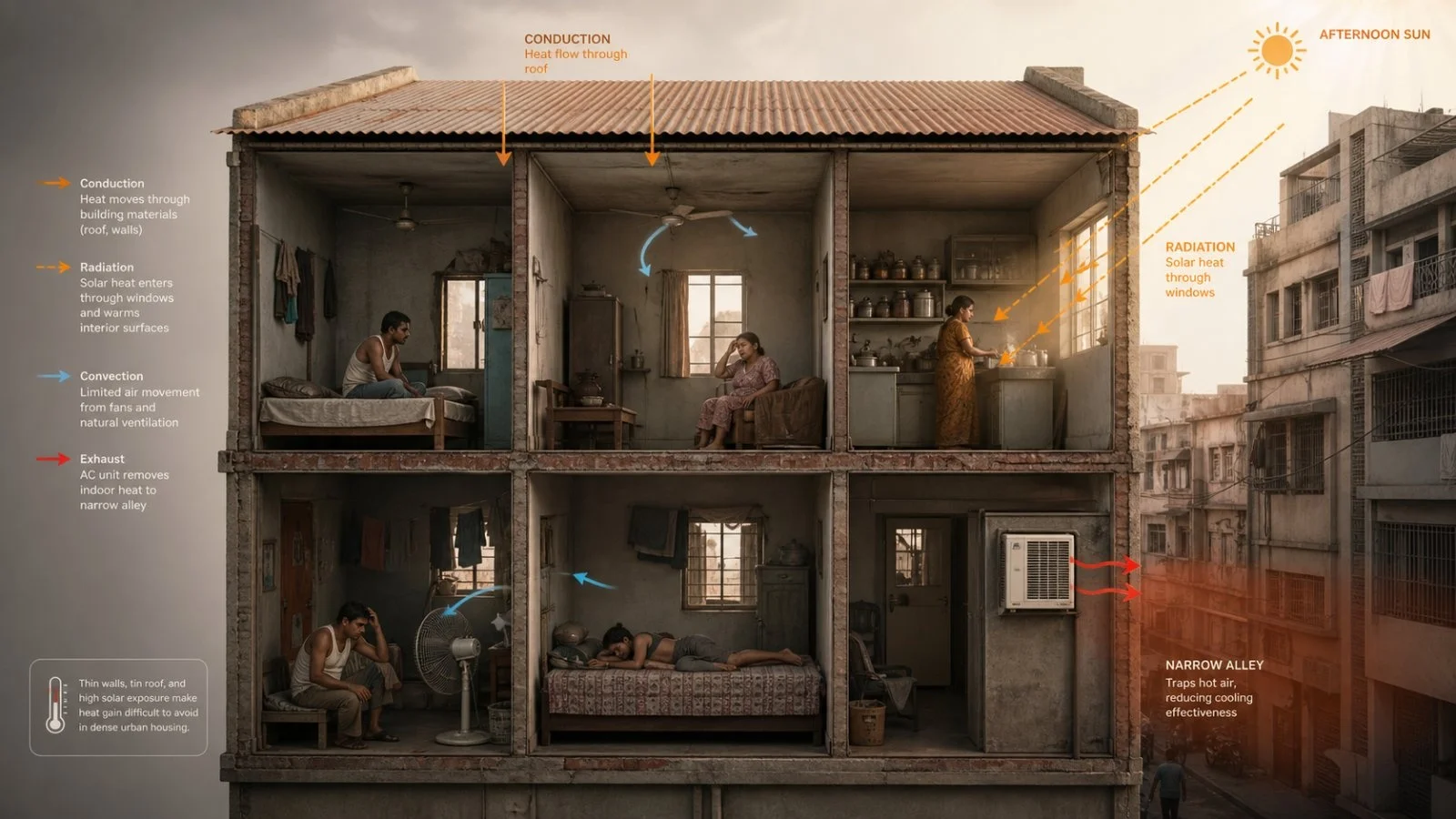
Rajan Rawal of CEPT University argues that popular fixes like cool roofs are necessary but insufficient on their own. Indoor comfort depends on air temperature and humidity, not only on surface reflectivity. Walls, floors, windows, wind, and solar radiation shape comfort, health risk, and energy demand inside buildings.
Cool roofs can lower nighttime temperatures on heat-retaining concrete, but they do less for tin or cement-sheet roofs, which shed heat faster after sunset. In north Indian cities that approach near-zero winter temperatures, Imdad suggests removable or seasonal cool roof solutions over permanent installations.
Passive design, active cooling, and the limits of both
Passive design strategies must be recalibrated. Rawal and Radhika Khosla advocate focusing on the three modes of heat transfer – conduction, convection, and radiation – using materials, construction methods, and room layouts that reduce internal heat load. These steps can cut air-conditioning use and the waste heat it adds to the city.
But passive techniques cannot do magic. In dense neighbourhoods with little cross-ventilation, indoor spaces remain hot and stuffy. Ventilation alone cannot reduce indoor temperatures below the outdoor ambient when humidity is high. Traditional courtyards and high ceilings were powerful when surroundings were cooler; as cities sprawl, ambient temperatures climb and the old tricks lose potency.
Vishwas Chitale from CEEW cautions that rising humid heat reduces the effectiveness of passive strategies. He says active cooling will be necessary, but affordability, innovative low-cost solutions, and adoption incentives are still a challenge. Reliable electricity becomes not just a comfort issue but a life-line.
To guide decision-makers, these principles stand out from expert recommendations and recent studies:
– Address both day and night heat, all year
– Combine shade with airflow and moisture control
– Design for conduction, convection, and radiation
– Ensure reliable electricity and health readiness

Stop flying blind: better metrics, better maps
City heat maps usually rely on daytime land surface temperatures from satellites. Rawal and Khosla note that this misses what matters to people indoors: air temperature, humidity, wind, and solar radiation, including at night. Those are the variables that shape comfort, hospital admissions, and electricity demand.
By integrating humidity, warm-night trends, and exposure data into planning, cities can avoid misdirected investments and target neighbourhoods with the worst compound heat stress. The goal is to move beyond seasonal crisis response to year-round resilience.

Cities begin to pivot, but speed is critical
After years of generic advisories, some local governments are refining heat action plans with context-specific triggers and timelines. Thane’s 2024 plan uses the IPCC AR5 framework of hazard, exposure, and vulnerability to build a city heat index. It combines historical and projected extremes in dry conditions, humidity, and warm nights with socioeconomic data for ward-level action.
CEEW is supporting 145 cities across seven states to develop such plans. Cuttack and Sambalpur are exploring cooling solutions that extend beyond six months. Chennai is embedding heat action into its master plan, signalling a shift from ad-hoc measures to structural change in urban design and services.
Bhubaneswar is preparing a climate-risk dashboard to map heat stress at the building level. This digital twin integrates satellite imagery, weather data, and local sensor feeds to assess surface and air temperatures, humidity, and urban heat islands under the SUM-ACA initiative supported by GIZ India and the Union ministry of housing and urban affairs.
The city’s commissioner, Chanchal Rana, calls it ‘a highly credible, scalable, open-source tool that has no licence fees’. He says if it succeeds, it will be recommended to other urban local bodies in Orissa. The tool will guide strategic investments using the state disaster management fund.
What to expect in the coming weeks
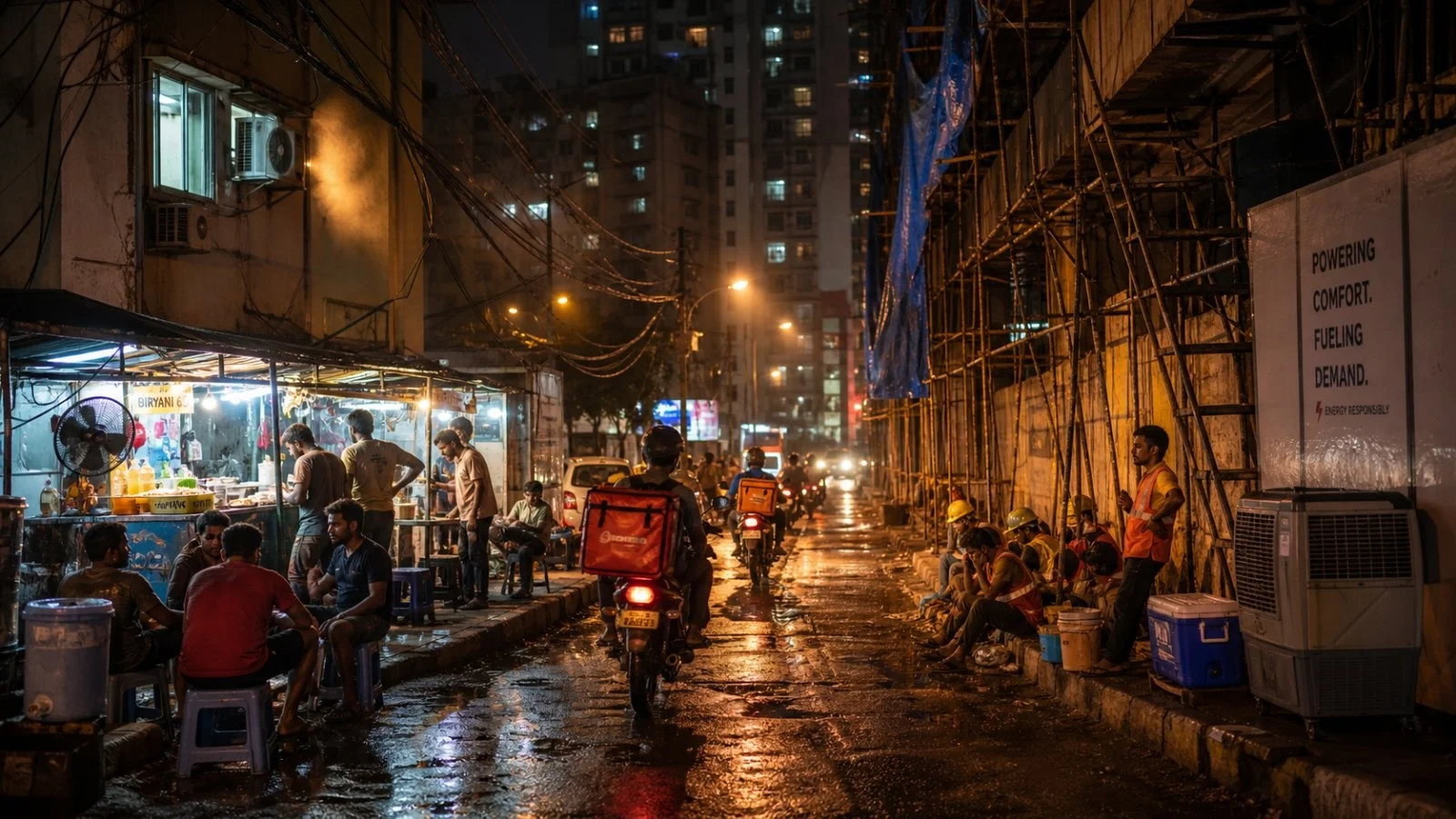
As monsoon humidity persists and rain remains intermittent, many cities will continue to feel hotter than their thermometers indicate. When nights fail to cool, next-day peaks stay high. That means longer AC run-times, higher electricity bills, and more risk for outdoor and night-shift workers.
Without careful planning, stop-gap fixes will fall short. Seasonal cooling shelters provide relief, but they do not reduce the structural drivers of humid heat. The path forward is clear: measure what matters, target the most exposed, and design buildings and streets that breathe.
The bottom line
The new heat threat is not just about temperature; it is about humidity, timing, and urban form. From 101 to 141 dangerously humid days per year since the 1970s, and heat index spikes like Delhi’s 53 degrees Celsius, the signals are unequivocal.
Cities must move fast to treat humid heat as a year-round risk, redesign for airflow and moisture management, secure reliable power for active cooling, and modernise heat action plans with night-focused triggers. The monsoon will not save India’s cities from heat stress; smarter planning might.