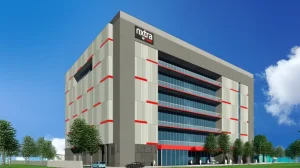
Meta is planting its biggest AI data centre outside the US in Alberta, committing more than USD 9.1 billion to a site in Sturgeon County. The first Meta facility in Canada, it marks a strategic bet on private power and cold-climate efficiency as competition for hyperscale AI capacity accelerates.
The project, described by Meta as a C$13 billion, or $9.17 billion, investment, will start at 1 gigawatt with room to scale to 1.8 gigawatts. Meta says the site will consume about as much electricity as 800,000 homes and will be the company’s 33rd data centre globally.
Why Alberta, and what this move means
Low-cost natural gas and cooler temperatures have made Alberta a contender for power-hungry AI infrastructure. Provincial leaders have actively courted hyperscale players and created a regulatory framework intended to draw data centre investment, according to Technology and Innovation Minister Nate Glubish.
Glubish called the announcement ‘a big deal for Alberta’ and added: ‘This is the first of its kind, the first of its size, the first of its scale, but it won’t be the last.’ He said several other gigawatt-scale proposals are in various stages of development.
The province’s grid is already under strain. With 20 small- to mid-scale data centres drawing on electricity that is 60% powered by natural gas, Alberta is prioritising projects that build or secure their own generation.
Build-out plan and Meta’s power strategy
Meta says it will fully fund new generation and grid infrastructure to support the Sturgeon County hub. The company plans a closed-loop liquid cooling system that will not draw water from surrounding sources and, according to Meta’s Gary Demasi, will use less water than a typical golf course.
To address local impacts, Meta will invest USD 42 million in roads and water systems. Company executives said they will offset the facility’s electricity use by investing in clean and renewable energy, aligning with earlier pledges to scale AI capacity while managing environmental footprints.
Private generation partners and timelines
The data centre will rely on a new natural gas-fired plant being developed by a consortium that includes Calgary-based Pembina Pipeline Ltd. Last week, Pembina Pipeline, Morgan Stanley Infrastructure Partners and Kineticor Asset Management approved the Greenlight Electricity Center in Sturgeon County.
Meta was identified as the customer for the 932-megawatt power plant, expected to begin operating in the second half of 2030. Meta has a long-term tolling agreement for the facility, securing dedicated power as AI demand intensifies globally.
Until Greenlight is online and for the next decade, Alberta-based Capital Power will supply 250 megawatts from its existing natural gas-fired fleet. Pembina said the project will require approximately 150 million cubic feet per day of natural gas.
Competition, costs and the emissions debate
Meta has doubled down on AI, pledging hundreds of billions of dollars to build large AI data centers in the U.S. The Alberta build widens that footprint while leveraging discounted Western Canadian natural gas and lower cooling costs.
Canada’s AI strategy recently argued that new data centre growth benefits from a clean electricity grid. Yet most planned sites are in Alberta, where reliance on gas makes the grid’s emissions intensity almost five times the national average, raising policy and community questions.
Environmental groups reacted sharply. ‘We need a moratorium on mega-data centers until we have legislated environmental and human rights protections on AI,’ said Keith Stewart of Greenpeace Canada. Alberta’s approach, however, is to allow proponents to self-supply power, reducing pressure on a constrained grid.
What to watch next
Meta’s Alberta project could reset how hyperscale operators expand in power-limited markets by pairing long-term tolling deals with on-site or dedicated generation. It also tests whether private energy arrangements can balance fast AI growth with local concerns over water, emissions and grid stability.
Key points now in focus:
– How quickly construction ramps to 1 gigawatt
– Progress toward the second half of 2030 power start
– Delivery of the USD 42 million local upgrades
– Execution of renewable offsets promised by Meta
If the model succeeds, Alberta’s bid to become an AI infrastructure hub gains momentum. If not, it may strengthen calls for tighter national rules on data centre development and energy sourcing. Either way, Sturgeon County just became a bellwether for the next phase of the AI buildout.