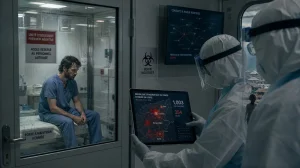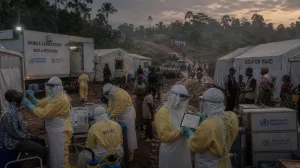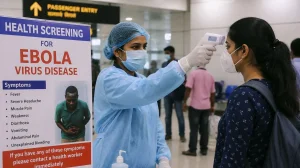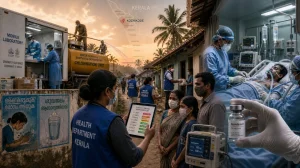
On July 10, 2026, the U.S. CDC made public that an American with a humanitarian outfit in the Democratic Republic of the Congo has come back positive for the Bundibugyo strain. The news comes on the heels of warnings from the WHO that the outbreak is moving in ways we can’t see, which only adds to the worry.
Hidden spread raises the stakes
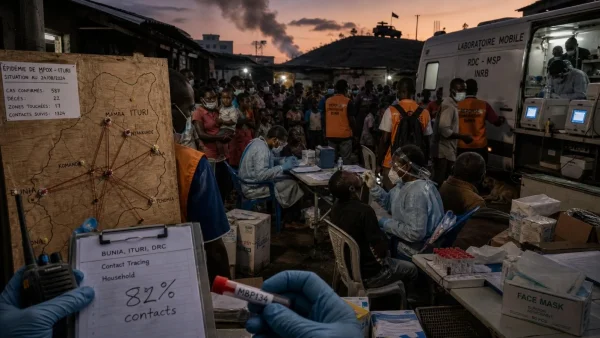
Chikwe Ihekweazu, the WHO’s Emergencies Director, put a number on it: 80% of the new ones in the Ituri hub don’t show up on any contact list. It’s a clear sign of where our tracing is falling short and how many are evading us.
If you look at the WHO’s figures, the real size of the outbreak could be two or even four times what we have on paper.
Take Bunia, a city of a million or so. About half of those who get tested for Ebola are positive. You see a lot of that kind of transmission in the home, where people first try to care for one another.
Fastest-growing Ebola outbreak, officials say
The Africa CDC is calling this the most rapid we have put on record. Wessam Mankoula was quick to point out the numbers: in the first six weeks of the 2013-2016 epidemic in West Africa there were 994 cases; in that same period here, 1,596.
By some counts, infections are on a 28-day doubling cycle. Since mid-May, the WHO has 1,759 confirmed, 600 dead, 285 who have made it through and 304 we are still looking into.
Then there is the government’s own tally from July 9, 2026: 1,792 and 625 fatalities in the northeast. You will see some differences in the reporting depending on the agency and the day.
Why this strain makes control harder
What we are seeing with the Bundibugyo type is that the symptoms can be less severe. People in the community may put off going in for care, thinking they can make do at home.
It means some arrive at the centre in better shape, but it also leaves an infectious person in the house for longer. Ihekweazu is clear on the risk: the more time a patient is left to their own devices, the more likely they are to pass it on.
We ran the numbers on the first 400 deaths and found 70% of them happened away from a treatment facility. Most of the reported cases – 90% – are in Ituri, in and around Bunia, Rwampara, Mongbwalu and Nyakunde. We are also seeing it in North and South Kivu, and Tshopo of late.
Where the response is working
In places like North Kivu where the case count is lower, we are able to pin down almost every new infection to a known contact. It shows that when the load is right, tracing and isolation hold up.
We have put in the lab work to back it up. In Kinshasa we were at 30 a day; now the provincial labs are turning out over 2,000. It is a matter of being able to move resources to where they are needed.
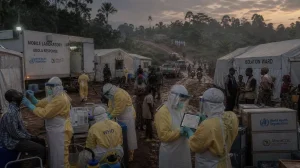
You will see 21,000 health workers in the field, trained to go from door to door and nudge people to seek help. That is how you stop a new chain before it starts.
Funding, trials and targets
To keep the operation running, the Africa CDC is looking at $1.4 billion. The ask to donors is for support to be put in place without delay.
As of July 2, we have started some clinical work on MBP134 and remdesivir, both by themselves and together. There is nothing on the market yet for the Bundibugyo variant. The fatality rate is in the 34% range.
We are following up on 82 percent of the 10,000-plus contacts we have. The WHO would have us at 95 to be sure of containment.
Some of the things we are doing to get there:
– 21,000 health workers in training
– More than 2,000 tests a day in the labs
– 82 percent follow-up on 10,000+ contacts
– MBP134 and remdesivir in the works since July 2
– A push for $1.4 billion
Conflict compounds the health emergency
Access is a problem in South Kivu because of the violence and the people on the move. The stand-off between the Congolese forces and the M23 is putting a strain on what little health infrastructure is left.
Volker Turk of the UN Human Rights office has called for a halt to the hostilities, with good reason. He sees a heavy toll on civilians and the possibility of more being pushed across the border.
What comes next
The CDC is in touch with the DRC and the patient’s employer to make sure we find any high-risk contacts and don’t let this go any further.
For those on the ground, it is about getting that 95 percent on contacts, not letting up on the testing and keeping the community in the loop. When you have as many cases as we do that are off the radar, it is all about speed from this point on.