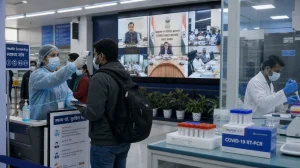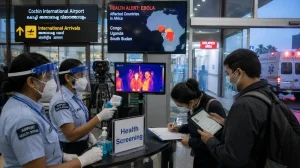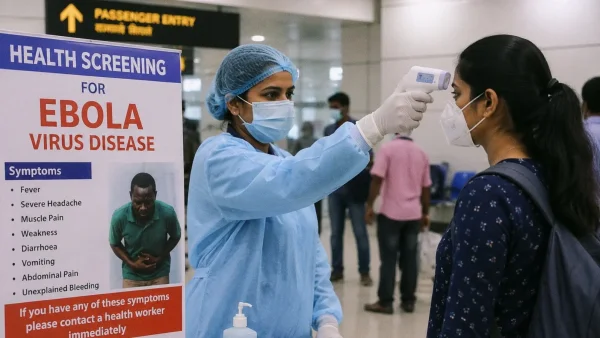
The new tone was set on 2nd June when India made it plain to arriving travellers: if you have symptoms, you isolate. This comes even as the country can say with certainty that it is free of Ebola. With 1,077 suspected infections out there and the WHO calling it what it is, the Health Ministry is also making sure everyone knows about the 1075 number.
What the advisory asks returning travellers to do
If you have been to, or even just put down for a layover in, an Ebola-affected country, the Health Ministry wants you to be on top of your health for the next 21 days. You start to see a fever, some muscle aches, vomiting, or anything like unexplained bleeding? Then you isolate and let the local authorities know right away.
You can get in touch with 1075 for that. The Ministry will have it that getting ahead of things is the way to stop transmission in its tracks and to get you and anyone close to you the medical attention you might need.
Here is what you should be doing if you’ve been travelling recently:
– Put yourself in isolation if you come down with something in the 21-day window
– Don’t be slow to ring 1075
– Let the local health department have it
– Have your travel and transit dates at the ready
Travel plans and countries to avoid for now
We have put out a word not to make any non-essential trips to the DRC, Uganda or South Sudan. They are being watched closely with the outbreak still going on, so it’s best to stay away and lower your risk of exposure.
And for those who have already been to these places, it’s a good idea to have your medical papers to hand when you’re talking to health teams. Having your history and test results on hand makes for a much smoother process if you need to be assessed later on.
India’s risk picture and the Gujarat update
For all the noise in the world, India’s position is one of caution, not alarm. We have had no confirmed cases, the Health Ministry says, and this is about being ready, not panicking.
There was a scare in Gujarat with a man from the DRC, but state health minister Praful Pansheriya has put to rest any worries: he tested negative. He has asked people to put aside the rumours and go by the official line. The result is there to give residents some peace of mind, but we are to remain watchful.
Global situation and what WHO has said
After some 80 were initially put down as dead, the World Health Organization made the call last month to declare this a public health emergency of international concern. The numbers have since moved to over 200 fatalities and 1,077 suspected cases, per the briefings.
It is a serious matter, but the WHO has been at pains to say it is not yet a pandemic. They have put a note to the DRC’s neighbours to be on their guard given the movement of people across borders.
There are some glimmers of better times in the region. The main airport in an eastern DRC province has been opened up again after officials saw some signs of the virus slowing down. But don’t let that lull you; they are still hard at work with contact tracing and keeping a close eye on everything.
Why this matters now
It’s not only for your own sake. For the family and co-workers around you, following the rules is what counts. Because in the beginning, an Ebola symptom can look like any other, that 21-day period and a quick call to 1075 are where it is at.
Put simply, there is no Ebola in India, but a little proactivity from those who have been travelling can make all the difference. Be conservative with your plans, and if you are unwell after time in a high-risk country, do the right thing and use the official channels.
What to watch for in the days ahead
You can count on more of the same with health checks and an eye on the travel routes. If the curve starts to turn, we may see some of the pressure let up. In the meantime, India is using caution and good sense to keep the virus out.
It is what it is. The health system here is putting in place what is needed before it is an issue. If travellers do their part and report in, we can stay on top of it while the rest of the world tries to put out the fire at the source.