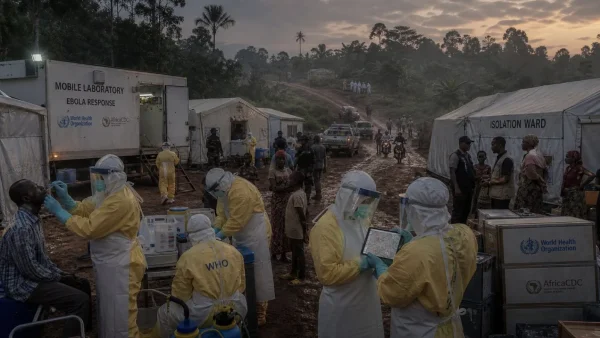
Sunday saw a sharp turn for the worse in Congo’s outbreak. In 24 hours, 72 more were infected. The Ministry of Health says that brings the body count to 181 after 29 more died, and confirmed cases to 782. You can put it down to the rare Bundibugyo strain, with its lack of an approved cure or shot.
A sharp daily jump and what it means
If you’re seeing higher numbers, it’s partly because we’re looking harder. Officials say better community reporting and surveillance are turning up more of what was out there. Response teams are on it, but the figures also show the virus is moving fast in some of these regions.
They put a stamp on the outbreak on May 15, but anyone in the field will tell you the virus was around before then. That makes it a bit of a chase to get on top of how it’s been spreading.
Some of the key changes since Saturday:
– 72 new infections in a day
– 29 more deaths on the books
– 782 cases and 181 fatalities in all
– Contact tracing only got to 56 per cent in some areas
A tougher virus, limited tools
We are dealing with the Bundibugyo here, not the Zaire strain from the 16 times this has happened in Congo. With Zaire you have your vaccines and treatments; with this one, you don’t. So for the clinicians on the ground, it’s mostly about supportive care.
The Ministry of Health puts the number of recoveries at 40 and the fatality rate at 23 per cent. In another report, they said 56 had made it through, but the 23 per cent rate holds.
Where transmission is highest
Ituri is still the hot spot, with over 90 per cent of the cases. But you now have two new health zones in the mix: Nia-Nia in Ituri and Mabalako in North Kivu. If we don’t put a lid on it, those could be the start of something bigger.
There are cases in both the North and South Kivus, and some have even made it over to Uganda. It’s a regional concern and one that calls for some co-ordination.
On-the-ground hurdles complicating control
You try to contain an outbreak and you run into a humanitarian crisis. There’s been so much conflict in Ituri that close to a million have been on the move, and they end up in hard-to-reach places where you can’t easily keep tabs on things.
Then you have the terrain. Thick woods, bad roads, and villages off the grid mean it takes time to get samples in. And with thousands of artisanal miners going back and forth between sites, it’s not easy to track who has been exposed to what.
We’ve had our share of resistance and even attacks from some in the communities, too. It’s a security issue that keeps us out of some of the hotspots when we need to be in there to make sure people are isolated and burials are done right.
The response and what to watch next
WHO is throwing more resources at it – more testing, more capacity for treatment, and we’ve already put some supplies in the field. Over at the Africa Centres for Disease Control and Prevention, they are sending in experts to shore up the labs and community work.
“We are in this to see it through,” said Jean Kaseya of the Africa CDC. He’s asking for global partners to step up. Whether we can put a dent in this surge comes down to having the funding and the community on side.
It doesn’t just stay in Congo. The US was looking to send any of their citizens who’d been in contact with the virus to a quarantine in Kenya, at the Laikipia Air Base. But after some pushback and a court in Kenya, that’s off the table for now.
What happens from here is about making sure we can get to contacts in the new zones and have the supplies to do it. Don’t be surprised if the numbers are a little up and down as we cast a wider net. For now, the job is to stop the spread in Ituri and make sure it doesn’t catch on anywhere else.