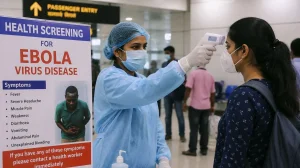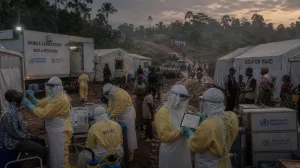
The country has officially made the diagnosis of a doctor who came back from the DRC, at a time when numbers in Congo are climbing past the 1,000 mark. You can be sure the risk to the rest of Europe is minimal, but it does show just how fast things are moving in Ituri and putting a strain on those on the front lines.
France moves to contain any spread
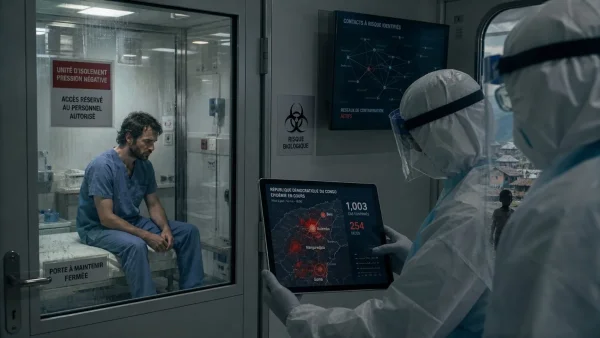
According to the Health Ministry, the patient was put in a specialised unit right away and is holding up well. He was moved in a controlled manner to a place that can handle highly contagious cases, with a negative-pressure room for isolation and all the usual safety rules in force.
They are in the middle of an epidemiological review to see who the patient may have been in contact with. If anyone is identified, the regional health agency will let them know and they’ll be put on home isolation for 21 days under a watchful eye. Precautions were in effect as soon as he got in, and they’re not letting up on the oversight.
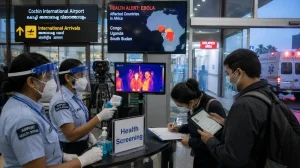
For now, the European Centre for Disease Prevention and Control has the risk of infection rated as low for people in Europe or those who have been in hot spots, and very low for the general public. France is also keeping tabs on any aid workers making their way back from the region.
A complex emergency in eastern Congo
Since they called the outbreak on May 15th, the Health Ministry in Congo has 1,003 cases on the books. There have been 254 deaths, 100 have made it through, and 365 are in the hospital or in some form of isolation. But don’t be surprised if the real figures are higher; the peak may not be behind us yet.
What you have in Ituri is the uncommon Bundibugyo type of the virus. You can’t treat it or vaccinate against it, so you have to be on top of isolating and tracing contacts. That said, they’re only at 55 per cent coverage on the tracing side, with over 35,000 to go.
Then there is the matter of security. In Ituri, the Allied Democratic Forces, with ties to IS, have been attacking, leaving some villages cut off and families on the run. It makes for hard going when you’re trying to do your job.
It’s been over a month and, as officials will tell you, the virus is outpacing the teams trying to put it in its place. They also have no word on who patient zero was.
Risk to Europe is low, they say
When the doctor made it back, France put emergency protocols in motion right away to put a stop to any potential spread. Health authorities are of the opinion that their current setup is up to the task.
The WHO put out a call for an international public health emergency on May 17, pointing to what’s happening in Ituri. The numbers for Europe are still fine, but there’s an undercurrent of caution when it comes to anyone, be it a traveller or aid worker, making the trip to eastern Congo and back.
What you should take from this is that we’re not looking at community transmission in France. This is a case of someone coming in from a hot spot and being met by a system that knows how to handle it.
The toll on children is out of proportion
Unicef puts the number of at-risk young people in the eastern DRC at 2.95 million – 54 per cent of the population in 31 of the hard-hit zones. On top of the virus, there are all the other things that make life harder: a lack of regular care, schooling, and support.
By June 19, kids and teens made up 15 per cent of the cases and over a quarter of the fatalities. If you’re under 18 and you test positive for Ebola, you are almost twice as likely to die as an adult.
Catherine Russell of Unicef has pointed out that these children are left to deal with fear and hearsay, not to mention the noise on the internet. You don’t see it in the statistics, but that kind of thing is what erodes trust and keeps people from getting the help they need.
What to keep an eye on
A few things will set the tone in the near future:
– Where the contact tracing for the French case leads
– Whether we see the 1,003 cases and 254 deaths figures go up
– Can we do better than 55 per cent on contact-tracing?
– Any news on patient zero in Ituri
– How the 365 patients in care are faring
Then there is the strain. Since there is nothing for the Bundibugyo variant in the way of a vaccine or a cure, you have to be quick about it: find them, isolate them, trace them. In its first month alone, this has been the most lethal outbreak on the books. A case in point for why time is of the essence.
If you are in Europe, don’t lose sleep over it. The risk is minimal and France has shown you can control an importation. But in Ituri, it’s a matter of having the security and the means to stay one step ahead of the virus.