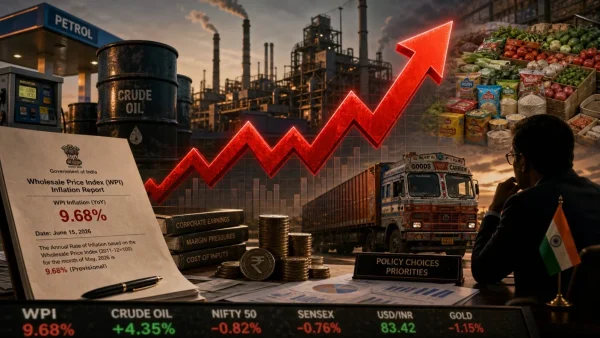
You could say the figure vaulted to 9.68%. The 15 June 2026 release was the inaugural one for the overhauled WPI and it left forecasts in the dust, highlighting a build-up of price pressures in the pipeline that will be hard to ignore in the coming weeks.
Why the May spike matters
This is the eighth month in a row of increases and it was well above the 9.05% that Reuters had been polling for. We are not far off from where we were in September 2022, when inflation hit 10.70% on the old 2011-12 base.
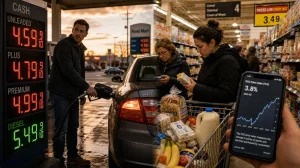
On the retail side, we have seen a nudge up to 3.93% in May. It is still under the RBI’s 4% line, but you can see the early signs of higher fuel and food bills being passed on. If producers continue to put those input costs on the shelf, there are risks down the road.
Energy shock sets the pace
The Commerce Ministry has the numbers: fuel and power were the main drivers, with the category’s inflation leaping to 30.33% in May from 24.89% in April. Mineral oils were up to 49.82% from 40.74%, and crude petroleum and natural gas to 61.51% from 56.31%.
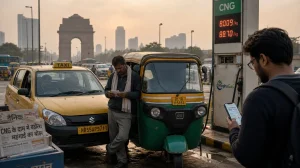
Then you have the four petrol and diesel hikes since mid-May ratcheting up logistics. Inflation for goods transport services is up 7.63%, which is a tell-tale sign of what is happening in the supply chain. With West Asia in a state of flux and global crude high, the threat of imported inflation is real.
Costs spread beyond fuel into factories and food
In May, the WPI’s heaviest segment – manufactured products at 63.1% – saw 7.48% inflation, up from 6.68% last month. Energy is making its way into factory-gate prices all around.
Some of the steepest climbs were in chemicals (13.40%), basic metals (12.30%), electrical equipment (11.32%), textiles (10.22%) and rubber and plastic (9.59%). It is a broad-based strain on the industrial value chain.
Wholesale food is no exception. The index for the sector is at 4.49% in May, compared to 3.11% in April. Food articles are up to 3.60% and processed items to 6.14%, so you can trace the raw material costs right through to the finished product.
Primary inputs and services show divergence
For primary articles, inflation is at 4.99% in May, up from 3.78%, with non-foods at 9.49% leading the way. Minerals have calmed a bit to 4.91% from 6.36%, a minor reprieve in the commodity mix.
Services are a different story; they are fairly held in check. The Securities Transaction Service Price Index is up 2.8% on the quarter and railway passenger fares 2.2%.
You can see the numbers: banking services are 1.3% off, pension fund management is down 2.4%, and air travel has given up 0.4%. As for telecom and rail freight, they’ve been about even.
Consumer basket: a case of delayed pass-through
Down at the consumer end, you can start to see wholesale pressures making themselves felt. Food inflation in May was 4.78%, up from 4.20%. We’re also seeing transport move back into the green at 1.75%, and restaurants and lodging put in 5.75% as they deal with steeper commercial LPG bills.
LPG has been on the rise – we’re talking roughly Rs 1,300 more for a 19-kg cylinder since February, or 75% plus. Then there’s the domestic LPG hike of Rs 29 that came in earlier this month; by all accounts, that will show up in June’s food price figures.
On top of that, personal care and the like have seen an 18.46% jump, no doubt because of a run-up in precious metals. It’s not tied to energy, but it puts more of a squeeze on household budgets.
A data reset with the new WPI and first-time PPI
What we got in May is the inaugural read from the reworked WPI, now with a 2022-23 base year. The government has put 957 commodities in the mix (up from 697) and re-weighted them to Gross Value of Output to get a truer picture of what producers are up against.
They’ve also made room for more energy items, moving crude and natural gas over to the fuel and power side. To make sure the transition is smooth, they’re using a chain-based approach with a linking factor from the FY25 indices.
At the same time, the government has put out its first set of PPI figures and will be trying out input and output PPI going forward. In May, PPI for manufactured goods was a wash, which is a good way to verify what the WPI is telling us at the factory gate.
So what does it mean?
Wholesale inflation is 9.68% in May, compared to 8.26% last month. That makes for a harder call when it comes to pricing and volume. Should energy stay where it is, you’ll likely see more firms put the cost on the buyer, and the gap between what a factory charges and the retail shelf will close in.
Policymakers are looking at a split between services that are cooling and commodities that are hot. It points to a supply problem, not too much demand, and that makes for some tricky policy choices. You can only do so much with tax levers on fuel.
Keep an eye on these in the coming weeks:
– Any more rough patches in West Asia for crude
– How the monsoon and food supplies hold up
– What the oil marketing companies decide to do with prices
– How quickly any of this ends up in stores
Looking forward
This isn’t just a number heading for double digits. It’s a sign that the economy’s cost base is being redefined by energy and inputs. If it holds, you could see a lag effect where strong wholesale numbers eventually rattle up retail inflation.
Services are holding the line for the moment, but with manufacturing and food costs on the up, there’s less room to make a mistake. We’ll have to wait and see if May was a turning point or just part of a more expensive road ahead.