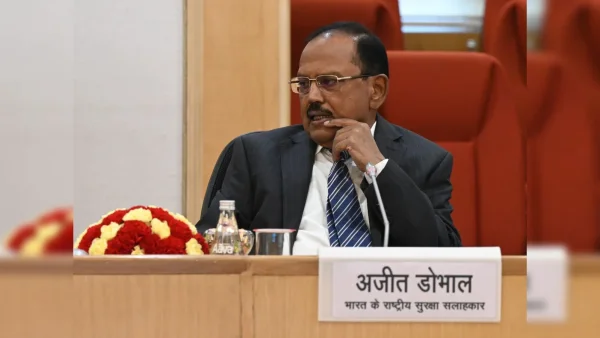
Doval went to Saudi Arabia over the weekend to get a sense of how things are changing in the Middle East and to strengthen India’s energy supply. He met with high ranking Saudi officials, and this happened after other Indian government ministers had recently visited oil and gas suppliers in the Gulf countries. The goal of the trip is to keep ways of getting energy and help for Indian citizens open, as tensions in the area are increasing.
Purpose of the visit
Doval’s trip was mostly about two very important things: keeping an eye on the fighting in the Middle East and making sure India’s energy keeps flowing. Because the Strait of Hormuz might be closed, there are worries about getting oil and gas to power Indian businesses and homes.
This visit is part of a larger plan by India to talk to the countries that sell it a lot of energy. It followed visits by S Jaishankar, the Foreign Minister, to the United Arab Emirates, and Hardeep Singh Puri, the Petroleum Minister, to Qatar. These show a planned effort to manage the risk of supply problems.
Key meetings and topics discussed
At the airport in Riyadh, Saud Al-Sati, Saudi Arabia’s Deputy Minister for Political Affairs (and a former ambassador to India) welcomed Doval. While in Riyadh, he spoke with Abdulaziz bin Salman (Energy Minister), Faisal bin Farhan (Foreign Minister), and Musaed Al-Aiban (National Security Advisor).
The Indian Embassy in Riyadh used social media to say the conversations were about the relationship between the two countries, what’s happening in the region, and other things they both care about. Saudi officials said that Faisal bin Farhan and Doval talked about ways they cooperate and recent events in the Middle East.
Energy security implications for India
Saudi Arabia is one of India’s three biggest energy suppliers (along with Russia and Iraq). If the flow of crude oil or gasoline is interrupted, the price of gas and the costs for industry will go up, so having a good relationship with Saudi Arabia is very important for India.
India is increasing its diplomatic contacts to lower the risks and make sure supplies continue. These actions are to keep current deals in place, look at other ways of transporting energy, and work together on logistics to avoid delays because of problems in shipping routes.
Protecting the Indian community and maritime safety
Almost four million Indians live in Saudi Arabia, and making sure they are safe and doing okay is a key part of this visit. New Delhi wants to be sure that life and jobs for Indians working in Saudi Arabia will continue as normal, even with the increased tensions in the area.
New Delhi has also asked for merchant ships to be able to pass through safely. Keeping the seas safe and stopping attacks or ships from being seized near the Strait of Hormuz is a priority to protect trade and sailors.
Diplomatic coordination and possible next steps
Doval’s visit shows a sensible and practical approach, combining assessing the security situation with working on the economy. India seems to want to continue talking to countries in the Gulf region through several different channels, and is encouraging them to use diplomacy to lessen the conflict.
As for what happens next, India might buy oil in smaller amounts from different places, increase its oil reserves, work with countries in the Middle East to improve sea transport, and have stronger plans for helping Indian citizens if something goes wrong. Continuing to have high level talks will likely be used to deal with instability and help India’s energy supplies stay steady.
India’s work with Saudi Arabia also shows its broader goals: keeping a balance in relationships with other countries, protecting its citizens who are abroad, and keeping a reliable flow of energy for the economy. As the situation continues to change, New Delhi will likely continue to actively use diplomacy and be prepared to respond to new dangers.