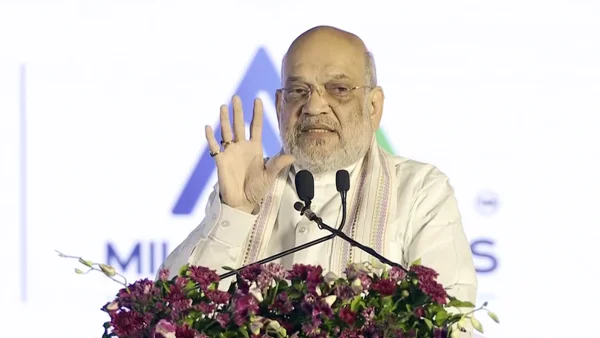
It is as much about better surveillance as it is about sealing off the frontier. The Home Minister made the announcement in no uncertain terms: we are moving to a technology-led approach to clamp down on smuggling and those who try to cross over without permission.
Why now and what it tackles
Shah is timing the launch to coincide with the Border Security Force’s 60th anniversary. “We will find each and every infiltrator from the country and send them outside India,” he said, also vowing to put a stop to any efforts to change the local demography.
Key official positions flagged by Shah include:
– Borders will be made impenetrable
– Every infiltrator will be identified and deported
– Meeting with eastern CMs is imminent
– A demography mission will be announced soon
Tools and grid being readied
What you’re looking at is a hard turn toward integrated border management. The government has decided to put in place a robust security grid along both the Pakistan and Bangladesh sides. It will be an upgrade on what is already in some sectors of the Comprehensive Integrated Border Management System – think laser barriers, subterranean sensors and high-res cameras that can spot and react to intruders.
But this time around, it’s not just about a fence. You’ll have drones, radars, thermal imagers and AI-driven oversight to keep an eye on weak spots 24/7. That kind of tech is a necessity in places like the riverine areas of West Bengal and Assam or the marshes in Gujarat where a foot patrol can only do so much. A fused command view is the way to go to eliminate blind spots.
The core stack Shah highlighted includes these capabilities:
– Drones for continuous aerial surveillance
– Radars covering long and medium ranges
– Thermal imagers detecting movement at night
– Smart cameras feeding analytics
– Sensor-based surveillance for hidden intrusions
– Command-and-control hubs for quick action
The western and eastern flanks are no less sensitive for it. On the Pakistan side, you have to deal with not only the usual networks but also cross-border terrorism. Lately, there have been more reports of drones being used to run in weapons, drugs and money. This is what the new system is meant to head off.
Political and administrative follow-through
To get on the same page, the Centre will be sitting down with the chief ministers of Assam, Tripura and West Bengal. The state governments in all three, being of our party, are of the mind that there should be zero tolerance for infiltration.
Timeline and next steps
Shah was making these points while giving the Rustamji Memorial lecture for the BSF. K F Rustamji, after all, was the force’s first director general when it was formed in 1965. And while the project is to be inaugurated in the BSF’s 60th year, the work to build this grid is set to be done in the next 12 months.
What the plan changes for security forces
From here, it comes down to how well the Centre, the BSF and the states can coordinate. If they can put the right tech in the right places and tie up their command and control, you should see fewer breaches and faster action across the board.