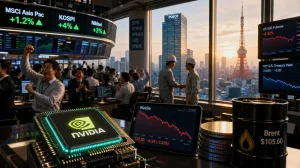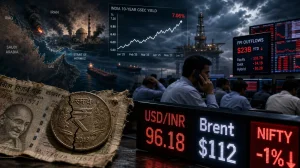
The message from the street is unambiguous: put aside the mixed earnings for a moment and you’ll find a firm belief in what AI can do. Seth R Freeman of GlassRatner Advisory would tell you that this is what is putting a lid on the inflation we’re seeing in energy and the rethinking of bond valuations.
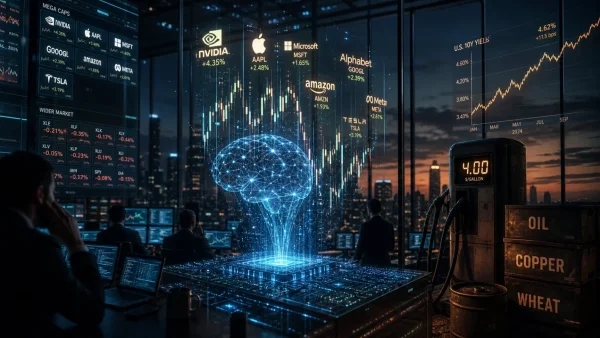
It is a case of contrasts. The equity numbers hold up, but then you see fuel topping $4 in parts of the U.S. where you don’t usually pay that much for a tank. With bond yields on the upswing, making the right call is harder, no matter how much the big AI names are dictating the mood.
AI optimism outweighs earnings noise
Freeman doesn’t mince words on what is behind the rally. It is AI. Even when a stock like Nvidia comes in a bit short of the mark, the allure for investors is undimmed.
In a way, the market is just being true to its nature. It is willing to overlook a rough quarter or two to put a price on the long-term demand for AI. That is what is propping up valuations and drawing in the capital.
Narrow market breadth raises durability questions
But there is not a lot of heft to the move. Freeman points out that a handful of large-cap techs are doing all the heavy lifting. The index may look fine, but there is some softness underfoot.
It puts a manager in a spot where they have to decide whether to go with the flow or step back from a crowded room. If the AI fervor wanes or the guidance isn’t there, what has been a tailwind could become a liability in a hurry.
Inflation channels reawaken through energy and commodities
Then you have the supply side. Freeman has his eye on inventories of chemicals and Middle Eastern-sourced commodities like urea, which are running thin. He thinks that is going to be felt in the form of inflation.
You can see it in the grocery bill. “Food prices in the U.S. are higher,” he says. And in places where gas was once a bargain, you are now over $4. It is only a matter of time before that becomes a political issue and limits what can be done.
Bond yields echo forward inflation bets
The bond market seems to be on the same page. The 10-year has made a sharp move because, in Freeman’s view, it is pricing in the kind of inflation you won’t see in the data for a while. Yields are a way for the market to voice its concerns.
You can feel it in everything from equities to crypto. Freeman figures the people in charge will come under more heat to hold off on rate hikes, with the next round of inflation data as the make-or-break.
What investors should watch next
For investors trying to navigate a market shaped by AI euphoria and macro crosswinds, Freeman’s remarks point to a focused checklist:
– Breadth versus index levels across major benchmarks
– US inflation prints and the fuel price trend
– Middle East-linked commodity supply disruptions
– AI capex signals and earnings guidance
– Moves in US 10-year yields
Strategically, you are looking at a split reality. One side is the steady hand of AI driving profits; the other is the niggling problem of tight supplies in energy and inputs that can ratchet up discount rates.
That is where the portfolio gets interesting. A few AI darlings can carry the day, but when yields are up, multiples get squeezed, especially on the growth end of the spectrum. You can have more of a seesaw without even having to write off an earnings recession.
For Freeman, the AI story is far from over. “There is a lot of money after it,” he says, and that is what the price is for. The narrative is strong enough to hold the line.
But you look outside the top tier and the ground is less solid. Worsen the commodity situation or have policy tighten up on some stubborn inflation, and the breadth of the market will show it. Passive funds with the same winners in their books will feel it.
So it comes down to the numbers. If the coming reports back up what the yields are telling us, the rate hawks will have to deal with it. If the heat goes down, the AI trade can keep on.
Right now, the bet is that the secular pull of AI is stronger than the cyclical hiccups. Freeman’s advice is to let the momentum be, but to have one eye on the cost of capital and the inflation that is building up. The next phase of this will be about who gives in first.