In a move that can only be called a rescue, NASA is making a play to save the observatory from a one-way trip back to Earth. They are staking a 30 million dollar mission on a robot to lift Swift out of harm’s way. Do it right and you have a telescope up and running in September; don’t, and it’s gone by October.
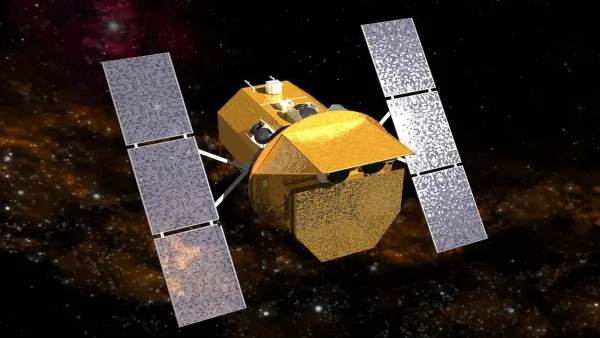
There’s more to it than sentiment. This old hand at tracking the universe’s most violent side – we’re talking gamma ray bursts and stars in their final throes – is still a workhorse. Pulling this off would show that even an older model can be given new life in space, which could change how agencies handle hardware that has seen better days.
What launched and how it will work
It was a bit of a wait with some weather and technical hiccups, but Northrop Grumman finally put Katalyst Space Technologies’ Link into the sky on July 3rd. You could see the Pegasus XL rocket let go from a plane at 40,000 feet over the Pacific, with the whole operation run out of the Marshall Islands.
From here on in, Link is on its own for a while as it makes its way to Swift. It will use three arms to make a connection. There won’t be any hard shoves; the idea is to fire the thrusters in a controlled manner so the orbit is raised without jarring the telescope.
Katalyst is looking to put 150 miles (240 km) between Swift and the ground, more or less where it was when it first left us. We do it by the book to make sure the instruments are in good shape for when the work starts up again.
Why Swift needs saving
You’d think a 2004 launch with a two-year shelf life would be done, but Swift is in fine fettle. It’s the environment that’s the problem. Some recent solar activity has made the upper atmosphere a bit thicker, and that means more drag for anything in a low orbit. Swift is feeling it.
The 1.6-ton (1.4 metric ton) scope is sitting at 224 miles (360 km). Since it can’t give itself a leg up, NASA has put the brakes on observations to hold on to what orbit it has. Left to its own devices, it would have been a crater in the ocean come October.
The timeline and targets
Give it a month and NASA expects Link to have a firm hold on Swift. They’ll be raising the orbit in steps to be safe, with an eye on being back in business by September. Katalyst put this whole thing together in nine months after they were told to get moving.
High risk, high reward
‘This is a high-risk, high-reward mission,’ says Ghonhee Lee, CEO of Katalyst Space. ‘The danger was always that we don’t put anything in the air and let Swift burn up.’
We saw some of that with the launch. A few times we were right on the line because of the weather or some other issue, and you could feel the window for a clean rescue closing as the drag pulled Swift down. We’ve got Link away now. Docking and the burns are up next.
Here is where we stand:
– We need to make contact in a month or so
– 150 miles (240 km) of extra orbit
– Have the science side of things up and running in September
– Or we miss our chance and it’s re-entry in October
A testbed for satellite servicing
Link is here to do more than just one good deed. If it can tie up with an old satellite and nudge it along, you have a template for on-orbit work. Maybe you have to stabilise something with no fuel left, or put an asset where it should be.
Katalyst is using a soft, steady kind of thrust to handle Swift. It’s a way to be kind to the equipment and get a few more years out of it. Make it stick and you might not have to replace as many satellites, and you won’t have as much junk in orbit to deal with.
What comes next
All eyes are on Link for the navigation and the takedown. NASA wants to put the observatory in a spot where it can’t be lost. If we are lucky, we’ll be watching the cosmos for a long time yet.
And there may be more to it. Hubble is also on the slide, and NASA has been open to the idea of a similar kind of intervention in the coming years. A win with Swift makes a strong argument that you can be proactive about it.
Put aside the show of a rocket going off in mid-air and a robot making a grab in space. This is about a shift in how we do things. Why let a perfectly good piece of kit go up in flames when you can give it a hand? For now, the fate of Swift – and maybe some of its peers – is in Link’s hands.