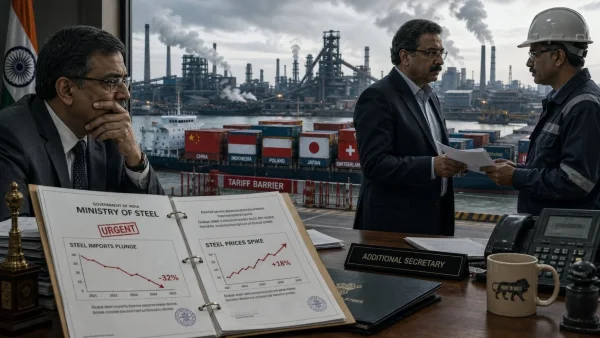
In a move to protect home-grown coke producers, curbs were put in place back in December for a six-month run. The idea was to make room for local suppliers by weaning off cheaper imports. But the ministry says it has had the opposite effect, straining availability and putting a premium on prices for mills that are already working with razor-thin margins.
An office memo from 18th May puts a fine point on it. The ministry notes a marked upturn in prices and a dearth of domestic stock since the duty was imposed. It is calling for a change of tack to take some of the financial pressure off.
To distil the stakes, here are the ministry’s core concerns as outlined in the memorandum:
– Imports have fallen sharply since the duty
– Domestic prices have increased substantially
– Availability in the market is limited
– Steel manufacturers face a significant financial burden
Import dynamics and supply squeeze
India can’t do without this kind of met coke for its blast furnaces, so it has to look abroad to China, Indonesia, Poland, Japan and Switzerland. Since the rules came down, those import numbers have taken a nosedive, as you’d expect. That has left the supply side of the equation for both integrated and secondary steel routes in a bind. Merchant markets can’t keep up with demand at a fair price, which in turn puts more heat on the producers further down the line.
Pressure points across the industry
You can see it in the case of Rashtriya Ispat Nigam Ltd. (RINL). The state-run operation is in the middle of a government-led turnaround, but the memo says it has been hard-pressed to get enough met coke at a sensible rate. RINL’s input bill is up 20%, which chews into any chance of being competitive. For a plant still mending its finances, that’s a risk to output and recovery if things don’t turn around.
Then there are the smaller and mid-sized players who have to buy in from the open market. They have even less of a cushion. The ministry is warning that the domestic scene isn’t providing what they need, leaving them open to the whims of the market.
Strategic implications for steel and trade policy
For a country like India, the second-biggest in the world when it comes to crude steel, you can’t have hiccups in your raw materials. A problem with met coke is felt in everything from how you plan your blast furnace to the final price of the steel.
Sure, the duty was put there to deal with underpriced goods. But the Steel Ministry’s view is that the downside is too great now. A little policy recalibration could bring some of that volatility under control while still having some regard for domestic makers.
Without it, you might see some mills reprice or hold back on production to stay in the running with the rest of the world. Some clarity would let them go about their business of hedging and buying with a bit more surety.
What comes next
The Finance Ministry hasn’t made a move on the proposal yet. We tried to get a word from both sides but didn’t get a reply. In the end, it’s a matter of weighing off trade protection against the needs of industry. Until then, the steel sector is waiting for a sign that will let them put input inflation behind them and get on with the next chapter of growth.