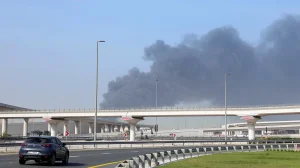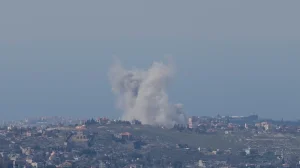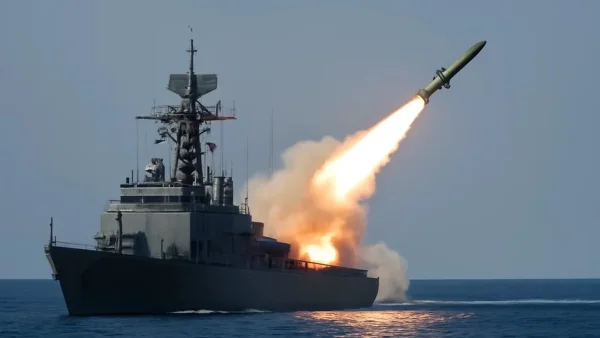
The US base in Bahrain was hit by an Iranian missile on Saturday; this happened during a very unstable time in the Middle East, after the US and Israel did coordinated attacks on Iran. The missile landed at the US Navy’s Fifth Fleet headquarters in Juffair, causing people to be evacuated and emergency warnings to go out throughout Bahrain’s capital, Manama.
Bahraini authorities said the Juffair area – where the US naval headquarters is – had been hit, and told people who lived nearby to leave their neighborhoods as a safety measure. While emergency alarms were going off and smoke could be seen in sections of the city, people were asked to help the teams responding to the situation. Reports using satellites showed the US had moved several ships away from the Bahrain base in the days before the attack, as tensions grew. Video going around the internet showed explosions and the fires that followed, and local authorities said there were more explosions after the first hit.
Regional spread, interceptions and immediate human impact
Beyond Bahrain, explosions and defensive systems being used were reported; blasts were heard in Riyadh, Abu Dhabi and Doha, showing that the whole Gulf area was in danger. Qatar said it stopped two Iranian missiles, and the UAE said its air defenses were activated close to Abu Dhabi.
Officials in the UAE said someone was killed by bits of a missile, and Kuwait’s National Guard said they did not find any increase in the amount of radiation in Kuwait’s air. Al Udeid base in Qatar was in reports, but it doesn’t at the moment have US soldiers who are ready to fight.
Why Oman was spared from the strikes
Oman was a clear exception in the area, and didn’t get hit by missiles like Bahrain, Qatar, the UAE and Kuwait did. People who study these things say Oman has for a long time been a neutral person who tries to help Tehran and Washington talk to each other, and doesn’t let the US have many permanent soldiers ready for battle.
Unlike Bahrain and Qatar, the agreements Oman has with the US about the military are about allowing access and getting supplies, and not about having big attack forces permanently based there. Oman’s ways of talking to people in government – including recent meetings between Omani and US officials – probably made Tehran decide to leave Oman alone.
Military and diplomatic fallout from the US-Israel strikes on Iran
The bigger worsening of the situation came after a new series of attacks by the US and Israel on Iran, which officials said were aimed at Iran’s military power and its nuclear facilities. Leaders said the campaign was needed to get rid of dangers to the area, and this caused Iran to answer through its Islamic Revolutionary Guard Corps.
Tehran’s answering missile launches were aimed at countries which were thought to be helping the attacks directly, especially places linked to US military work. This has made the capitals of Gulf countries have to think again about how their forces are set up, where they send patrols and how to protect the regional bases that help with air and naval work.
Security measures and next steps for regional stability
Gulf countries have raised how alert they are, activated air defenses and done evacuations while watching for more launches. The movements of US soldiers – including moving ships away from Bahrain – show an attempt to lower the chance of being hurt, while still being ready for possible missions.
Using talks is also being done: Oman’s role in helping with talks, and the recent talks in Geneva, have kept a small chance open for discussions, even as fighting started. Right now, people who work on regional security and international partners will look at where missiles are going, what is happening at bases, and what people in government are saying, to work out if the crisis will get better or become even worse.
Keywords: Iranian missile, US Navy base in Bahrain, Fifth Fleet, missile strike, Gulf tensions, regional security.