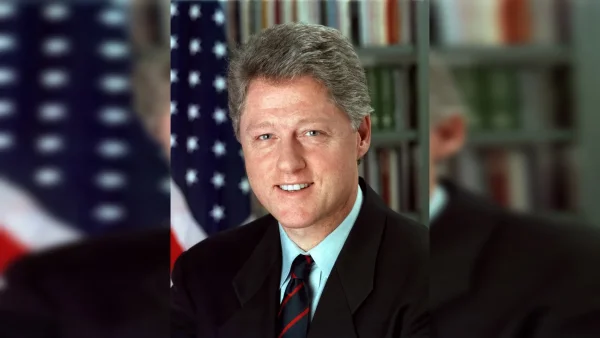
The ex-President told members of Congress that he ‘did nothing wrong’ in his previous relationship with Epstein, as he answered questions for hours in a private deposition in Chappaqua, New York. He said he hadn’t noticed any signs of abuse, and didn’t know anything about Epstein’s crimes.
Clinton’s Denial and First Statement
In a first statement put on social media, Clinton showed his appearance as doing his job as a citizen and being accountable. He made the point that 'no one is above the law‘ and asked for facts to be more important than party loyalty as the House Oversight Committee questioned him about connections from decades ago.
‘I didn’t see anything, and I didn’t do anything wrong,’ he said – and added that if he had known about wrongdoing he would have ended the connection, and given support to legal moves. Clinton also said he would respect his promise to tell the truth, and would not guess, saying that time passing might make it harder to remember what happened.
Clinton gave his support to the people hurt by Epstein, asking for justice and a chance to get better. He described his connection with Epstein as a short acquaintance from years before, and said he stopped contact before the financier admitted guilt in Florida in 2008 for things connected to a victim who was too young.
A Rare Congressional Questioning of a Former President
The meeting was the first time a former president had been made to give evidence to Congress. It was one day after ex-Secretary of State Hillary Clinton had given her own deposition, in which she said she didn’t know about Epstein’s sexual abuse, and didn’t remember meeting him.
Members of the Republican party saw the deposition as a long-delayed looking at the important groups of people linked to Epstein. The head of the Oversight Committee, Rep. James Comer, said people with power had not been made responsible for what they had done for too long. He added that ‘the American people have many questions’, while also saying no accusations of wrongdoing had been made against Clinton.
Members of the Democratic party backed trying to get answers, but also said that the same rules should be used for everyone. They said the move set an example for looking at other well-known relationships with Epstein, showing a wider argument about responsibility in organisations.
Connections Shown in Documents: Flights, Pictures, and White House Visits
Members of Congress questioned Clinton about official and public records which showed he had dealings with Epstein and Ghislaine Maxwell in the late 1990s and early 2000s. Pictures in case files showed Clinton on a plane with a woman passenger whose name had been removed, and in a swimming pool with Maxwell and another person whose name had been removed.
Comer said the committee had proof that Epstein visited the White House 17 times when Clinton was president, and that Clinton flew on Epstein’s plane 27 times. Clinton and Epstein also went on trips to do good work in later years – a point Republicans say needs to be looked at closely.
Clinton went on saying he didn’t know about criminal behaviour at those times. ‘We’re only here as a result of him being so good at keeping it secret for such a long time,’ Clinton stated – and added that by the time Epstein pleaded guilty in 2008, he ‘had already ended his connection with him’.
Timeline and Public Records Being Checked
The period being looked at is the late 1990s and the early 2000s, which was before Epstein was accused of federal sex crimes in 2019 and died in jail in New York from suicide. Maxwell was found guilty of sex trafficking in 2021, and is still fighting the decision.
Clinton hasn’t been accused of a crime. He told members of the committee he won’t guess about things he doesn’t remember after over twenty years, but will answer questions if they match what is in the records – such as flight information and who visited the White House.
Party Differences and Requests for More People to be Held Responsible
Clinton used a bit of his statement to say the committee’s choice to question Hillary Clinton was ‘just not fair’. Republicans said she had sent questions about Epstein to her husband and that what she said in her evidence helped the committee decide what to do next.
The questioning also made the discussion about whether the investigation should be widened more intense. Democrats said the same should happen to President Donald Trump, who also used to know Epstein. ‘President Trump has to face up to it, come before this committee and answer the questions,’ said Robert Garcia, the leading Democrat on the panel.
Comer refused that request, saying Trump had already answered journalists’ questions about Epstein. At the same time, Democrats asked for Commerce Secretary Howard Lutnick to be investigated further, pointing to case details which showed he had been in touch with Epstein after he’d said he’d stopped having contact in 2005.
Republican Nancy Mace asked Hillary Clinton about Lutnick during her questioning. People from both parties showed they might be willing to call him to give evidence to the committee, and some Democrats said they thought there would be enough votes to make him appear using a legal order.
What Happens Next in the Epstein Investigation
The committee is planning to publish a written record and video of Hillary Clinton’s questioning, and might publish Bill Clinton’s evidence after it’s been checked in the usual way. Members of the committee are likely to look at travel details, visitor lists, and messages sent at the time to check what happened and when.
The main things they are looking into are whether anyone in the team checked who Epstein was allowed to see, how trips to give money to charities were arranged, and if signs that something was wrong were ignored. Clinton said he hadn’t seen any wrongdoing and had stopped talking to Epstein years before his guilty plea, but members want a complete, official account of what happened.
Beyond the main news, the questioning brings to light bigger issues about how leaders in government and public organisations deal with things when rich or important people are seriously accused of something. What the committee finds could change the rules in the future about checking who donates money, who is allowed to visit, and what ethical rules there should be in government and private companies.
For those who survived Epstein, and people who support them, the most important thing is that Epstein’s network – and anyone who helped him – are held responsible. Clinton emphasised this in what he said, calling for ‘the truth and fairness’ and promising to help, although he still said he hadn’t seen or done anything wrong. The investigation now moves to looking at evidence, what people say, and official records.