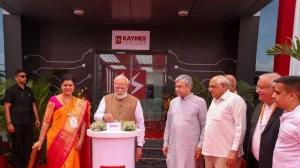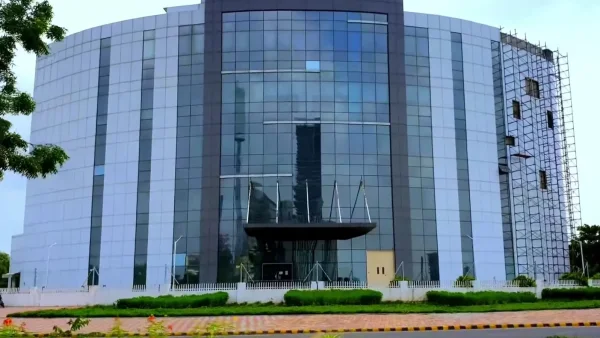
On Saturday, Prime Minister Modi opened Micron Technology’s ATMP – Assembly, Test, Marking and Packaging – facility in Sanand, Gujarat. This is a key step in India becoming a place where advanced memory and storage items are made. The plant has started to produce and send out the first semiconductor memory modules made in India, showing it’s working quickly.
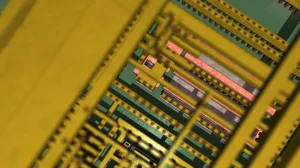
The new unit will turn advanced DRAM and NAND wafers into finished memory and storage. Mr Modi said opening the plant showed how committed India is to leading in technology, and that it makes India’s position in the world semiconductor chain stronger. Ashwini Vaishnaw, a Union Minister, showed how important memory chips are to both everyday consumer electronics, and to industry. The plant will make SSDs, DRAM and NAND – the products that give power to smartphones, servers, data centres and other systems needing high performance.
Facility scale, investment and capabilities
Micron put about Rs 22,516 crore into the Sanand plant – the very first project accepted under the India Semiconductor Mission. Building began after ground was broken in September 2023, and went quickly, to let it start making items for sale early. When fully working, the plant will have about 500,000 square feet of cleanroom, and be one of the biggest raised-floor cleanrooms in the world. The facility is planned to serve world markets, and the increasing need for AI, high-performance computing, and data storage.
Role in India’s semiconductor strategy
The Sanand ATMP plant is a major win for the India Semiconductor Mission, which wants to draw in investment and build up the country’s ability across the whole chip chain. Accepting Micron’s plan set an example for large, export-focused semiconductor projects. The plant now working reinforces India’s place as a good place for making semiconductors, and helps to build up how the supply chain can deal with issues. Making ATMP work in the country adds value here, and cuts down on depending on packaging and testing resources far away.
Economic impact and job creation
The plant now has about 2,000 people working for it, and is expected to make around 5,000 jobs when it is at full scale. As well as direct jobs, the facility will create a need for local suppliers, logistics, training and professional services. By serving markets where things are exported to, the Micron plant can help trade, and encourage more investment in semiconductor areas. Officials in Gujarat have said the Sanand area has the chance to become a world semiconductor centre, because of its infrastructure and policy support.
International collaboration and technology leadership
Officials have shown the project as an example of international work together, mixing American technology skill with Indian manufacturing ability. The US Ambassador said that the plant makes the supply chain more able to deal with problems, and shows the trust between the two democracies. The plant working on DRAM and NAND goes with world trends toward more memory and quicker storage for AI work. Making memory modules in India puts the country in a position to take more part in new markets for artificial intelligence and cloud computing.
Conclusion
Micron’s Sanand ATMP facility is a key addition to India’s semiconductor system, mixing large investment, advanced cleanroom ability and production for export. With commercial shipments starting, the project will test the wider policy aim of making India a strong, high-value part of the world semiconductor supply chain.