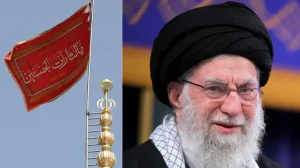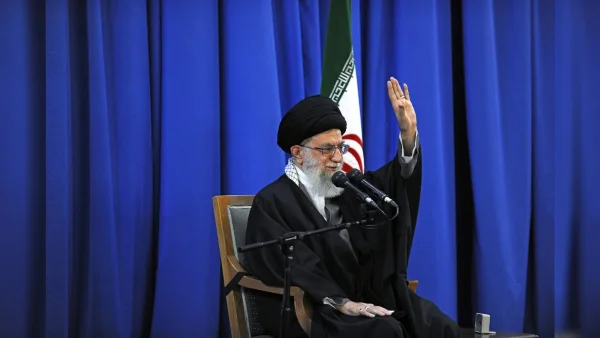
Hours before the announcement, President Donald Trump of the U.S. stated that Khamenei had been killed in a joint U.S.-Israel operation. News from Iran also said that several of Khamenei’s family – a daughter, a son-in-law, a daughter-in-law, and a grandchild – were among those who died in the same attacks.
A leader who remade the Islamic Republic
Khamenei’s death brings to an end a period of rule which changed Iran’s politics, military, and economy, and also made its opposition to the West stronger. It creates a very uncertain situation in Tehran; there is no obvious person to take his place, though strong security groups are signalling that things will continue as they are.
Khamenei took over from Ayatollah Ruhollah Khomeini in 1989, and for over thirty years worked to create a country where the difference between religion and government was unclear. He made the Shiite religious community bigger, and put all decisions in the hands of his office.
The Islamic Revolutionary Guard Corps – the IRGC – became the most important part of his system. Under Khamenei, it grew into a strong group with power over the army, intelligence, and large businesses. It built up a large supply of ballistic missiles, and also became involved in building, energy, and banking.
Khamenei’s administration used groups working alongside the government and appointed committees which reduced the power of those who were elected. Presidents were in and out of office, but the supreme leader always had the final say in both what happened inside Iran, and in its dealings with other countries. People who supported him saw him as protecting the revolution; those who opposed him thought of him as the person responsible for a country that suppressed people.
Domestic dissent and the security state
Many large protests challenged his rule. In the late 1990s, people who wanted reform became powerful, so Khamenei stopped attempts to make media laws less strict, and to make politics more open. The crisis after the 2009 election led to mass protests, and a crackdown by the IRGC, the Basij volunteer militia, and the police.
Problems with the economy caused protests in 2017 and 2019, as sanctions became tighter – and once again, security forces responded with violence. The death of Mahsa Amini in 2022, while in the custody of the morality police, caused a national revolt against the rules which made women wear the hijab, and against the wider controls on society.
By the beginning of 2025, anger at inflation, shortages, and repression had grown into some of the biggest protests since 1979. Reports from people who defended rights, and from witnesses, described the most deadly response from security forces for decades, with thousands of people killed in several periods of unrest.
From revolutionary cleric to supreme leader
Born in 1939 in the holy city of Mashhad, Khamenei studied in Qom, and joined the fight against the shah – who was supported by the West. He was put in prison, went to ground, and became important in the revolutionary movement which overthrew the monarchy in 1979.
After the revolution, he helped to create the IRGC, and was president in the 1980s. In 1981, an attempt to kill him left his right arm unable to move. When Khomeini died, Khamenei rose quickly from a mid-ranking religious position to the highest religious authority in the country’s law – a move which was criticised by senior religious scholars.
He admitted he had doubts about his qualifications when he started in the job, but over time he gained power. He made the country stable after the Iran-Iraq war, made hard-line control of key organisations stronger, and put himself above political groups.
A regional strategy built on proxies and missiles
Khamenei changed Iran’s defence and foreign policy to be based on unequal power. Rather than fighting wars directly, he supported allies – groups that weren’t governments – all over the Middle East. Hezbollah in Lebanon was the first model for this, using both political power and military force against Israel.
Iran then used the same idea with the Houthi group in Yemen, and with several militias in Iraq and Syria. The Quds Force of the IRGC – Iran’s Revolutionary Guard – planned the training, the weapons, and the money, all to help Iran’s goals from the Levant area to the Red Sea.
The situation in the area changed after the Hamas attack of October 7th, 2023, and the war in Gaza that followed. Israel began attacking groups linked to Iran more often. In 2024, Israel and Iran actually fired on each other directly, going past limits that had been respected for a long time. Then, in June 2025, attacks on Iranian nuclear plants – and the deaths of important Iranian officers and scientists – led to Iran firing missiles and drones at Israel.
During this time, Iran’s network of allies began to have trouble. Important people in those groups were killed, the groups lost battles, and leaders died, all of which made the groups weaker. Late in 2024, rebels took Damascus, ending the Assad family’s control – a serious setback for Tehran’s long effort in the Syrian war.
Getting close to nuclear weapons, and years of being punished with sanctions
Khamenei didn’t trust the United States, and frequently called it the ‘Great Satan’. He allowed Iran to enrich uranium, but said out loud that nuclear weapons were against Islam. The 2015 nuclear deal limited Iran’s nuclear work in return for an easing of the sanctions, but the U.S. left the deal in 2018, which ruined it.
From the 2015 deal to almost having enough uranium for weapons
Iran slowly broke the limits of the deal, enriching uranium to 60% purity. Talks with other countries failed because of the sanctions and problems within Iran. The death of IRGC General Qassem Soleimani in 2020 almost brought the two countries to a full war. Soon after, Iran’s air defenses shot down a Ukrainian plane, killing everyone on board and causing unusual public anger.
By 2025, with sanctions hurting the country and protests growing, Tehran was in talks with others – though not directly – even as it got closer to being able to make uranium for weapons. Events sped up with new threats from the U.S., attacks on Iran’s nuclear sites, and a growing secret war.
These things were the situation during Khamenei’s last months. He wanted to gain power through enrichment of uranium and by using his allies, all while keeping control of the government at home. The result was a dangerous mix of economic trouble, being alone on the world stage, and frequent times when things almost went too far.
Who will be next, where power is, and what will happen
Khamenei's death starts a private process to choose who comes next. The 88 members of the Assembly of Experts – a group of clerics – must pick the next supreme leader. There is no clear person to take his place, and disagreements between groups have been going on for a long time.
For the time being, the IRGC and the security services will likely be the ones to make the important choices. What they have done in the past shows they will mostly want to keep the system in place and show they are strong. Senior people in the government have said that those who caused Khamenei's death will be badly punished, showing they will take a hard line.
Trump told Iranians to 'take back your government‘ and asked security forces to join the protesters. It is not known if these requests will change what the people in power in Tehran do, especially with so many arrests and security forces being sent out.
For most Iranians, everyday life is about rising prices, not having jobs, and not being allowed to say what they think. People who disagree with the government have said the state is without culture and doesn’t respond to the people. But the system Khamenei built is still strong, with many parts designed to last longer than any one leader.
The world’s trading centers and countries in the area are preparing for problems to come. Iran has a lot of oil, important sea routes are now more at risk, and a larger war could stop trade. Any deal about who will be next that seems secret or forced could cause more trouble inside Iran.
Khamenei is leaving behind a clear history: a religious state made strong by a powerful military, a plan for the area that uses allies and missiles, and a nuclear program that is still at the center of Iran’s fight with the West. His death ends a long period, but it does not solve the struggle about what Iran will be in the future.