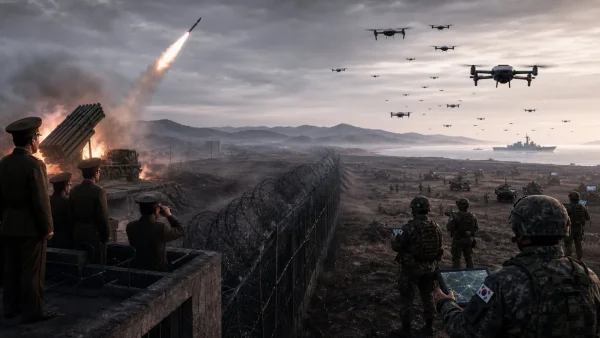
Seoul put an end to any ambiguity with an ambitious plan for more drones just a day after Kim Jong Un was in charge of some new tests. Put it all together and you have a story of escalation that is as much about politics as it is operations.
According to state media in Pyongyang, the trials were held on June 25, 2026 – they made the report on the 26th. KCNA has it down as part of an effort to bring the country’s forces up to date, while Kim is in no mood for a return to the negotiating table and wants a harder line on the offensive side.
Pyongyang’s tests target the southern front
KCNA makes a point of saying the exercises show they are well on their way to altering the fire posture along the southern border. It’s a message to anyone in South Korea, even at US bases, that you are in their crosshairs. Kim wants an 'offensive posture‘ that is, in his words, deadly and destructive enough to put off any opposition.
They are touting a warhead for a tactical ballistic missile built for ‘special missions’. The idea, per KCNA, is to do in airfields, ports and power plants. They also ran some numbers on how accurate a 155-mm self-propelled howitzer can be with its longer-range shells.
Then there is the 240-mm multiple rocket launcher, now with 24 tubes and an autonomous guidance system that lets it hit targets 90 kilometres (56 miles) out. Kim was pleased with what he saw and put a premium on things like automation and ‘ultra-precision’.
Seoul doubles down on drones
It didn’t take long for the Defence Ministry in South Korea to come back with a plan of its own, hours after the KCNA story. With threats on the rise and what they see as Russian tech making its way to the North, officials are calling this a quick fix for the kind of warfare we’re seeing today.
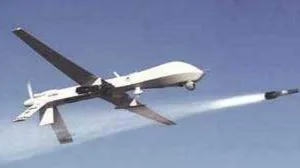
The plan is to get some 20,000 or so of the cheaper recon and attack drones and to make every one of the 500,000 in the armed forces a 'drone warrior‘ who can handle an unmanned system as easily as a rifle. They will also be building out long-range drones with a bit more oomph.
Ahn Gyu-back, the Defence Minister, says you have to be on the ball. He sees the value in low-cost loitering munitions and points to Russia’s war in Ukraine as a textbook example. You have to consider the fact that thousands of North Koreans have been in the field with the Russians, too, and how that is changing the way battles are won.
Arms build-up amid frozen diplomacy
Ever since the high-level talks with the U.S. fell through in 2019, Kim has been upping the ante on both nuclear and conventional fronts. Back in May they let us know they had put a range of missiles and AI-guided cruise types through their paces.
It’s not just on the ground anymore. The 5,000-ton destroyer Choe Hyon was put into service on Tuesday, which Kim is holding up as proof of what the navy can do. And with ties to Russia only getting stronger and a visit from Xi Jinping earlier in the month, the region is in flux.
What to watch next
Here is where you can tell if the standoff is going to go further:
– More of those tactical missile runs close to the line
– The 20,000-plus drones coming in hot
– 500,000 troops being put through their paces as drone operators
– Any evidence of Russian hardware in the North
– A door opening for some sort of dialogue in the wake of the testing
Rising risks, narrowing options
'To make the enemies feel constant uneasiness and fear is just an important aspect of the exercise of war deterrent,’ is how Kim put it in a KCNA piece. With Seoul and Pyongyang each vowing to put more muscle near the border, the hardening of attitudes is plain to see.
In the end, it’s an arms race that is quicker and less expensive, but no less volatile. Every move meant to keep the other side in check could also mean you have less time to think in a crisis. That is the reality for policymakers in both capitals right now.