A number of high courts are coming off their summer break next week, so the Centre has been in a hurry to get before the top court. It is asking to be the forum for every challenge to the 2026 Act. They don’t want to see a patchwork of rulings on transgender rights, so they are putting the matter in the hands of the apex court to be dealt with as a whole.
Government makes the case for a single hearing
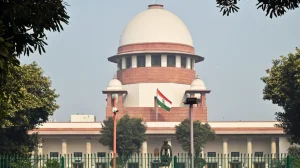
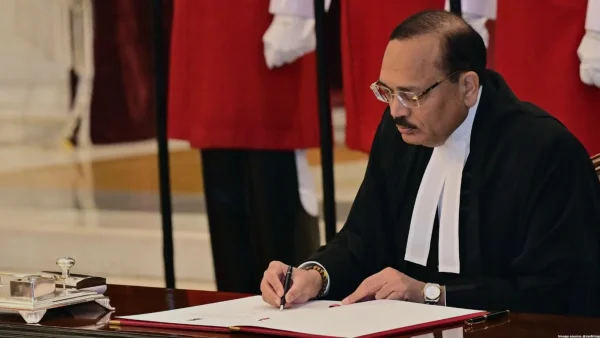
Tushar Mehta, the Solicitor General, put the matter before a bench with CJI Surya Kant and Justice Joymalya Bagchi. He said the transfer petitions are in to have the 2026 Amendment cases moved up to the Supreme Court. The Centre is also after an urgent listing for this Friday, May 29.
Mehta’s point is that several high courts have the issue in hand already. Once they are back in session in the first week of June, he says you could end up with ‘divergent views’ if they go ahead on their own. A quick hearing would let the Union tell the high courts to hold off for now.
There is also the calendar to consider. The government has put forward that the Supreme Court won’t be in full swing in June, which means there is a good chance a provincial court will get to it first and start issuing interim orders.
In short, here is what the Centre is after and why:
– To have all the high court cases on the 2026 Amendment transferred here
– To be on the docket for the 29th of May
– To make sure we don’t see different takes from different courts
– To have the high courts put their proceedings on ice
Bench sees merit in what the high courts have to say
The CJI was a little more measured. ‘We can have the benefit of a high court’s view at times,’ he put it, as in, a bit of first-hand constitutional review can be useful in nailing down a final position. When the Solicitor General made his pitch again, the CJI’s response was, ‘I will see’.
This isn’t the first time the bench has had to look at it. We’ve had some activity on this front this month, including a formal notice to the Centre on some direct challenges to the 2026 law. What we are looking at on Friday is a way to put the old and the new under one roof.
The 2026 Amendment: what’s different
You can trace the row back to the fact that the right to self-identify your gender is gone. The 2014 NALSA judgment from the Supreme Court made that clear, but Section 3 of the 2026 Act has done away with it.
Now, before a District Magistrate will sign off on a person as transgender, a medical board put in by the government has to be in favour of it. Those bringing the case call it gatekeeping – be it medical or administrative – and say it is an overreach into a person’s dignity and autonomy.
The Union has its side of the story: the law is there to make sure people who need help get it, and it has made a point of the fact that you can’t be forced into a sex change. But the petitioners say the 2026 changes have upended lives by calling a halt to therapies and treatments in mid-stream.
How the petitioners see it
Laxminarayan Tripathi and others have built their case on the constitution. In their eyes, the 2026 version throws out the notion of an identity you choose for yourself and puts the state in the driver’s seat.
They are on record with these points:
– The 2014 right to self-identity is no more
– You have to go through a medical board, which is a form of ‘gatekeeping’
– Ongoing treatment is being put in jeopardy
– Identity is now something the State decides, not you
Why this is a live issue
It comes down to what happens in the near term. Put the cases in the Supreme Court and you may have a precedent that puts to rest the big questions on recognition and healthcare. Let the high courts have at it and you could have a very different set of rights depending on where you are in the country.
For the ones in the dock, a consolidated case would make for some clarity on protections, particularly when it comes to pending certifications or put-on-hold therapies. For the Union, it is about keeping the 2026 Act from being interpreted in too many ways.
All of it hinges on Friday. The Centre is after a hearing on the 29th. The CJI has left us with a ‘will see’, so we are waiting to see how the court will rule on a procedure that will have far-reaching effects.