You could call it a tech upgrade for the country’s food safety net. The Cabinet has given the nod to the Sarthak Public Distribution System, a way of overhauling how rations are put in front of some 80 crore people with the help of data and AI. In the words of officials, it is meant to put an end to the kind of delays and headaches that have been part and parcel of the PDS for too long.
Why the Sarthak PDS push matters now
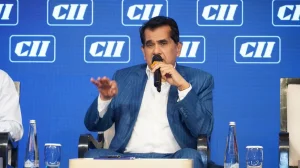
It is in step with a broader move toward welfare that is driven by technology, where being able to target precisely and close out complaints quickly is just as important as having the grain on hand. Ashwini Vaishnaw, the Information and Broadcasting Minister, put it this way: we are not here to do away with the PDS, but to give its logistics and last-mile delivery a good housekeeping.
The May 27, 2026 decision from the Cabinet is about getting more out of transport and monitoring. The Centre is also tying it to a more climate-aware way of governing; the Prime Minister made sure to put the matter of swift climate changes on the table during the session.
What the scheme changes on the ground
We are looking at a 15-50% drop in the miles put in to move food grains. That one thing can mean lower costs, less of a clog on the roads and better stock at the shop, particularly in areas where you have had to go round about to get what you need.
Under one roof, the government will be backing intra-state movement, shoring up fair price shops and bringing the supply chain up to date. For the states, it should mean a more even-handed allocation and the ability to see and fix problems in the chain without much fuss.
AI layers built into delivery
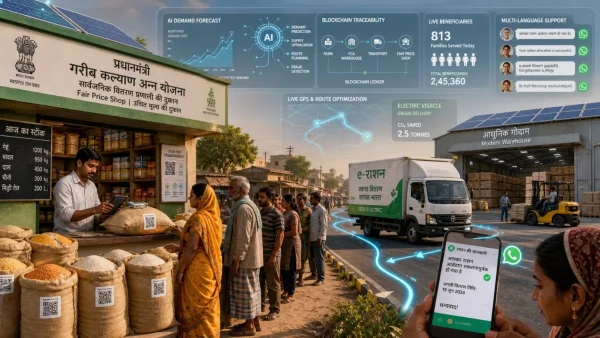
First up are the points of contact with the citizen. There will be a multilingual system for grievances, tied in with WhatsApp and a chatbot, to deal with as many as three lakh a day so that issues and feedback don’t sit around.
Then there is the logistics side. An AI platform will be put in place for vehicle tracking, demand forecasting and QR-code traceability. The idea is to have your consignments on a wiser route, while the QR codes give you a line of sight from the shop to the depot to keep any diversion in check.
In the middle of it all is a beneficiary registry powered by AI and real-time data. By putting the books in order across different schemes, the Centre is after a no-nonsense approach to entitlements with less room for duplication.
Funding, timelines and integration
Some numbers came out on Wednesday to show the scale of it. Vaishnaw spoke of a Rs 25,000-crore tag for the approved scheme, while a formal statement from the government puts the five-year outlay at Rs 25,530 crore, running through to March 2031.
Sarthak-PDS is a combination of two things already in motion: the assistance for moving foodgrains within a state and the NFSA margin for FPS dealers, plus the SMART PDS for modernisation. All to put some heft behind the National Food Security Act of 2013.
The CCEA has put in place new rules for how the Centre will assist States and UTs with their transport and handling, as well as dealer margins. But the old way of funding will stay for now.
This is what was put on the record on Wednesday:
– We are talking logistics, not a PDS replacement
– A more direct line for the states’ supply chains
– Services for the public that are in their language and AI-backed
Governance trend and beneficiary base
There is a reliance on AI, ML and Blockchain in Sarthak-PDS to make sure everything is open to audit. It is the next chapter in ten years of going digital, from e-PoS and Aadhaar cards to apps like Mera Ration.
Roughly 80 crore are in the offing to be helped. The government has said it will be working to meet the needs of the 81.35 crore under the NFSA, which gives you an idea of the scope and the rules of the road for the rollout.
What to watch next
It will come down to how it is put in practice: whether the data holds up, if the grievance system can take the heat when it is busy, and if the new routing actually means fewer empty shelves at the fair price shop.
The Centre sees it in three ways: engaging the citizen, seeing the supply chain and vouching for the beneficiary. Get those right and the ration system in India will be something you can count on, and not so easy to work around.
For the person on the receiving end, it is about a simpler time with less haggling and a clear view of what is due to them. For the states, it is cost and control. And for the system as a whole, we will have to see if the AI and the tracking can make a dent in the old problems of leakage and hold-ups.