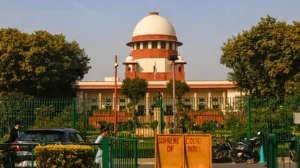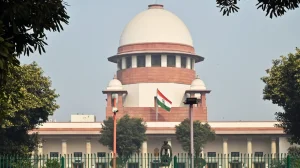
Wednesday’s session was no different: the top court pressed for celerity in the prosecutions and told officials to come back with an update. It was also firm on one thing – that victims should be represented by lawyers who know their way around the Manipuri language. The court has signalled it will be keeping a close eye on how these proceedings are handled at the next hearing.
Law and order and looking after victims
For a bench of CJI Surya Kant and Justice Joymalya Bagchi, what matters most is the faith victims have in the system. They have asked the CBI and others to see to it that there is proper legal help for the survivors and to put in place some ‘confidence-building measures’.
The bench made it clear that the day’s business was about legal aid for the families. “We won’t be wading into other matters right now,” was the tenor of the comments, but they did want a progress report before we reconvene on this file.
For its part, the court has made its wishes clear:
– Get the trials under way
– Have a status report ready for the next hearing
– Make sure victims have legal aid in their own language
– Do what is needed to build some confidence
Where the cases stand now
In putting out its orders, the court had to take note of what was put before it on the speed of the work. While some cases have been set in motion, the overall docket is still a heavy and somewhat disjointed one across the board.
Bail order under scrutiny and the liberty question
All of this comes as the CBI is trying to overturn a bail order from the Gauhati High Court in a matter with two accused, Arun Khundongbam and Nameirakpam Kiran Meitei. The charge is that they not only gangraped the women but paraded them in their underclothes as well.
It was on September 8, 2025, that the Gauhati High Court let the pair go. Their reasoning was simple: you can’t hold someone for two years without framing a charge. “The accusations are shocking, yes, but we can’t have it that detention without trial is tantamount to pretrial punishment. That’s not in the law,” the High Court said.
The CBI is after the cancellation of that bail, given the nature of the allegations. Nizam Pasha, an advocate for some of the victims, put a fine point on the difference between what was noted on May 9, 2025, about the heinousness of the crime and the later decision to grant bail over a delay.
The Supreme Court’s view on the matter is that when you’re talking about liberty, you need an ‘egregious’ reason to cancel bail. “Our job is to get to the truth,” the bench said, and it will look at what kind of rehabilitation is in order.
By the numbers
You can see the size of the task and how uneven it is from the numbers on the table. The CBI has put in 20 chargesheets and 16 of those have seen the start of a trial, according to the bench.
If you want to get a sense of where things stand:
– 207 chargesheets (SIT)
– 400+ accused (SIT)
– 20 chargesheets (CBI)
– 16 CBI cases in trial
Then you have the Special Investigation Team, whose figures tell a wider story of the prosecutions. The SIT’s numbers tell the story of how far this has gone: in 207 cases, chargesheets have been put before the court for over 400 accused. You can see why the bench is making a point of moving things along – there’s a gap between when a case is filed and when it actually gets to trial. So the court has been on top of the agencies, making sure that having a lawyer doesn’t slow down the process and that survivors have a real voice in it.
The judges were also mindful of what is happening on the ground. They pointed to a report from ex-IPS Dattatray Padsalgikar which put the state’s law and order in ‘precarious’ terms on April 7 and 18, with the police stretched thin and violence in the offing.
With that in mind, the bench has been insistent on providing some structure for the survivors. In a place as divided as this is, you can’t let the victims’ faith in the system be eroded by a lack of communication or red tape. It’s an extension of what the apex court said back in March about the state legal services authority putting counsel in place for them; now we are tying that to a faster pace in the courtroom.
What has led us here
It all started on May 3, 2025, with ethnic unrest in Manipur. A ‘Tribal Solidarity March’ in the hills was held in opposition to the Meitei community’s push for ST status, and the violence that followed left more than 260 dead and uprooted thousands, the court has been told.
The Supreme Court got involved in July 2023 of its own accord, after a video of an assault went viral and riled up the country. There had been some friction before then too, over Kuki villagers being moved off reserve forest land.
Then in August of that year, the Centre set up the Justice Gita Mittal Commission to handle relief and rehabilitation at the behest of the state government. The fact that they’ve been given until the end of July to see it through shows the work is not done.
The idea is to turn those papers into some movement in the dock. The court has given the agencies a timetable, but hasn’t made up its mind on any one bail application yet.
So it will be interesting to see what the next status report says, and if the police and prosecutors can keep the trials going in the kind of conditions we saw in April. For the survivors, Wednesday’s orders are something to hold on to – they put speed and support in the same room. And for the rest of us, it’s a case in point: you can’t have accountability without a trial that is both fair and on time.