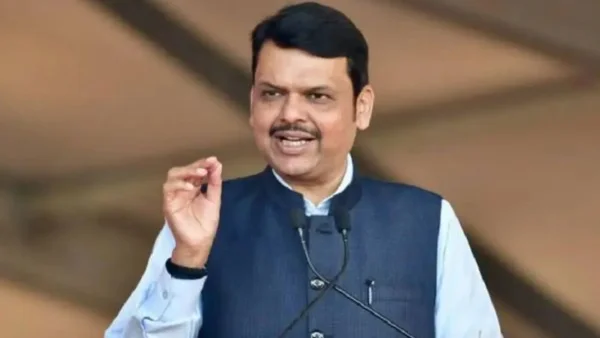
You could call it a governance reset. On June 9, 2026, the Cabinet, with Chief Minister Devendra Fadnavis in the chair, gave the green light to a plan that puts higher ed, tax and industry reforms under one roof to get things moving. That means 10 more departments to handle the load.
It’s not just here; you see states across India retooling to deal with complicated portfolios. In Maharashtra’s case, the idea is to break up some of the more congested clusters into leaner, single-purpose units. As per the General Administration Department, there won’t be any new jobs on offer. They are simply shuffling the work around to clear the decks and avoid bottlenecks.
Why the expansion matters
Put too many unconnected files in one office and you get policy gridlock and clashing priorities. Carving out these departments is about having a straight line of accountability and a quicker way to get a decision made when it counts.
For the people and the companies that have to deal with the state, it should mean less time in a loop between departments and a better sense of when something will be done. The message is simple: a narrower job description leads to a cleaner job well done.
What exactly changes
The big number is 43, up from 33. We are looking at 13 ministerial departments being reworked. Some of the sub-divisions that have been operating as part of a larger whole will now be their own thing, with their own mandate to follow.
And no, the state has put to rest any talk of hiring. What was once lumped together in a multi-sector department is being doled out so the new units can be more focused and process what comes in with a bit more alacrity.
Here is what was put to paper in the meeting:
– A way to let MIDC borrow more, by ordinance and otherwise.
– Some housekeeping with the Maharashtra Public Universities Act of 2016.
– The 33-to-43 department increase.
– 13 departments to be reorganised.
– Making sure our GST Act of 2017 doesn’t diverge from the Centre’s.
– Nod to the 2026 Amendment Bill for the Goods and Services Tax.
– All put forward by the General Administration Department.
– And a firm word that no new posts are coming.
Reforms beyond bureaucracy
The Cabinet didn’t stop at the admin side of things. There were also moves to build up capacity in education. With the 2016 University Act being amended, officials say they can be more efficient in giving the final say on new colleges or when an institution wants to put in a new faculty or course.
It’s about making sure you have the talent to meet the demand. If you take the friction out of the approval process, universities can be more in tune with what the industry and the students want.
Tax law alignment
Then there is the matter of taxes. The Cabinet has seen fit to amend the 2017 Maharashtra GST Act to mirror the Central version. They also approved the 2026 Bill to that end.
When you are in business, you don’t like ambiguity. This makes for a level playing field with other states and lets the government sync up with national standards on enforcement.
Industrial push via MIDC
We’ve given a leg-up to industry financing as well. An ordinance and some changes to the 1961 Industrial Development Act mean the MIDC can now put its hand in the till for more borrowing power.
According to those in the know, this is to put some extra fuel in the tank for development. When you have a surge of interest from investors, you want to be able to put the land and the infrastructure in place without missing a beat.
What to watch next
Well, we’ll see if it works. Now that the sub-divisions are on their own, the proof will be in the turnaround times for your average approval or industrial project.
With the CM’s secretariat putting out the word after a session led by Fadnavis, the intent is plain. Maharashtra is going to rely on a simpler structure and better access to capital to make an impact, and they’re doing it without the need for more staff.