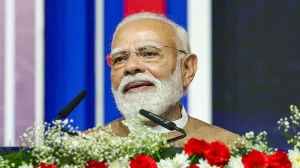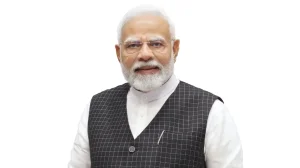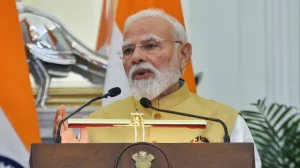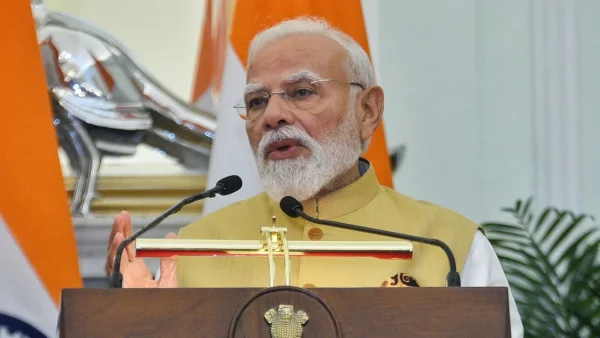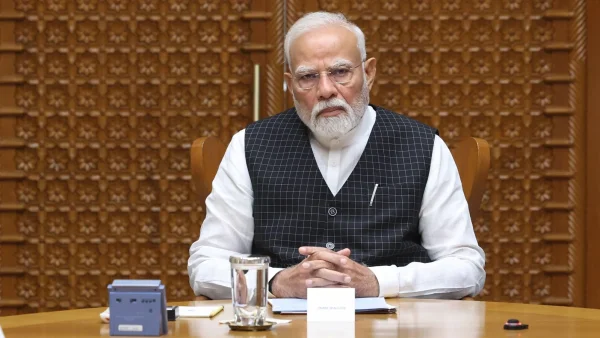
Speaking at a political meeting in Thiruvalla, Kerala on Thursday, Modi stated that the talk about the South losing seats is completely untrue. Parliament will make sure that Kerala, Tamil Nadu, Karnataka, Andhra Pradesh, Telangana, and Goa are protected. He explained that states shouldn’t be penalized with fewer seats in Parliament just because they’ve done a good job of managing their population size.
Modi described this plan as both fair and looking toward the future. Increasing the total number of seats will allow for a fairer balance of representation. This message is aimed at a region that has worried for a long time that redrawing voting areas (delimitation) might shift political power away from states where the population isn’t growing as quickly.
Parliament to Reconvene for Women’s Reservation and Seat Expansion
Both parts of Parliament will meet again from April 16th to 18th to work on the laws needed for women’s reservation and to increase the number of seats. The government wants to raise the number of Lok Sabha seats from 543 to 816, so they can have a 33% quota for women without reducing the number of seats any state currently has. This is because of a population change.
The Prime Minister connected this plan to the Nari Shakti Vandan Act, and said the goal is for women to have 33% of the seats in Parliament from 2029 onwards. He wants all political parties to support this, and thinks of it as a major, lasting change to the system, not just a quick political move.
Why Seat Expansion Matters for Representation
Making Parliament bigger allows politicians to include a quota for women while keeping the current areas (constituencies) the same. Adding seats will also lessen the impact of recalculations of seats based on population, which might cause some states to lose out. It will also create more new voting areas and give a wider range of people the chance to run for office.
People who support the increase to the number of Lok Sabha members say a larger Lok Sabha would be a better representation of how diverse and rapidly changing India is. They also say carefully planning the expansion to protect states with stable populations will be fair and won’t result in a situation where one state wins and another loses.
Opposition Concerns and the Delimitation Debate
The Congress party has been questioning the BJP (Modi’s party) about how the voting areas will be redrawn, and are worried that the Southern states could be at a disadvantage if the number of seats each state gets is too strongly tied to recent population figures. Congress leaders say states that have controlled population growth shouldn’t be punished with fewer seats, and this is a very important issue that needs to be examined thoroughly.
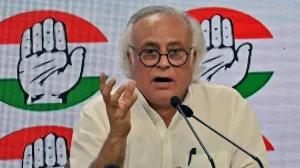
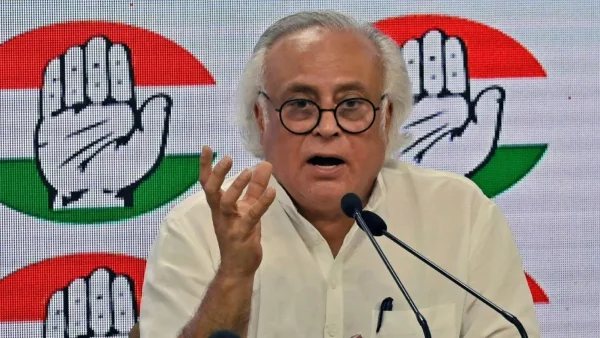
Jairam Ramesh, a leader from the Congress party, said the government wants to increase the size of the Lok Sabha by about half and also increase each state’s number of seats by about the same amount. He warned that even if the percentages don’t change right away, a bigger difference in the number of seats between states that are growing quickly and those that aren’t, could put the South at a disadvantage in the future.
Balancing Equity, Population, and Federal Priorities
How Parliament decides to expand and redraw the voting areas will determine what happens next. Lawmakers can create rules to prevent areas with slow population growth from losing seats, while still following the rule of representing people based on population.
People who study politics say a clear and open way of calculating the changes, a definite timeline for when things will happen, and agreement between the different parties will be essential. Making sure states don’t feel unfairly treated could decrease disagreements and keep a good relationship between the national government and the states, especially as the plan for women's reservation is put into action.
Women’s Empowerment as a Political and Policy Priority
Modi presented this plan as part of a larger effort to empower women, and mentioned things the government has already done like building toilets in homes, opening basic bank accounts (Jan Dhan accounts), and officially registering homes in women’s names. He also said a lot of the new business owners who are getting loans from Mudra are women, and the Lakhpati Didi campaign is making progress.
This focus on women as leaders fits with the 33% quota for women in the Lok Sabha and in the legislative assemblies (state parliaments). By connecting the expansion of seats to the number of women in government, the government hopes to get support from the public and show they are committed to growth that includes everyone.
What to Watch Next
Now, all attention is on the Parliament session from April 16th to 18th. The government is expected to present the plans for increasing seats and the roadmap for women's reservation. Important questions are how the states will be protected, exactly how the seats will be added, and when the 2029 goal will be reached.
If Parliament can agree on a fair and clear way to do this, India could have the biggest change to its lower house of Parliament in many years. The result will affect how the country is represented, how voting areas will be redrawn in the future, and will show if the political system can balance fairness, the relationship between the states and the center, and positive change.