The foundations are there, but you can’t run a sprint just yet. According to Wilson, who is also MD, the kind of snags you get from suppliers and makers have put a damper on the kind of product and fleet improvements the airline was looking to make, right when the Indian market is at a pivotal point.
Leadership handover and strategy
Wilson is out later this year, and he sees it as a good time to make the change from building to running. He’s had a ‘fantastic’ and ‘incredible’ run, he says, having overseen a reset in everything from the brand to the mergers that will see the airline into its next chapter.
At 54, he is done with the day-to-day of an executive job and will be more of an advisor or lecturer, putting 30 years of experience in turnarounds and M&A to use. He came on board in May 2022 after his time with Scoot and will stick around until a replacement is found; a committee at Air India is on the case.
Delays that clipped momentum
It’s been a letdown, in Wilson’s view, that the manufacturers and their ilk haven’t come through on their word. “It was a shame that the aircraft that Air India had ordered were not delivered on schedule,” he put it, which has had a real effect on how we grow and what we can offer our customers.
Then you have the supply side of things – like getting the right seats for the premium cabin – and you’re looking at a two-year delay on the retrofits for the wide-bodies. If the new metal had come in and the work was done as per contract, we’d be further along, but it was out of our hands.
In short, the hold-up has limited us in a few ways:
– We can’t put as much capacity out there
– Upgrades to the top end of the cabin are on the back burner
– Modernising the fleet has taken longer than planned
Scale, fleet and timelines
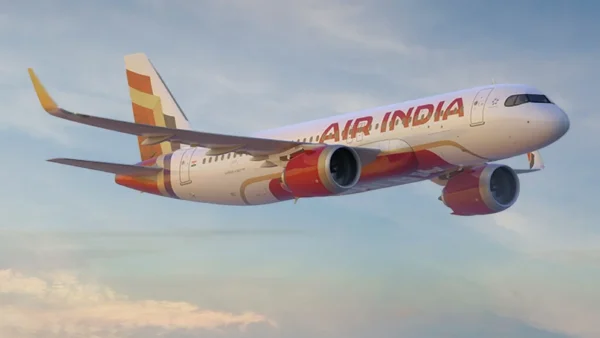
Put all that aside and you have an expansion on the horizon. Wilson is counting on the bulk of the 670 planes on the books to be delivered once the supply lines open up. The Air India Group – that’s us and Air India Express – has over 300 in the air now.
Right now we have 184. That’s 34 787s, 6 A350s and 19 777-300 ERs, plus a couple of new 787-9s we’ve put in the mix. You’ll see the 777-300 ERs start to get the treatment in mid-2027, so the cabins and the new capacity line up.
Why the timing matters
We were made private in January 2022 and are in the thick of a re-do with the Tatas and Singapore Airlines. Wilson points to the way we’ve put the four airlines together, changed the brand and worked on the product to win back some trust.
But it hasn’t been smooth. You have the loss of 260 in the Dreamliner crash in June 2025, the Pakistan no-fly zone and costs going up. All of that makes it even more important to have your deliveries and windows for work where you expect them to be.
What to watch next
For Wilson, it’s about the push to expand, with most of that 670 plane pipeline coming in. The test will be how fast we can go from standing still to putting capacity down, finishing off the retrofits and making good on the rebrand.
There are two big ones for the stakeholders: find a new head of the airline and make sure the parts and planes are on time. They will determine the speed of our transformation. As for me, I won’t be in another top job. I’d rather be in a position to guide the ones coming up.