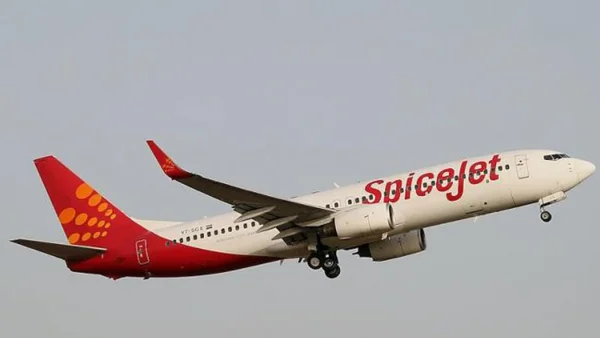
You can see the strain in the cockpit: with salaries in arrears since March, pilots have been riled up even as the company makes a run for a state-backed line of credit. Not long ago they were a force to be reckoned with; now they’re having to hold their ground against stiffer competition while trying to get a handle on operations.
Funding bid signals urgent stabilisation push
According to SpiceJet, they are in the process of putting together some financing through the Emergency Credit Line Guarantee Scheme to make ends meet. That would give them access to as much as 15 billion rupees ($156.74 million) in seven-year loans with the government standing behind them.
External shocks and long-running constraints
“All efforts are being made to achieve normalcy,” the airline put it in a statement, though they also point to “extraneous factors” like what’s going on in the Middle East as the reason for the pressure on their books. They figure things will even out in the coming months.
Pilot pay delays deepen workforce strain
I’ve seen some internal correspondence that shows a lot of pilots have been waiting for their checks for a good few months. There are 375 of them on the roster as of March, if you ask the pilots or look at a WhatsApp group of over 180 of them.
Then on May 26, Virendra Malhotra, the SVP of flight ops, put out a word to the effect that he knew the late disbursements were hard to take, but the rest of the February tab would be settled soon. “These are testing times, no doubt, but they are temporary,” he was quoted as saying.
Malhotra has since put the record straight: “I categorically deny having issued any such communication.” But the airline won’t put up a fight about the fact of the matter. “Employee payments continue to be disbursed in a phased manner… and a majority of employees have already been paid for March,” they said.
The personal side of it comes through in the WhatsApps I’ve come across. One pilot put it bluntly: it’s “really really challenging” to make ends meet and some have had to put out feelers for help. The post got 52 reactions, a mix of likes and hearts.
As for the aviation regulator in India, they had nothing to say when we asked if the salary hiccups might be a safety issue.
Capacity resets and fleet moves amid demand
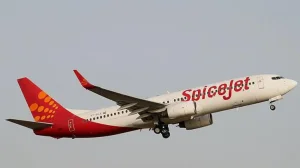
Word from SpiceJet is that a Boeing 737 MAX is back in the air with customers.
On top of that, it has put the finishing touches on a lease for three Airbus A320s and some of the crew to go with them. They’re due in July to keep up with the numbers.
Still, you can see the squeeze in the short term. OAG, an aviation data firm, puts scheduled flights at 3,053 in May, down from 4,494 back in January. The airline is running with 21 planes in its operational roster for now.
The figures tell you where SpiceJet stands at the moment:
– Up to 15 billion rupees ($156.74 million) in loan availability
– 21 planes in the active fleet
– 3,053 flights on the books for May
– 4,494 in January
– A 60% slide in stock value so far this year
– 3.4% of the market (you could say 15% back in 2019)
Market standing: from contender to catch-up
Back in 2019, SpiceJet was the second-biggest name in Indian domestic air travel, with about 15% of the passengers. Today it’s in fourth place with a 3.4% share. It’s a case of what happens when you let disruptions run on while IndiGo and Air India put together their scale.
You can tell by the way investors are feeling. The stock is 60% off this year; even IndiGo, the country’s top airline, is only down 13.8%. That kind of gap makes the upcoming funding and fleet plans all the more critical.
The airline will point to the situation in the Middle East for some of its recent cash flow woe – higher fuel bills, less room to fly. But then again, so have the likes of IndiGo and Air India.
Sector backdrop and the risk calculus
SpiceJet’s problems predate that. When the Boeing 737 MAX was grounded in 2019, it had to sit on about 10% of its fleet. Then came the pandemic and a string of legal and payment tangles, and you had a pattern of putting off pay and making do.
It has been in the red every year since 2019, with one exception: the year to March 2025, when a one-off gain from some lessor settlements put it in the black. We’re told at least two lessors have handed down default notices in the last few months. SpiceJet won’t be drawn on that.
Aviation in India has never been kind. Between the taxes, the competition and the hiccups in the supply chain, you’ve had Kingfisher, Jet and Go First go under in the past 15 years. So any carrier trying to make a comeback without a fat wallet is going to be watched closely.
SpiceJet is saying things should get back to normal in the next few months. With the A320s coming in and a 737 MAX back in service, they want to be in a position to take the business. Of course, that means nailing the government-guaranteed loan and getting payroll in order.
What to watch next
In the quarter ahead, we’ll be looking to see if they can close on the Emergency Credit Line Guarantee, get those A320s in the air as planned, and show some headway on the salary arrears. If we start to see flight numbers hold up from where they were in May, that would be a good sign.
Bottom line
They have a plan: use state credit to buy some room to manoeuvre, put some capacity out there and put some spirit back into the workforce. But can they really put ground back on IndiGo and Air India? You’ll have to judge by what they do, not what they say. At the moment, the onus to perform is outpacing the income.