It was an extraordinary lapse, in the view of the Supreme Court, that a murder appeal from the mid-1980s should only be put to rest this year. The court called it out as something to be concerned about and made no secret of its desire to see the kind of fixes that will put some pressure on the mounting docket and what it means for those who have to live with it.
Why the Supreme Court has to get involved
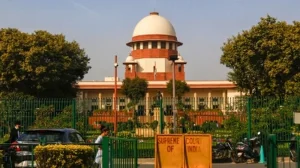
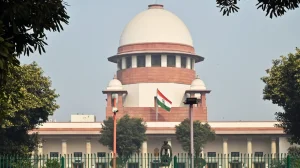
A bench of Justices Prashant Kumar Mishra and A S Chandurkar put the question to the table: what can be done to unblock the system at the Allahabad High Court? They see it all the time – litigants coming to them for some direction because their cases have been in a holding pattern for too long.
For the time being, the bench has let the appellant’s bail stand while they are still before the court. They also put to senior advocate Siddharth Dave and his colleague Zoheb Hossain for some practical ideas on how to put some speed into the disposal of these matters.
The case in question
You have to go back to November 1983 for the start of this one. That’s when Vijay Singh, then 28, was taken in for the alleged shooting of his brother. By December 1985, a sessions court in Kanpur had found him guilty of murder and handed down a life term.
Singh took it to the Allahabad High Court, but for 41 years his appeal was in no-man’s-land. It was only on February 9, with a 20-page ruling, that the high court put a stop to it, which is what has the Supreme Court looking at the after-effects of such a wait.
Living with a case over your head
If you read the record, you’ll find Singh was in custody for a mere three months; he was on bail for the better part of 43 years. Now 72, he has made it plain to the court that his entire life – from his 20s to his 70s – has been under the cloud of a conviction.
In keeping his bail, the Supreme Court is showing it doesn’t want any more harm to come to him while it figures out what to make of the delay.
Where the court draws the line
Someone from the Bar put forward a blunt proposition: just throw out any prosecution appeal that is 30 or more years old. The bench wasn’t having it. You can’t just clear a case because the clock has run out, they said.
A blanket dismissal would be bad for the public and for the parties who are owed a hearing. The judges were unambiguous: you don’t get to trade justice for a quick fix.
To put it in the terms used in open court:
– You can’t use pendency as an excuse to dismiss
– The merits of the case are what the public is interested in
– The appellant’s bail is to be continued
The bigger picture
This is what happens when there is a lag in a serious criminal file. An appeal in a life sentence case can drag on for decades, and in the end, neither deterrence nor fairness comes out on top. It’s another reason why the Supreme Court is put in the position of having to nudge things along.
The bench is open to some workable plan to put an end to the oldest of the old dockets, provided you don’t cut corners. No particular remedy has been put on the table yet, but the interest is in measures that put the rights of the parties first.
When the system puts a strain on the individual
As the bench has pointed out, the weight of the docket at the Allahabad High Court means you end up in more litigation just to be heard. Singh is the proof of it: a 1985 conviction, an appeal decided 41 years later, and a man who has been on bail the whole time.
Now the ball is in the court’s court to make some of this talk of solutions a reality. With the suggestions in and the bail in place, we will see if they can come up with a way to handle these cases on time and on merit, without the usual compromise.