
It’s a one-liner that has become a stumbling block for H-1B hopefuls and is changing how they prepare: ‘Why you and not an American?’ For some, like our Indian tech talent, the way you handle that is now the difference-maker. Attorneys say you have to be more on point with your response than in the past.
You won’t find anything novel about the question itself, but as The American Bazaar has put it, the way it is being asked has more heft to it. Lawyers are talking about sterner interviews, more time spent in the chair, and a higher price to pay if you are on a deadline with an offer or a client.
We break down why it is such a big deal and how to put together an answer that will hold up to a hard-nosed officer, without sounding like you are reciting a script.

Why this question is back in vogue
If you ask the attorneys, they will tell you it has to do with the kind of policy we have seen with ‘Buy American, Hire American.’ Back in 2017, President Trump made that executive order to put a stop to fraud and to put the best and highest-paid H-1Bs first.
Several lawyers have said to us the vibe is much the same today. James Hollis with McEntee Law Group says he is running into the sort of refusals and debriefs that hark back to that order. The consulates are making a point of it, asking whether you are really needed there.
You see it most in the world of technology and IT consulting. These were fields built on global talent, but now the bar is higher and the wait is longer, in particular for those from India and China.

What they are looking for when they put you on the spot
Technically, the law doesn’t put the onus on you to show no one in the US could fill the position. But the officer is going to use it to see if there is a real business case for your skills and if you are bringing something to the table or just replicating what is already here.
Hollis says it applies to L-1B and some E-category staff as well, even where there is no cap. Consular officers have a lot of leeway, and they will be after any unique or company-specific expertise you have.
And because of that, you have to be clear. If you can lay out what you will be doing and why you are the right fit, you will do better than the person who is just running through their resume in broad strokes.

How to answer in the room
Anyone can rattle off their credentials and the software they run with. What is harder is to show why your particular background makes you difficult to let go of. That is where Hollis would have you focus.
Do your homework before you walk in. Be able to point to the kind of know-how or ties a local hire wouldn’t have, and make sure you can connect it to what is at stake for the business if you don’t get in.
Put your answer together with these in mind:
– You have inside knowledge of the product or firm
– There is a process or system you have put in the years to master
– You have the client side of things to keep the project on track
– Some regulatory or cross-border angle the work requires
– A track record of results they are counting on
Hollis will also have you make sure your papers are in order and that you know them cold.
If you can put a clear, confident face on your role, where you’ll be working and what the project is about, you can head off the kind of second-guessing that turns into a hard no.
Who has the most to worry about
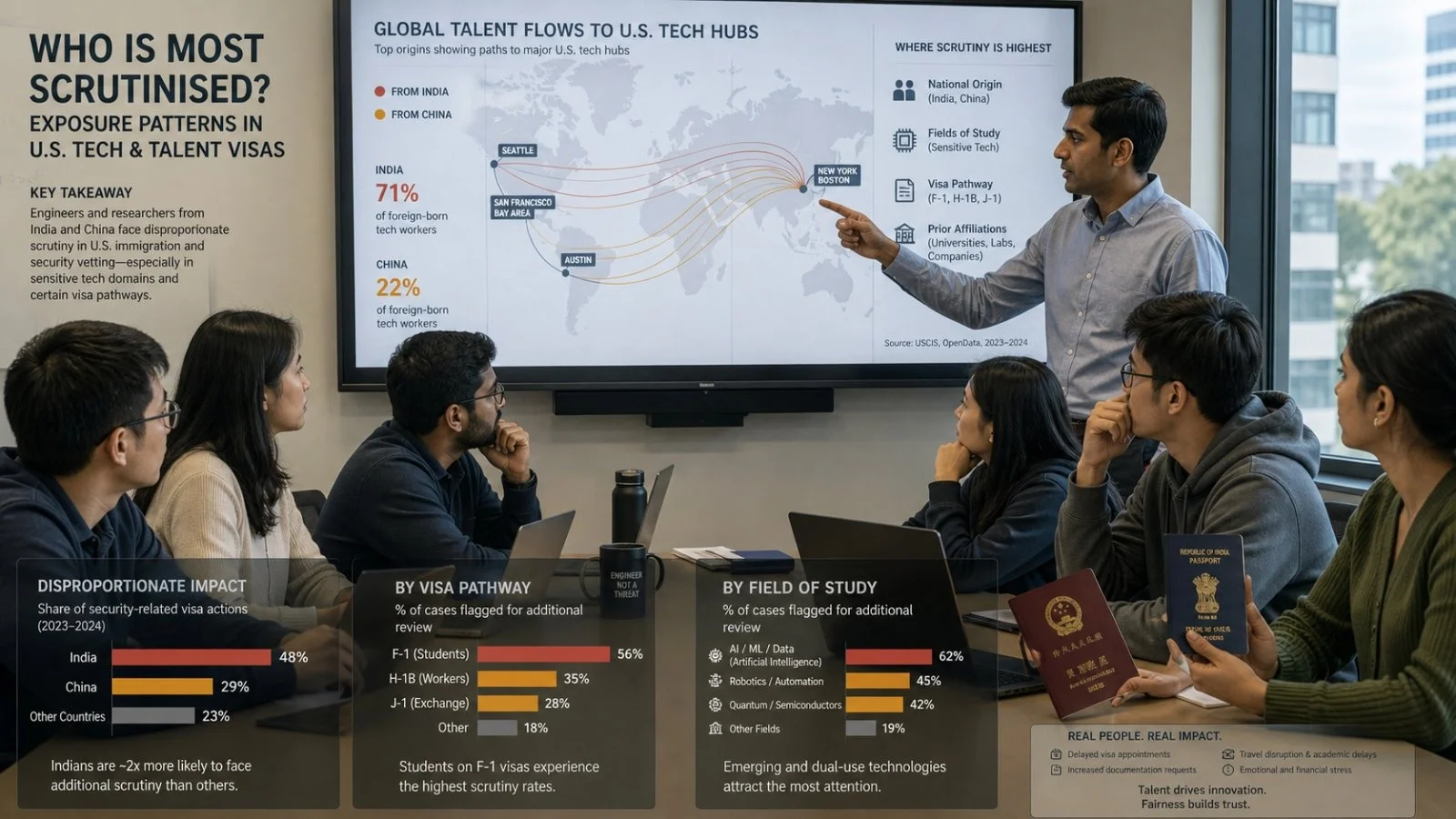
For the time being, it’s the workers from India and China who are in the crosshairs. They account for the bulk of H-1B sign-offs, and as The American Bazaar has reported, their case is under the microscope. Hollis, an attorney, says the bar seems to be getting higher for these nationals, particularly if they’re with one of the big IT or consulting firms and are coming in on an L-1B or H-1B.
It isn’t always down to how good you are. Sometimes it comes down to the company you work for. “You can’t do much about the number of people from your firm who have applied or what the job pays,” Hollis said, but those are the things that can invite a closer look.
In some cases, he even suggests holding back. “The system is overcorrecting,” he put it. If you can, don’t put yourself in front of too many interviews over the next three years. The less you have to deal with, the less you’re at the mercy of whatever the rules of the day happen to be.
Then there is the matter of fraud. It’s a big issue in India, and you can feel the suspicion in the room. The way to offset that is to be well-versed in your paperwork and your position. Show them you know what you’re talking about and why you’re worth it.

How the rest of the market is shaping up
All of this is playing out in the middle of an old argument over the H-1B. You have the naysayers who think some companies are using it to keep wages down or to go around U.S. applicants. On the other side, you have those who say the program is there to plug holes in areas where we’re short on talent.
The numbers tell part of the story. In 2024, USCIS gave the green light to 399,395 H-1Bs. Of those, 283,397 went to people from India – 71 percent of the total.
And it’s a tech-heavy world. Some 64 percent of the approvals, or 255,000 of them, were for computer jobs. The rest is a mix of architecture, engineering, education and the like.
As for the idea that these are low-paying positions, the data doesn’t bear it out. The median for an H-1B was $120,000 last year, and if you’re in a computer-related field, you’re looking at more like $135,000.
Kishore Khandavalli, who runs a software consultancy in Dallas with 380 staff (nearly half on H-1Bs), sees it differently. “There’s a skills gap between the 3% of people in the market and what the market is after,” he told CBS News, especially when it comes to new tech. For him and others, that’s what makes the program indispensable.
Studies have shown that more H-1Bs can mean more patents and growth, with little to show for any displacement of local workers. Big tech needs them for AI, software and the rest.

What to do about it
Don’t expect the hard looks to go away, so you have to be ready. Being able to answer "why you and not an American” is table stakes for any interview or document check.
Before you sit down with a consular officer, here is a good rule of thumb:
– Make sure your papers are in order.
– Practice your pitch on the role and the project.
– Be able to tie your skills to what your employer needs.
– Check that the salary and duties on file are what they should be.
– Talk to your lawyer about any red flags from the company side.
– If you can, don’t do an interview unless you have to.
Here’s the bottom line: you can’t make the policy changes, but you can make the case for why you’re a better bet than some local hire. Do it with hard facts and you’ll be in a better spot when the going gets tough.