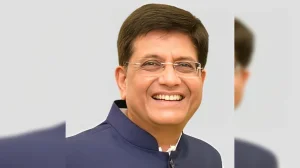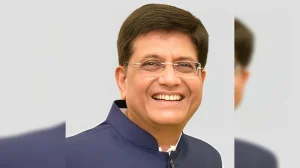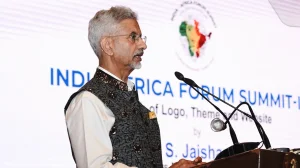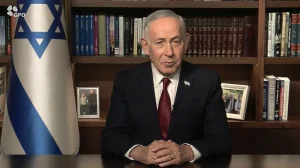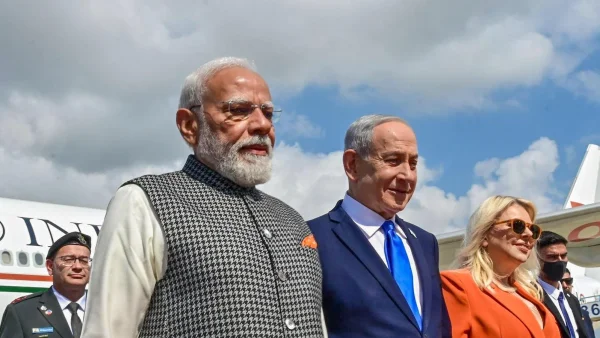
Netanyahu said that when he and his wife Sara welcomed Prime Minister Modi to the Knesset (Israeli parliament), he gave him a very warm, sincere hug. He said you can tell a hug is genuine. He described the connection between the two as a ‘wonderful friendship’ where both countries, both democracies, want to work together and see a positive future.
A Symbolic Embrace and a Strategic Message
He started his speech by remembering when he and Sara met Modi at the airport and how Modi hugged him. He said it was a completely real hug, and everyone knew it.
By making the ‘Modi hug’ into a symbol of how they relate to each other, Netanyahu made it clear the visit was about more than just following official procedures. He said it showed how much trust and warmth there is between the people of India and Israel, and he wanted the members of parliament to feel that same good feeling.
Netanyahu said the relationship actually increases the strengths of each country. India is huge, and Israel is very good at coming up with new ideas, and when they cooperate, it improves both their ‘spirit’ and what they can actually do. Basically, working together makes them both more powerful in a difficult world.
Historic Address at the Knesset
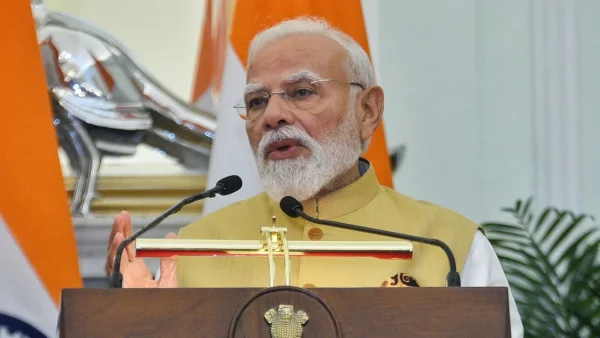
The warm welcome Modi received in the Israeli parliament was very historically significant. People chanted “Modi, Modi” and all stood up to show how important it was that the Indian Prime Minister was giving the first ever speech by an Indian Prime Minister to the Knesset.
Amir Ohana, the Speaker of the Knesset, said it was an honor to welcome Modi and to mark an important point in the relationship between the two countries. The usual rules were ignored as the Indian group was greeted with a level of excitement rarely seen at parliamentary meetings, showing how both the politicians and the public feel the same way about this.
Netanyahu called Modi “more than a friend, a brother,” and praised him for being a leader on the world stage. The way the ceremony went showed that the relationship between India and Israel, which used to be more about practical advantages, has now become a strong and open partnership.
Security Convergence and Regional Diplomacy
A key part of the visit was talking about working together on security. Netanyahu said thank you to India for supporting Israel after the attacks in southern Israel on October 7, log in 2023. He thanked Modi for ‘being with Israel’ and ‘being honest’, and tied this support to both countries being democracies and working to fight terrorism.
New Delhi (the Indian government) sees close work with Israel as part of a larger plan for the Middle East which focuses on keeping things stable, having secure energy supplies, and growing the economy using technology. Jerusalem (the Israeli government) views India as a lasting connection to Asia and a partner they can trust when it comes to getting information, defending against cyber attacks, and protecting their country.
This agreement doesn’t ignore the difficulties in the region, but it does show they are both being sensible. Both countries want to be able to make their own choices, have strong defense industries, and protect their important systems from new dangers.
Expanding an All-Weather Partnership
Besides security, the leaders highlighted all the different areas they’re cooperating in. Trade has been steadily increasing over the last ten years, especially in technology, medicine, diamonds, and machinery. They’re also increasing cooperation on services, investments, and research.
Farming and new ways to use water are still important areas. Israel’s drip irrigation, making salt water drinkable, and recycling water methods are being combined with India’s size and ability to put things into practice. Joint projects have increased harvests, used less water, and brought ‘precision farming’ to most farms.
Working together on health and biotechnology is also notable, with research into vaccines, medical equipment and testing out telemedicine (receiving medical care from a distance) all fitting with India’s plans for using digital technology in healthcare. In clean energy, they’re both looking at solar power, storing energy from the grid, and ‘smart cities’ – using Israeli companies with India’s ability to implement them on a large scale.
Economic Momentum and People-to-People Ties
The economic reasons for the relationship are that each country has what the other lacks: India has a huge market, places to make things, and a digital system for the public, and Israel is good at starting new businesses, doing lots of research and development, and finding solutions to problems. When they work together, they create opportunities in things like semiconductors, electronics, transport, and ways to deal with the climate.
Exchanging students and talented people makes this even stronger. Students, partnerships between universities and joint research facilities are building an ‘innovation route’ connecting Bangalore, Hyderabad, and Pune in India with Tel Aviv, Haifa, and Jerusalem in Israel. Tourism and direct flights add a human element which often happens before investments.
Good feelings between the cultures have grown at the same rate. The enthusiastic welcome inside the Knesset was similar to the excitement during high level visits to both countries in recent years, strengthening the idea of trust and shared goals.
What the Visit Signals Next
This visit is meant to make the progress they’ve made more permanent. We can expect more agreements between the governments on jointly developing weapons, rules for cyber activity, and getting important minerals. Making sure the supply chain continues to work will be a priority, as will ‘regulatory sandboxes’ which allow startups to test solutions that work across borders more quickly.
Regarding technology rules, both countries might look at standards for artificial intelligence, being able to use digital identities with each other, and safely sharing data, so it supports business without risking security. Groups of government officials and private company representatives could speed up testing in ‘precision farming’, ‘smart water grids’ and infrastructure that can survive disasters.
In the long run, really focusing on training people for the workforce, creating shared rules for intellectual property, and making it easier to invest can turn the good feelings into lasting economic success. If the ‘Modi hug’ is as genuine as it seems, the people making the policies now need to turn that genuineness into dates, budgets and results you can measure.
A Partnership Built on Trust and Delivery
Netanyahu’s praise showed a time when what something represents and what it actually does are the same. The hug he talked about wasn’t just for a picture; it showed how confident both leaders are in a relationship that works when things are difficult and grows when things are peaceful.
As India and Israel deal with dangers in the region and changes to the world economy, their partnership looks likely to grow. Because they have similar interests, skills that complement each other and a strong commitment from their politicians, these two democracies are in a good position to turn the memorable welcome in Jerusalem into a plan for lasting strategic success.