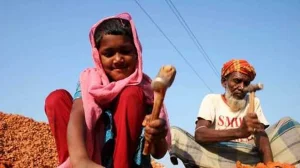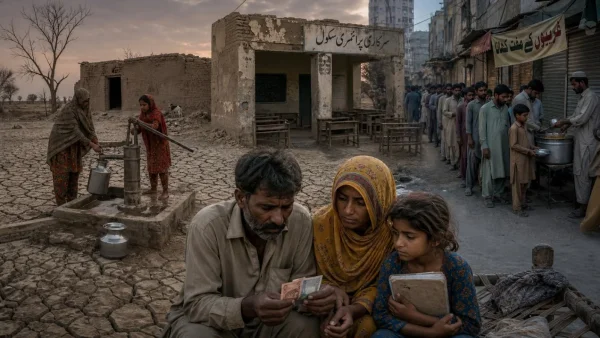
It is a steeper, wider squeeze on the way of life for many as the poverty line is crossed by more and more while money for education dries up. According to the 2025-26 Pakistan Economic Survey, we have seen a 7 per cent jump in poverty over the last six years – 27 million new cases, to be exact, for a 70 million total.
If you look past the top-line stats, it is a story you will find in any number of developing nations: a series of shocks that open up chasms between those with the means to weather them and those without. The survey makes no bones about the fact that inequality is on the rise, which only puts more pressure on the policy decisions to be made in the federal budget.
Why poverty is on the upswing
For the low-income household, it has been a piling up of hard times. The survey points to inflation at record levels that has whittled down what your money can buy, a weaker rupee making imports pricier, and the kind of fiscal tightening that comes with an IMF deal.
Then you have the outside forces like the West Asia situation and climate events, not least the floods. It is an uneven burden; the Gini coefficient has inched up from 28.4 in 2018-19 to 32.7 now. The survey is clear: one more external jolt and the financial strain could get much worse.
Where the pain is felt
We are looking at 28.9 per cent this year compared to 21.9 per cent back in 2018-19. The rural heartland is under the most duress, but the cities are feeling it too as the cost of things goes up and odd jobs become harder to come by.
In the countryside, the rate has gone from 28.2 to 36.2 per cent. Even in urban areas it has ticked up from 11 to 17.4 per cent, so it is not just the farming families who are being left behind.
There is no hiding the differences from one province to the next. Balochistan has the heaviest load, up from 41.8 to 47 per cent. Khyber Pakhtunkhwa is at 35.3 per cent (was 28.7), Sindh at 32.6 (from 24.5) and Punjab at 23.3 (16.5). Punjab is still the best off of the four, but the slide is something to take note of.
The risk of an underfunded school system
At a time when it is needed, the country has been less of an investor in its people. Public spending on education is down 23 per cent to Rs962 billion for FY2025, leaving it at 0.8 per cent of GDP – hardly anything in the grand scheme of things.
You can’t have good schools without the right infrastructure, and in some of the poorer parts of the country that is lacking. With so many kids not in class and a literacy divide that is hard to close, particularly for women, the survey suggests we are in danger of making today’s problems permanent for the future.
What is happening in Balochistan
A 47 per cent poverty rate is a way of saying that for every two people in the province, one is having to make do. If you talk to people on the ground, they will tell you of meagre work, tight budgets and a lack of the basics – be it water, a doctor or a proper school.
Both the survey and local reports say the same thing: if we don’t step in with some real development, the gap is only going to get bigger, and with it the risks to society and the economy.
The numbers in brief
Some of the ones that matter most:
– 28.9 per cent national poverty (2024-25)
– 21.9 per cent in 2018-19, so we have lost some ground
– Some 27 million more in the red
– 70 million in total
– Rural: 28.2 to 36.2 per cent
– Urban: 11 to 17.4 per cent
– 47 per cent in Balochistan (the top figure)
– 23.3 per cent in Punjab (the bottom of the list)
– 32.6 per cent in Sindh; 35.3 in Khyber Pakhtunkhwa
– Gini has moved from 28.4 to 32.7
– A 23 per cent cut in education outlay to Rs962 billion
– 0.8 per cent of GDP for education
How it was tallied and where we go from here
These are the official numbers, worked out using the standard cost of basic needs method. The survey is put out every year before the federal budget to give some hard data to the table.
When you have nearly three in ten in some form of want and inequality is the order of the day, the document is a nudge to do something about it. We will have to wait for the budget to see if the words are followed by deeds.