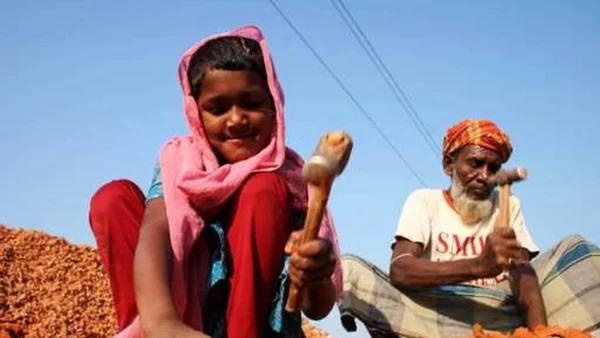
The Telangana Socio, Economic, Educational, Employment, Political and Caste (SEEEPC) Survey-2024 found that 89,000 under-18s are doing daily labor throughout the state. This thorough “caste census” of 35.5 million people gives a very detailed view of employment, education and how easily people are affected by issues.
Major data points on child labor and caste composition
About one percent of those younger than 18 are doing daily wage work. But as a number, 89,000 children are working to help their families or to add to the family income.
Certain castes have a much larger percentage of children working. 14 percent of children in daily labor are SC Madigas, and 11 percent are ST Lambadis. In fact, 7.2 percent of people in the ST Kolam community under 18 are working.
These numbers show that poverty is concentrated in certain places. Getting consistent schooling, help from social programs and local support systems is particularly difficult for communities where more children are working.
Wider patterns of employment and inequality by caste
Adults of all castes do daily wage work, with an average of 31.3 people between 25 and 65 doing this type of job. However, it’s distributed very unevenly by caste, and shows how deeply unfair the quality of jobs is.
The BC-A Odde caste has the highest number of daily laborers at 55 percent of the 56 main castes. In comparison, only 2.6 percent of OC Brahmins are relying on daily wages, which suggests they are relatively financially secure.
Job types also show an unfair access to permanent employment. OC Rajus and OC Brahmins are 27 percent of those in professional private jobs, then OC Kapus at 24 percent. These trends are a result of past advantages in education, connections in cities, and money.
Consequences for children and social protection gaps
Child labor is damaging to a child’s education, health and future chances. Long hours at work mean kids go to school less and are more likely to drop out, and this continues the cycle of disadvantage in the same communities the survey points to.
The survey says that the current systems meant to protect people aren’t reaching those who need them the most. In areas with the most child labor, families are likely under a lot of financial pressure and don’t have access to benefits, school lunches, scholarships or people to make sure child labor laws are followed.
Fixing the problem needs both quick help and long-term changes. Right away, the focus should be on getting money to families who need it, getting kids registered for school and providing services focused on children in the areas where child labor is most common.
Policy recommendations and use of survey data
People making policy can use the SEEEPC data to get money and help to the right places and caste groups. Detailed information on 75 things about each person means help can be specifically designed for education, health and ways to make a living.
They suggest giving money to families if their children go to school, going into communities to find kids who are working and making sure child labor laws are enforced. Putting money into good public schools and providing good food at school can lessen the need for children to earn money.
The survey also says longer-term plans are necessary to address the unfairness of the caste system. Training people for jobs, making sure people from lower castes get a fair chance at work in the formal sector and starting local businesses can move families away from needing to do daily wage work.
This survey gives people in charge the proof they need to act. Used properly, the information can make sure government money goes to stopping child labor and giving more opportunities to the communities most affected.