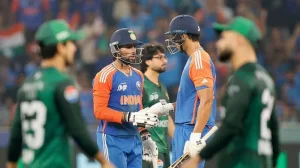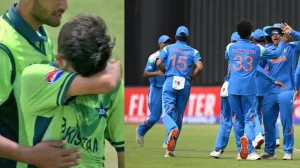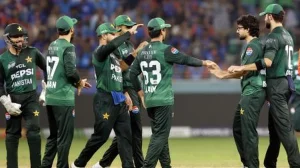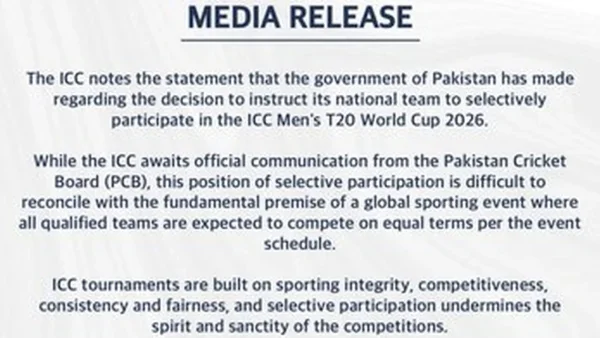
The Pakistan cricket team has a nerve-wracking build up to the T20 World Cup of 2026 after it was given a go ahead to participate in the tournament by the government, but the match against India in Colombo ‘Group A’ on 15th February was to be subject to a boycott. Pakistan will engage in other matches as well, but Pakistan Cricket Board and ICC have serious legal, financial, and governance issues on their hands following this focused non-participation.
National sender and creating event ripples
The Pakistan government cheerfully announced that they were in support of the team’s participation; however they clearly stated that the team will not play against India when it came to the later on in the instructions. The government procedures followed are a normal affair as the correction of the previous and the subsequent clarification of travel arrangements to Colombo for the group stage match versus the Netherlands do feature in the scheduled program.
It is noted that the official word came to the target audience through the government’s social media account. The situation is alarming in that a national stance is directly instructing a global tournament against a particular team to avoid taking part in one match. This myopic politics adoption has put it on a head-on collision with tournament’s conditions.
Ehsan Mani’s legal interpretation and precedent
Former cricket administrator, former president Ehsan Mani, has stated that the situation should not be such that ICC can take action against Pakistan, provided they are adhering to the specific orders of their government. He made reference to past incidents where the stance taken by authorities influenced the position taken by the board, and he was very clear that it was very crucial to observe consistency in enforcement.
However Mani cautions that should the board be penalized for following the dictum of its government an undesirable practice of invoking patriotism of one’s country to shun a fixture can be established. This places the discussion at a different level of purely sports discipline to those of political and legal issues of controlling a nation.
ICC rules, force majeure and financial exposure
The ICC terms for playing the game include considerations for any team who might violate fixtures since failure to do so could lead to penalties, however, ‘commercial impossibility’ is a different concept, which may be applied in case of cancellation due to war or earthquake. For this case, if the reason for cancellation is fear of a particular opponent, then it cannot be described as such.
In other words, in the case where the Pakistani national side does not participate in their assignments, they would simply be handed over to the opposition nation free of charge and the Pakistan Cricket Board
[PCB]
– the relevant national governing body, may have to dispose a hefty sum of money intended for the rights and broadcaster in this subordinate self-organized league. It has oft been mentioned that the cricketing circles, as someone named possible financial losses in the case of the India-Pakistan match, which traditionally brings the highest payment in the tournament.
Inferences and potential issues
For instance, the International Cricket Council (ICC) may conduct an investigation regarding the non-contribution of many other players and players from those countries to their national teams or their cricket. Normally when such situations arise, for there to be any remedy, the alternative would not be satisfactory, such as imposing fines. Even the most severe action would also bring about ramifications within the countries with respect to the competition and income of players.
There could be corporate penalties that can be attaracted to the board such as negative public opinion or strained relations with other members. On the other side, soft adjustment to the situation could cause an imbalance in the organization. The bias factor is especially strong in the background of recent tournaments, when team modifications were made on safety contingencies or travel issues and some teams were newly inspanned or freed from play.
Shortnote on tournament structure and possible switches of teams between venues
Normally, event organizers also come up with some fall-back plans, such as substitute members. If a team is disqualified or ejected, then following the logic of other tournaments, the most probable contender would be an eligible high-ranked Associate member who has confirmed their willingness to take part on short notice.
Replacing such a team will enable the game to go on according to the tournament calendar, however this will also come with its own challenges in terms of competitive integrity and the broadcasting packages. It is also not likely to add the previously expulsed team back because of contract implications and the safety consideration.
Pakistan cricket and its aftermath
In this regard, the PCB will have to maneuver between bowing to government orders and assuring the financial and competitive security of the team. It is expected that the upcoming period will be full of a variety of meetings of key players since most of the parties involved will want to take diplomatic measures in solving the conflict.
The ICC has little room for a delay in making a response as decisions may roll out quickly, particularly as there exists a plethora of operational timeframes and other constraints already put in place by the respective broadcast contracts. In the context of Pakistan cricket, the immediate focus will be on averting any adverse financial consequences in the shorter term without compromising international relations within the global game.
A case study on the principles imbibed in world cricket in regions -An ideal- for and against values that are not cricket.
This narrative lends itself to inquires about how sport in the world deals with political interest. In this regard, the ICC has a major task on how to balance the aforementioned factors – including the law, contracts and politics and at the same time ensure uniform application of laws across all the Full Members.
In any event, irrespective of the T20 World Cup happening in 2026, history will be remarkable not for the spectacular cricketing actions but about collusion among governance, diplomacy and commercial elements on a global scale.