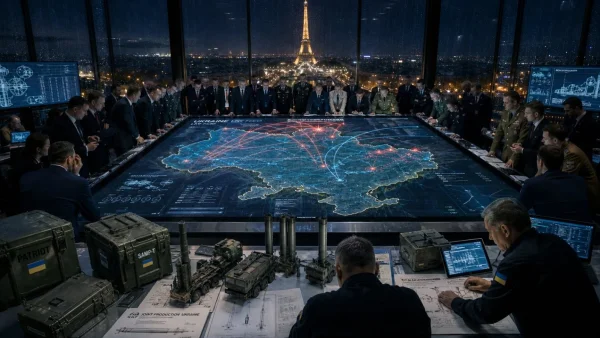
It is a race to close the holes in Ukraine’s air cover as the ballistics come in harder. Paris is the venue for a hard-nosed meeting of the Coalition of the Willing to see what can be done to expedite aid and make good on security promises. The idea is to build some strategic heft for Kyiv out of the current situation on the ground, rather than just talking about it.
Why Paris matters now
Even with the headway made of late, Ukrainian cities have not been spared from the kind of pressure Russia has been putting on them. Take Saturday: officials put the toll at eight dead and many more injured from a mix of missiles and drones. It is a stark reminder of what happens when you are short on the means to stop a ballistic projectile moving at several times the speed of sound.
You will find 25 or so leaders here, Volodymyr Zelenskyy among them, to put the pieces in place for both what is being delivered today and what comes down the line. This is in the wake of the NATO summit a few days back, which was all about projecting a united front across the Atlantic.
From pledges to production
The focus, according to an official from the French presidency, is on anti-ballistic-missile work. That could mean more US Patriots, or moving forward with the SAMP-T system from France and Italy. Or it could be something home-grown in Europe, with Ukraine part of the process.
There is talk of a European system to sit alongside the SAMP-T and Patriot, one in which Ukraine would have a hand in the making of it. Necessity is driving this; as it stands, Kyiv is running thin on the munitions for its present batteries and has had trouble with the ballistics of the last month or so, they say.
Exercises, credibility and a future force
President Macron has put forward some bilateral moves, maybe even in co-producing arms. He has also pointed to the possibility of joint exercises to put the Multinational Force for Ukraine through its paces – be it on land, in the air or at sea – to give it some standing.
Make no mistake, however: there is no plan for any of that to be done on Ukrainian soil. The point is to be ready and in sync with one another, within set boundaries.
Ceasefire track and security guarantees
In the view of the French, the summit is a way to forge a common line to put before Russia and to define the kind of security underwriting that will be needed for a peace deal, should one be in the offing. There is more to the new coalition than just military backing. Formed by France and the U.K., it will also be in a position to advocate for a ceasefire and a return to the negotiating table, per the French presidency.
From the Elysee, this is being put down as a time of rekindled transatlantic unity and some better news for Kyiv on the ground, despite the ongoing air threats.
Economic pressure and the sanctions puzzle
It is not only about missiles; there is a question of how to put a crimp in Moscow’s income. The eyes of many are on the shadow fleet of tankers with little in the way of clear ownership that are being used to get Russian oil out without scrutiny. Put a stop to those and you have a force multiplier for what is happening in the field.
Then there are the mixed messages on sanctions. Some reports have the EU ready to put forward a 21st round next week, but ministers have yet to agree and the bloc’s top diplomat has been at pains to point out there are still matters to be resolved. It is an open discussion, not a foregone conclusion.
Escalation risks and competing narratives
The back-and-forth has been sharp. As Russia has ratcheted up its strikes, Kyiv has responded with drone operations well inside Russian borders, after oil and weapons plants. In the area around Moscow, local officials say three were left dead in Pionersky and two wounded in Solnechnogorsk, and they put the number of Ukrainian drones brought down overnight at 81.
On their side, the FSB in Russia says it has nipped in the bud any plans for Ukrainian drones to hit the Shagol and Ukrainka air bases, and has made some arrests. Moscow maintains it is only after military targets and has no interest in civilians.
Jean-Noel Barrot, the French Foreign Minister, would have it otherwise. He has called out Russia for the deliberate targeting of civilian areas and noted that June was among the deadliest months of the war so far. It is a view that gives some heft to the push for better air defences.
What to look for
The idea in Paris is to turn political will into something tangible. The measure of success, as one official put it, is whether allies can put interceptors and batteries where they need to be on a schedule that keeps pace with the Russians.
Some of the things to come out of the summit:
– Where the next batch of Patriot interceptors will come from
– When SAMP-T systems will be rolled out
– A plan for co-producing with Ukraine
– Word on any joint exercises
– New moves against the shadow fleet
The road ahead
There is also talk of what comes after. The Multinational Force for Ukraine, which is meant for when the fighting is over, is to be put in the ready state, according to those in the know.
But for now, it is about having your back in the skies. In Paris, the aim is to make sure defence industry output is in line with what Ukraine requires, to keep the screws on the Russian economy and to leave the option of a workable peace on the table.