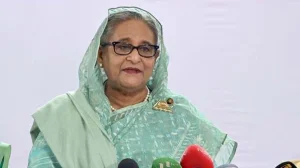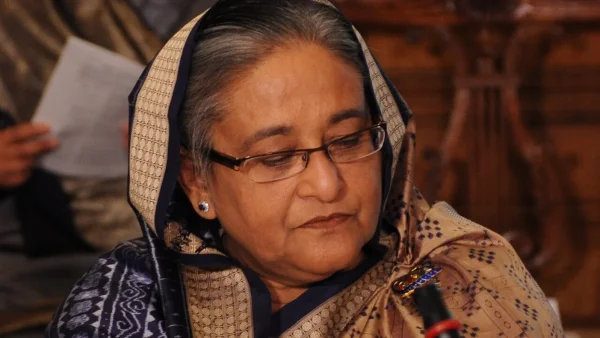
It’s a political time-bomb for Bangladesh. In an interview not long ago, the former prime minister put down a marker that she will be back “this year,” some two years after she was run out of office and had to make for India. It is a statement that has put new kind of pressure on Dhaka in the wake of a rough change of the guard.
You have to go back to August 2024 to find the start of this. After the students and others took to the streets in their thousands to protest the government, Hasina left. She has been tending to the party from outside the country ever since, watching the home front turn against her.
A defiant timetable and its political signal
Hasina puts it in terms of duty. She has said she will put aside “every obstacle and every conspiracy” to get back where she belongs. And she is not one to be cowed; she has no fear of dying, what with most of her family being killed in 1975 and her own brush with danger on 21st August.
That kind of resolve is music to her supporters, who have always seen her as a survivor. Her politics, she says, are about the people and the old dream of a ‘Sonar Bangla’. She also makes a point of noting she was put in the Prime Minister’s chair five times by the electorate.
The conviction she won’t have any part of
Then there is the matter of the International Crimes Tribunal. Back in November 2025, they found her and other top Awami League officials guilty of crimes against humanity and gave her the death penalty. Hasina has written it off as a sham – illegal, unconstitutional and done for show.
In her view, the judiciary has been co-opted for “political revenge” in an effort to leave the Awami League without a head. She says they have tried these things before and they have not worked. They won’t now.
Barriers to a comeback
She is looking at a hard road. The interim government has put an official stop to the Awami League and you can find much of its top brass in jail or on the run. With the apparatus of her 15-year reign in pieces, it is going to be an uphill task to put the organisation back together.
The new powers in town have been blunt about it. Tarique Rahman, the PM since the 2026 elections, has laid down the law: come back and there will be no extra-judicial nonsense, but you will be in the hands of the judiciary and in a cell.
And it is not just a domestic problem. There are the diplomatic angles to consider, like the threat of extradition and an environment that is anything but welcoming.
To put it in perspective, here is what stands in her way:
– The ban on the Awami League
– A leadership and network in disarray
– Being taken into custody the moment she is back, per the government’s word
– The realities of a hostile climate and extradition
How the Awami League will get back in, in Hasina’s telling
The ban means nothing to her when it comes to the party’s future. That is up to the voters, not the state. Shutting down an office or putting a lid on some activity doesn’t make the public forget. “We have already started to come back up,” is how she puts it.
Trying to keep the party out of a “staged election” only makes for a better story, she would have you believe. It is all part of rousing the base for the day she returns, even if the state is not budging on its position.
What comes next
“This year,” is Hasina’s word. If she does it, the first thing to happen will be the courts and a prison term, as has been made clear. The playing field would move from wherever she is in exile to the dock.
It is a matter of principle for her and one of control for the government. All of Bangladesh is waiting to see if she will act on her timeline and what the system will do in response.