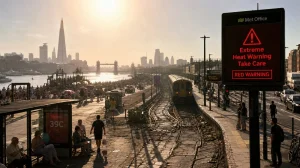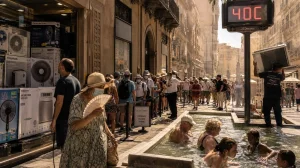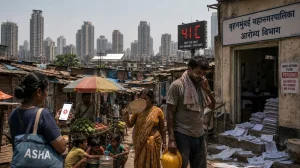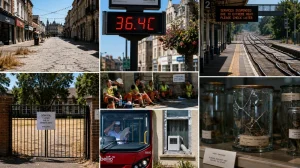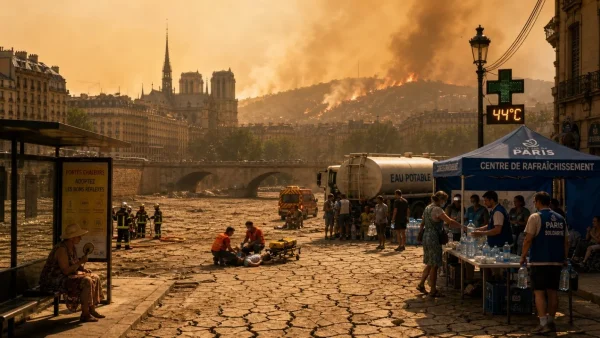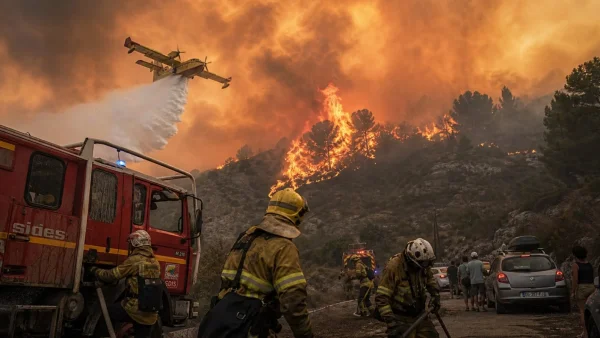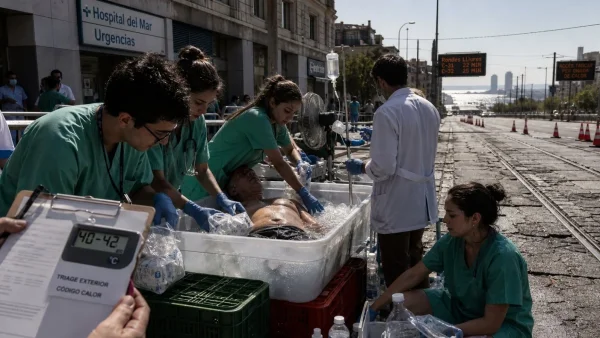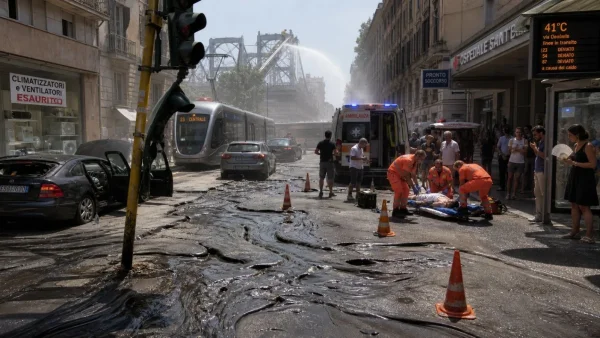
What was once just an alarming spell of hot weather has turned lethal. In Paris alone, they are reporting 109 deaths tied to the heat. It’s not just a number; you have plastic traffic lights deforming in some of Germany and tarmac giving way in France and Spain. The numbers are up, and so is the tension among authorities.
You feel the disruption right away. There are road closures and accidents where the asphalt has gone soft. Shelves are being picked clean of fans and air conditioners in a bit of a panic. The message from public agencies is plain: don’t be out and about if you don’t have to, and keep your cool.
Why Europe is on emergency heat alert
For a part of the world that is usually mild this time of year, what we’re seeing is one of the worst in a long time. In a matter of weeks, the heat has ratcheted up, and it is putting a lot of pressure on everything from our hospitals to our daily routines in the big economies of the continent.
France is feeling it the most. In Paris, the stress is palpable and you will find hospitals with more cases of heatstroke and dehydration than they’d like. The word from the top is for everyone to head inside when the afternoons get to their peak.
Germany’s temperature spike
They have put down some record figures in Germany. We are talking 41C and above, with a tentative 41.5C in Drewitz and 41.3C in the vicinity of Saarbrucken. It shows how fast things are moving here.
The forecast is for the heat to make its way east, which means the rest of the region is in for some of it. Emergency crews are bracing for the long haul should the temperatures not let up.
Infrastructure buckles under sustained heat
This is more than a high reading on a thermometer. The sun is hard on the roads; they are cracking and in some places splitting open, which is a nuisance for any driver. Some of the public transit is also having a hard time with the heat.
Over in Germany, you can see for yourself how some of the traffic lights are warping, making for less safe conditions. And in Italy and Spain, the power grid is being put to the test as everyone turns on the cooling in their homes.
Then there is the Netherlands, where they have been a bit proactive. They are hosing down steel bridges to stave off any warping and make sure the crossings are in good order.
What authorities are doing now
You will see a lot of warnings being put out as the mercury doesn’t seem to want to drop. The priority for public bodies is to put some guardrails in place for health and transport before things get any worse.
If you ask the experts, these kinds of events are only going to happen more and more as the climate changes. This is a case in point of how quickly a city can be put in a bind by the weather.
Public advisories you should follow
There are a few no-brainers to lower your risk, and the authorities are making a point of it. Don’t wait on it:
– Steer clear of the outdoors unless you have to
– Be inside when the day is at its hottest
– Make sure you are cool and have enough water
Strain on daily life grows
Go to a store in some of these cities and you won’t find an air conditioner or a fan. People are in a hurry to make their living rooms bearable, and with the nights not much better, you can understand the rush.
The emergency services are still busy with the after-effects of the heat. With the fatality count on the rise and the creaking of the system, the job is to hold the line and keep people out of harm’s way.
What to watch in the coming days
There is a concern that with the state of the roads and the load on the hospitals, we are in for more of the same. The risk is still very much present in France, Germany, and the like.
So the plan is to lay low and do as you are told. Europe is in the middle of something dangerous, and what happens next will be up to us as much as the officials in charge.