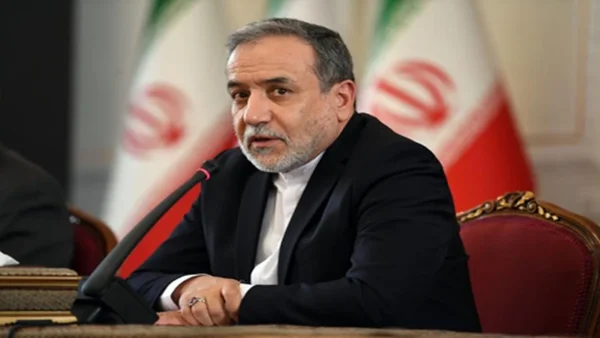
Things have come to a head on more than one level. In Baghdad, Iran’s foreign minister Abbas Araghchi made it clear that while they are open to talking about US accords, only Tehran has the say in when the Strait of Hormuz is open for business. It was a statement made in the wake of US strikes on an Iranian tanker, a reminder of how quickly the stakes can rise for both shipping and statecraft.
Baghdad talks and control of Hormuz
On a trip to Iraq, Araghchi put it bluntly: for the next 30 days, the Strait of Hormuz is under Iranian watch. He said he would see to it that full capacity is put back in place once the way is clear, but don’t try to make an issue of it or you’ll be stoking the fire.
As far as he is concerned, it is up to the Islamic Republic to get traffic moving again. A memorandum of understanding makes it plain there is no one else with the right to do so; any outside hand in the matter will only put off a reopening and make things worse.
Araghchi did note that the talks in Baghdad had room for US accords, a way of showing they were willing to cool things down even as they put their foot down on a key waterway. He was in Iraq to sit down with officials for just that purpose.
Mediation efforts and diplomatic pressure
Then there is the question of mediation. Fuad Hussein, the foreign minister of Iraq, has put on the table the idea of a gathering in Baghdad with Iran and its Gulf neighbours. It’s a move to put Iraq in the middle of things as stability and trade in the area are put to the test.
Europe has not been as accommodating. The EU has called out Iran’s use of drones as a breach of international law and is telling them to stand down from their neighbours and stick to the new MoU, especially after the strikes on eight US bases in Bahrain and Kuwait.
Strikes, drones, and shipping risk
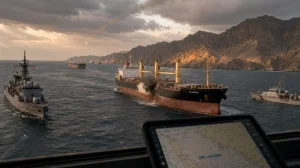
US Central Command has put out word that the Navy and Air Force have made their mark on 10 military targets in and around the Strait of Hormuz. This was in response to a drone that came in at 4:30 a.m. and put a hole in the M/T Kiku, an oil tanker flying the Panamanian flag.
Around the same time, the US and Bahrain put nine of those drones in the ground. A US official says there was no serious harm done to them. Over in Kuwait, air defence was on high alert and people were told to be on guard; in Bahrain, the siren was let out and the public was asked to keep their heads.
For its part, the IRGC says it has hit back at eight US facilities in Bahrain and Kuwait for what the Americans have done on their soil. They have also let it be known they may be less forgiving with ships in the Strait, which is not a message commercial operators want to hear.
What it means for those in the energy and maritime sectors:
– Iran has put a 30-day claim on the strait
– The US has made 10 of its own near Hormuz
– Eight strikes by the IRGC in Bahrain and Kuwait, they say
– Nine drones have been dealt with, no major US losses to show for it
Lebanon front complicates the calculus
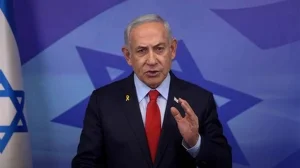
And then you have the Lebanon side of it. Israel has been after armed Hezbollah in the south while in Jerusalem they set out a different kind of security plan. PM Benjamin Netanyahu has said Israel will be within its rights to have a ‘security zone’ in Lebanon until the threat is gone, calling it a US-brokered arrangement that both sides have come to terms with.
Naim Qassem of Hezbollah won’t have any of it, calling it a capitulation. But Israel’s defence minister, Israel Katz, has a warning for Iran: if the deal is scuppered, we will act. It’s a way of linking the north to the rest of the board.
What comes next
It all depends on whether the talk in Baghdad can be made into a real dialogue and if Iran is true to its word on the strait in the coming month. Araghchi has put it out there: let a third party try to run the show and you will see an escalation.
More of the same between the US and Iran is in the cards, what with the tanker and the 10 targets we’ve seen. The IRGC is talking tough at sea and the EU is on Iran’s case about the MoU, so for now, shippers will be looking for some sign from Washington and Tehran that the heat is going to be turned down.