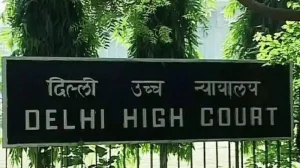
A Delhi court discharged gangster Lawrence Bishnoi and two other people accused with him in a case involving a one crore rupee demand by phone, as the people bringing the case hadn’t been able to prove the important parts of the crimes. Chief Judicial Magistrate Nupur Gupta ordered Bishnoi, Haren Sarapdadiya and Ashish Sharma let go after looking over the charge-sheet and the evidence.
What the extortion claim was about
The case began with a complaint from Raman Deep Singh, who said he had started getting threatening phone calls between midnight of April 23rd and 24th, 2023. The person calling, he said, had demanded one crore rupees, and had threatened to kill or seriously injure him if he didn’t pay.
Police took the matter to the Sunlight Colony police station, and later filed a charge-sheet against the three people accused. The charges were Sections 386 and 387 of the Indian Penal Code, read with Section 120B for what was claimed to be criminal agreement.
What the court found about the crimes
Magistrate Nupur Gupta looked at whether the people bringing the case had proven the things required under Sections 386 and 387 IPC. The court said that Section 386 needs actual handing over of property because of fear of death or serious injury – something missing from the records.
The order of February 20th made clear that the person making the claim hadn’t said any property had been handed over under threat. The charge-sheet also failed to claim or show any transfer or payment caused by the supposed threats.
Looking at what was done and the quality of evidence
For the crime under Section 387, the court looked for any action showing the accused had put the person making the claim in fear of death or serious injury. The magistrate only found a claim of getting calls asking for money and no particular physical action or behaviour in the claim.
The court also pointed to a lack of supporting proof. Investigators didn’t produce phone records or other independent evidence to link the supposed calls to the accused, leaving the people bringing the case depending mostly on statements given by other accused people.
Depending on statements and holes in the investigation
The magistrate showed that the charge-sheet mostly depended on statements given by other accused people. Without supporting electronic phone data, examination by experts or witness statements, the statements alone weren’t enough to keep the charges going.
The court ended by saying that except for the statements, there was no evidence to make up the crimes the accused had been charged with. That lack of proof was a key reason for ordering the people to be let go.
Order for bail and formal letting go
The court told the accused to put up bail bonds of 20,000 rupees with one person to back each one, as a condition of being let go. On March 6th, the three put up the bonds needed and were formally let go in the extortion call matter.
Being let go isn’t the same as being found not guilty of any future charges. People bringing the cases may start their investigation again or try to file new evidence where the law allows, subject to rules to be followed.
What this means for police and people bringing cases
The ruling shows how important technical evidence is in phone-based extortion cases, including phone call details and looking at digital things. Courts expect clear proof of both getting someone to do something and handing over property when extortion charges need actual transfer of property.
This case may cause investigators to strengthen how they collect evidence, especially when charging well-known suspects. The ruling also shows judges will closely look at cases that mostly depend on statements of confession without independent support.