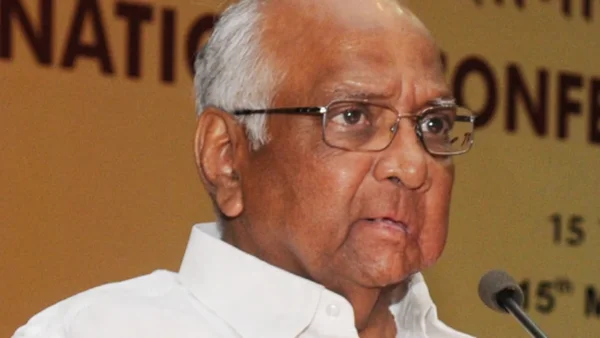
Sharad Pawar went back to the Rajya Sabha on Monday as these 19 newly elected members were sworn in. This is the first group of arrivals after the recent elections for 37 positions across ten states. The ceremony showed how much the Rajya Sabha is always changing, with many long-serving politicians going back to work in parliament.
Sharad Pawar and returning leaders take oath
Sharad Pawar, who leads the Nationalist Congress Party, has officially taken his place in the Council of States after winning the recent election. Pawar has a very long history in parliament; he was last in the Rajya Sabha in t2014, after a long period in the Lok Sabha.
The Vice President, CP Radhakrishnan, who is also in charge of the Rajya Sabha, had the 19 members swear their oaths. Among them were Ramdas Athawale (a Union Minister), Tiruchi Siva from the DMK, Ramrao Wadkute from the BJP, and Santrupt Mishra and Dilip Kumar Ray from the BJD (with support from the BJD and Congress).
Details of the biennial Rajya Sabha elections
The voting for these every-two-years elections took place on March 16th and the votes were counted that same day at 5pm. These elections were to fill 37 places that would be empty in April, across ten states, causing a significant reorganization of the Rajya Sabha.
The positions were available in Maharashtra, Odisha, Tamil Nadu, West Bengal, Assam, Bihar, Chhattisgarh, Haryana, Himachal Pradesh, and Telangana. Nineteen members have been sworn in, but the remaining winners and the final details will be finished as the vacancies are officially announced and the schedule is finalized.
Key winners and party representation
The new MPs represent a variety of both regional and national parties. Along with Pawar and Athawale, those who took the oath included Constandine Ravindran and LK Sudhish (DMK members) and Christopher Manickam (from Congress). This variety shows how parties are working together and how much influence regional parties have in the Rajya Sabha.
These results impact the numbers and ability to negotiate for each party. The returning politicians have experience and connections that will affect discussions and committee work. Those who are new may change which issues are given importance, what committees people are on, and deals made between parties during the next meeting.
Contests, cross-voting and electoral drama
The Rajya Sabha elections had a lot of drama in several states. When the votes were counted, there were claims of cheating and some instances of people voting for someone from a different party, especially in Odisha where the BJD removed six MLAs from the party because of accusations of breaking party rules. Parties publicly disagreed about the results and how things were done in many states.
In Haryana, counting was stopped briefly because of claims of improper behaviour and it caused tension between the competing sides. On a state level, Nitish Kumar (the current chief minister of Bihar) leaving state politics led to protests by some of his party’s members and criticism from his opponents, showing the wider political consequences of these changes.
Next steps: Nitish Kumar and the implications for the upper house
Nitish Kumar, the leader of the Janata Dal (United) and the current chief minister of Bihar, will be sworn into the Rajya Sabha on April 10th, according to a senior leader in Bihar’s BJP. Kumar officially joining the Rajya Sabha will change the balance of power between parties and the way leaders act.
As the rest of the elected members finish their required steps, the Rajya Sabha will adjust before the parliamentary session. These changes are important for creating national laws, checking the work of others, and parties making deals, and experienced figures like Pawar will likely affect the discussions and the final results in the coming months.