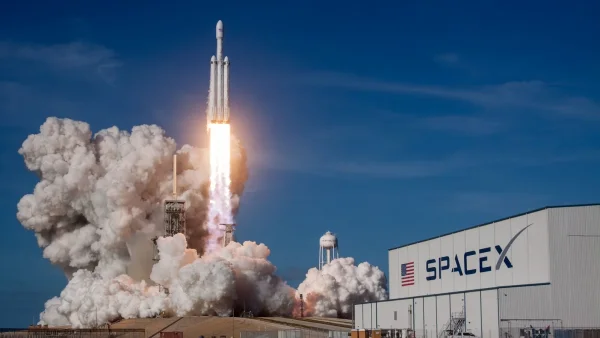
Science has been a dwelling place for human ambition, and SpaceX is at front and center in this quest. On the heels of NASA pressuring its contractors to provide plans for lunar exploration sooner rather than later this decade, SpaceX, through its billionaire entrepreneur owner Elon Musk, came up with yet another intelligent solution with a so-called ‘simplified’ plan to ferry humans to the Moon on Starship.
SpaceX’s Simplified Mission Proposal
The announcement was made in style through the elaborate SpaceX blog dated October 30, 2025, marking the occasion with a version of the company’s view that it could act to streamline operations for Artemis III. Lessee see if the plan could be acceptable for national considerations, accelerating crew safety and speeding up the return of humans to the Moon. SpaceX claims that the mission concept is under formal review as a more streamlined approach to lunar landings.
The time-sensitive nature of this proposal is due to NASA’s concerns about SpaceX’s Starship vehicle being ready for lunar missions. The space agency has experienced internal problems, such as political instability and staffing shortages, which have in return placed its contractors’ progress under a finer scrutiny. Acting NASA administrator Sean Duffy stated that SpaceX is behind on Starship development and that the Artemis contract was potentially being opened to other companies that could deliver a faster solution.
Starship Development and Testing Milestones
Despite these criticisms, SpaceX has countered by listing dozens of milestones it has achieved under its contracts for a Starship moon lander. The company has conducted eleven test launches as it undergoes its accelerated test-to-failure development program. While the last two flights were fully successful, important milestones such as achieving orbit around the Earth and demonstrating the transfer of propellant in space have yet to be accomplished.
In-space refueling will become the key to enabling a Starship mission to the Moon. Each mission will require numerous tanker flights to refuel the Starship bound for the lunar surface in Earth orbit. Initially expected to be carried out by 2024, delays happened because of the very aggressive testing and development schedule. Nonetheless, SpaceX foresees its opportunity between later this year and early 2026 to begin launching upgraded Starship prototypes for in-space refueling.
NASA and Greater Lunar Aspirations
The Artemis program is an articulation of America’s resolve to sustain its leadership in human space exploration in the face of rising competition from nations like China. The Artemis III mission will land astronauts around the south pole of the moon in 2028, using a modified Starship megarocket built by SpaceX-classified as the most powerful launcher ever built. NASA had selected SpaceX for the first two Artemis missions in 2021.
Still, finding the need for redundancy and new methods, NASA announced in 2023 that Blue Origin, an enterprise owned by Jeff Bezos, would provide the second human landing system for Artemis V. This boost in having a second human landing system highlights NASA’s direction to diversify partnerships toward achieving the successful crewed landing on the Moon.
A New Era of Lunar Exploration
Bold ambition and technical challenge sit in the forefront on efforts by SpaceX to make the mission happen, describing humanity attempting to land on the Moon for the first time since 1972 via the Apollo missions. The proposed streamlined plan is reflective of a conversation between SpaceX and NASA aimed at evolving the requirements of the mission with time.
The road leading to the Moon carries with it many uncertainties, but it also provides the opportunity for splendid scientific research and technological advancements. SpaceX is designing, refining, and testing spacecraft and rockets very actively, which creates anticipation for a whole new era in lunar exploration, one that would see not just a return to the Moon but may host a permanent presence there.