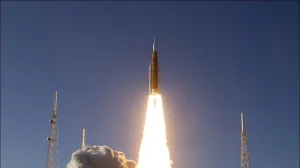
NASA is preparing for a flight that will take people farther from Earth than anyone has ever gone. Artemis II, aiming for a launch from Florida in April and returning roughly ten days later, will go around the Moon. This is the first Artemis mission with astronauts.
Artemis II is the step between unmanned tests and actually landing on the Moon. The spacecraft will follow a ‘free return’ path around the Moon, using the Moon’s pull to bring Orion back to Earth without landing. This is similar to the Apollo 8 mission, but uses newer, more advanced technology. The astronauts will check the navigation, communication, and life support systems needed for a longer stay on the Moon and, later, journeys to Mars.
Because of this path, the astronauts will travel much farther from Earth than they would in Earth orbit, and might even go a record distance for humans in space. If it’s successful, it will prove NASA can safely use the equipment with people in the area between the Earth and Moon (cislunar space).
The Crew and the Spacecraft
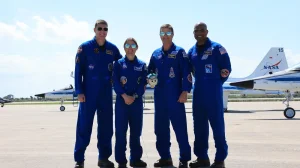
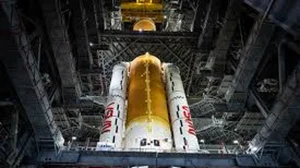
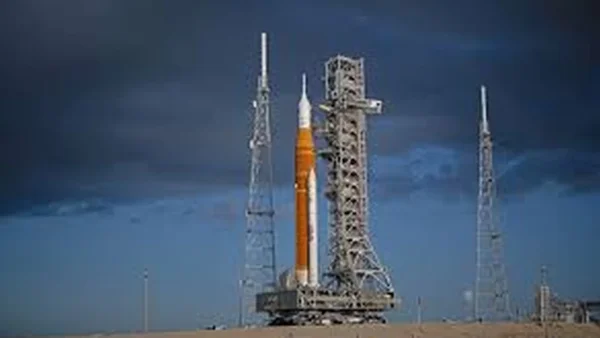
Four astronauts will be on Orion, which will be launched on top of the Space Launch System (SLS) – NASA’s biggest and most powerful rocket. These astronauts are Reid Wiseman (the commander), Victor Glover, Christina Koch, and Jeremy Hansen from the Canadian Space Agency.
This group is making history. Artemis II will be the first time a woman, a person of color, and someone who isn’t American go to the Moon. This shows how much NASA values working with other countries, as everyone agrees on what to do for a long time when it comes to exploration.
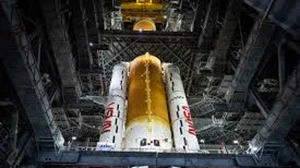
Space Launch System and Orion at a glance
The SLS is a very powerful rocket designed for missions to deep space. It will put Orion into an oval-shaped orbit around Earth, and the crew will test everything before firing the engines to head for the Moon.
Orion is built for long trips into deep space. It has the navigation, power, heat shield, and life support systems to provide the crew with oxygen, the right temperature, and air pressure throughout the mission.
Why This Mission Matters
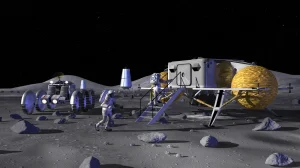
Artemis II is a chance to prove things out. NASA wants to have a permanent base on the Moon, near the South Pole, which is believed to have water ice. They could use this ice for living on the surface and making fuel.
The mission is also important for the United States’s position in space as many countries are now trying to go to the Moon. China plans to land astronauts near the South Pole by 2030. Artemis II shows that the next stage of people exploring space is now really happening, and not just being talked about.
NASA also hopes to get the same feeling of unity as with Apollo 8, which gave the world the “Earthrise” photo and changed how we see our planet. Artemis II is meant to inspire a new group of scientists, engineers and explorers.
Risks, Safeguards, and Open Questions
Space is a harsh environment, and Artemis II does have risks. The equipment, although tested, hasn’t carried people beyond Earth orbit yet. NASA says they are doing very careful analysis, having backup systems, and training the crew well to deal with the unknowns.
They plan to thoroughly check all the systems while in orbit around Earth before going to the Moon. The crew will only fire the engines to go to the Moon when they’re sure everything is working as it should.
Heat shield, radiation, and life support
Coming back from the Moon is a very difficult part. During the unmanned Artemis I flight in 2022, Orion’s heat shield was worn away more than expected during the intense heat. NASA isn’t changing the heat shield design for Artemis II, but they are changing the path it takes when returning to Earth to lessen the heat.
Radiation is another problem. Far from Earth’s protective magnetic field, the Sun’s activity can mess with the spacecraft’s systems. During Artemis I, engineers found that some power problems were caused by radiation. For Artemis II, NASA has updated the software and procedures to make the spacecraft more resistant, and they’re continuing to develop better hardware in the long term.
Inside Orion, the life support system will be running with a full crew for the first time. Engineers have made progress on the oxygen, pressure, temperature, and emergency systems. However, they won’t know for sure if it’s all working perfectly until the mission is actually flown.
Timeline, Costs, and the Bigger Picture
Artemis II has been delayed due to technical problems and improvements to the systems. Earlier attempts to launch the first SLS mission were stopped because of hydrogen leaks and a problem with helium, which meant the rocket had to go back to the building for repairs. Each issue has helped make the rocket more ready for flight.
The Artemis program in general relies on both government and private companies. NASA has given contracts to companies to build the lunar landing systems, and several big space companies are competing to make safe landers for people. This competition is meant to lower costs, make things happen faster, and provide more options for future missions.
What’s happening around the world is also important. Although people often compare this to the space race of the Cold War, things are more connected and reliant on each other financially now. Working together, agreeing on standards, and making sure equipment works with each other will determine how quickly and safely people can return to and live on the Moon.
If Artemis II works as planned, it will pave the way for Artemis III, which will be the first attempt to land astronauts near the South Pole of the Moon. This would start a new age of exploration focusing on science, being able to stay on the Moon for a long time, and getting ready for Mars. For now, everyone is watching the crewed flyby that aims to take humanity farther into space, and with more understanding.