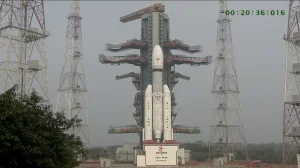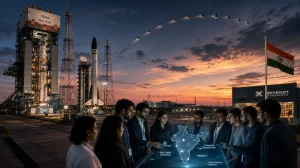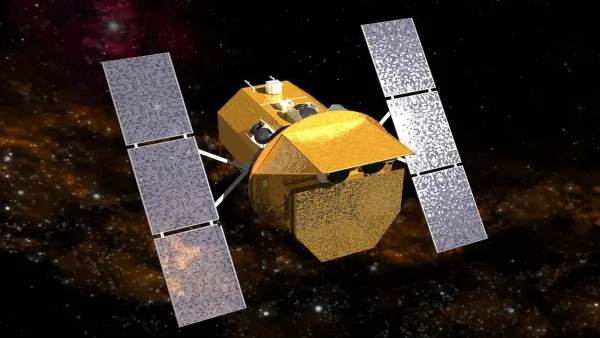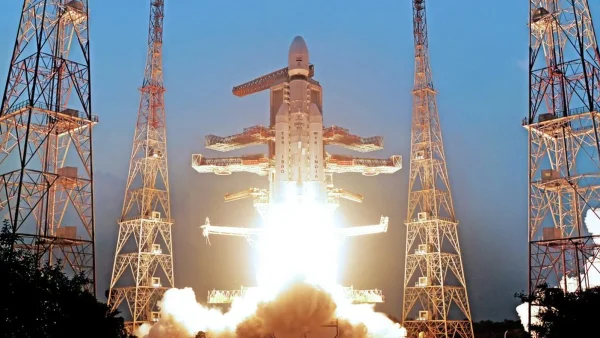
Recently, ISRO launched the LVM3-M5 rocket and with it, a major accomplishment for India’s space work. This launch is a big jump as ISRO uses its biggest rocket yet, the LVM-3, to put the 4,410 kg CMS-03 communication satellite into a geosynchronous transfer orbit (GTO). It’s not only a demonstration of India’s skill with technology but also makes it easier to make even more progress in space exploration.
A New Era for ISRO
The LVM3-M5 launch proves how much better ISRO is at sending heavier satellites up from India. In the past, ISRO used space companies in other countries for these kinds of launches, but now they’ve shown they can send satellites over 4,000 kg into orbit independently. Because CMS-03 is now in a transfer orbit about 29,970 km by t70 km from Earth, this mission emphasizes ISRO’s determination to broaden its technological limits.
Previously, ISRO had to pay other countries to launch the heavier satellites. Getting CMS-03 into space by themselves is a large change towards being able to do space missions without help from others, and it increases India’s importance in the worldwide space field.
LVM-3: A Versatile Powerhouse
The LVM-3 rocket (which used to be called the Geosynchronous Launch Vehicle Mark 3 or GSLV Mk 3) is a strong and flexible rocket for launching things. It uses solid, liquid, and cryogenic engines combined to send objects to different orbits. It can lift as much as 8,000 kg to low Earth orbit (LEO) or 4,000 kg to geosynchronous orbit (GEO) and shows off how good ISRO’s engineering is.
The LVM-3 was originally made for getting things to geosynchronous orbit, but it has been changed to do many different things. For example, during the Russia-Ukraine war in t2022, this rocket launched 72 OneWeb satellites into low Earth orbit. This ability to adjust shows it can be used for lots of purposes beyond what it was first created for.
Innovations and Upgrades
ISRO is always finding new ways to improve its rockets. One important goal is to increase how much weight rockets like the LVM-3 can carry. The current cryogenic upper stage, known as C25, is essential for getting to the speed needed for geosynchronous orbits. They are planning to introduce the C32 stage which will hold more fuel and create more force, and therefore be able to carry heavier loads.
Also, ISRO is looking at semi-cryogenic engines as an alternative to the stages that use liquid fuel. By mixing more refined kerosene and liquid oxygen in the second stage of the rocket, ISRO hopes to be more efficient and lower costs. This effort is in line with India’s larger goal of being more self-sufficient with space technology.
Expanding Horizons
The successful launch of CMS-03 isn’t just about what’s been done right away, it’s also a starting point for bigger projects in the future. It’s a step towards India’s human spaceflight mission, Gaganyaan. The LVM-3’s better abilities will be key to safely getting astronauts into space and getting them back, despite the difficulties of moving through the atmosphere.
And along with wanting to send people into space, ISRO is looking at a planned space station for India and trips to the moon. Making more advanced vehicles like the Lunar Module Launch Vehicle (LMLV) will extend how far India can reach in space. These vehicles, meant to carry a lot of weight to low Earth orbit and further, will be critical to making these ambitious aims happen.
Looking Ahead
Because ISRO keeps succeeding with each launch, their history clearly shows they are dependable and inventive. The LVM3-M5 rocket’s latest mission is the eighth successful flight since its first launch in December re2014. This success rate gives people confidence, both in India and around the world.
With improvements like the way CMS-03 was launched and the continuous new developments in rocket engine technology, ISRO is in a very promising position in its journey through space exploration. As it keeps improving its abilities and expanding what it can do, India will have a bigger and bigger role in space exploration worldwide, which is proof of both technological success and national pride.