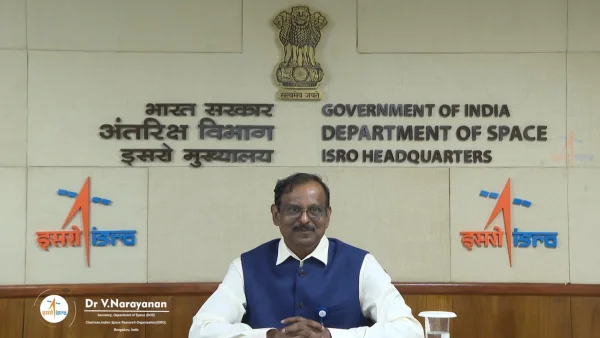
V Narayanan, after receiving the KPP Nambiar Award 2025 from IEEE Kerala, told journalists that ISRO is getting ready for launches immediately and has many missions planned, but wouldn’t say exactly what each launch will carry. He said they are aiming for a May start, and this shows how much they want to keep launches happening regularly, all while dealing with putting things together, testing everything, and having the launch location available.
Launch schedule and May target
ISRO’s goal is to launch in May, and they have a lot scheduled for the next few months. How quickly they actually launch will depend on the financial year’s mission plans, and program managers will set the dates when safety checks, the payload being ready, the right time to launch, and getting permission from authorities all come together.
Gaganyaan mission progress and IADT-2
Work on IADT-2 (Integrated Air Drop Test-2), which is part of the Gaganyaan program for human spaceflight, is going as expected. There’s no definite date for it yet, but it’s a very important test of the systems that will be used to get the crew safely back to Earth.
Astronauts are continuing their training. This includes special sessions at about 4 kilometers high to prepare them for the difficulties of being in deep space. These exercises are designed to improve the astronauts’ bodies, technical abilities, and how they work as a team before they reach important steps in the actual crewed missions.
NavIC and satellite navigation plans
NavIC (Navigation with Indian Constellation) is staying on schedule, Narayanan says. He says details about the next NavIC launch will be revealed when the time is right, which shows they are being careful about announcing missions and making sure they are ready to operate.
NavIC is continuing to improve India’s ability to navigate, and is being used by businesses and the public. Future NavIC satellites will make it even more accurate, dependable, and widely available for things like transportation, farming, and responding to emergencies.
Investigation into PSLV-C62 and technical readiness
A committee headed by K Vijay Raghavan is investigating the problem with the PSLV-C62 mission, and their report should be out soon. The purpose of the investigation is to find the basic cause of the problem, suggest how to fix it, and to make launches more reliable.
ISRO is also continuing to develop engines and other important parts for going to the Moon, following the success of Chandrayaan-3. These improvements to technology will help with future missions and keep a good flow of launches and spacecraft being built.
Confidence in Artemis II and international context
About NASA’s Artemis program, Narayanan said Artemis II is a big step for people going back to the Moon, and he’s confident it will be successful. This mission will go around the Moon and then come back to Earth as part of NASA’s plan to do things in stages.
Narayanan said he enjoyed watching Artemis launch and commented on how huge the vehicle is, including the solid rocket boosters and the RS-25 engines on the main section. He said Artemis II will set the stage for Artemis III which will actually land people on the Moon.
Outlook for 2026-27 and strategic priorities
Narayanan is optimistic about progress in the financial years 2026-27, mentioning lots of work being done on human spaceflight, going to the Moon, and navigation. ISRO plans to keep making progress by working on many missions at the same time and improving technology.
Guided by the Prime Minister, ISRO is doing everything they can to advance India’s space activities. The agency intends to turn current plans into actual launches and abilities over the next two years, with a combination of scientific, commercial, and strategically important projects.