The next stage of sending people into space is moving from planning to being ready to launch at the Kennedy Space Center. The official countdown for Artemis II has started, and it will be the first Artemis program flight with people on board, and the first trip around the Moon with a woman astronaut.
Artemis II Countdown Begins at Kennedy Space Center
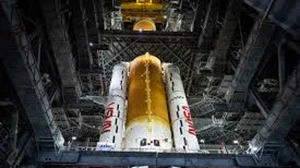
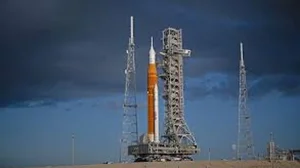
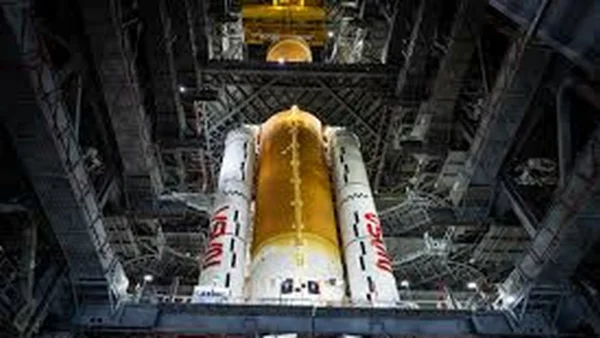
Artemis II is aiming to launch at 6:24 pm EDT on Wednesday, April 1, 2026 (3:54 am IST on April 2). The SLS rocket will launch from Florida and send the Orion spacecraft on a ten-day trip around the Moon, then bring it safely back to Earth.
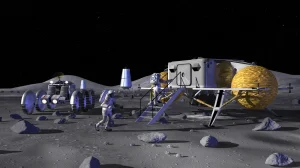
This flight will really prove NASA’s new deep-space transportation system (built for continuing to explore the Moon) works. It’s the first time SLS and Orion will have people on board, a key step towards landing on the Moon near the south pole. There’s water ice there that could allow people to stay on the Moon for a long time.
When and How to Watch the Launch
Viewing of the launch will begin at 7:45 am EDT on April 1 when the teams begin putting super-cold fuel into the SLS rocket’s main and upper parts. You can watch on NASA’s YouTube channel, and get updates on NASA’s social media and the NASA app.
Full launch coverage will start at 12:50 pm EDT on NASA+, YouTube, and some other streaming services. NASA will give live commentary during the launch, as the rocket goes up, and during the first part of Orion’s journey out of orbit around the Earth.
Crew and Mission Objectives
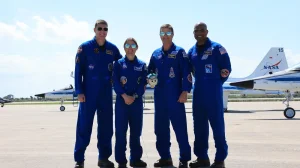
Four astronauts will be on Orion: Reid Wiseman (mission commander), Victor Glover (pilot), Christina Koch (mission specialist), and Jeremy Hansen (mission specialist from the Canadian Space Agency). This crew includes the first woman, the first person of color, and the first astronaut who isn’t American to go on a Moon mission.
Artemis II‘s main goal is to demonstrate that the SLS and Orion together work well with people on board. The astronauts will test the life support systems, how they find their way, communications, and how the astronauts manually control the ship. They will also assess how the controls work during important parts of the mission.
The spacecraft will go by the Moon at high speed, without landing, like Apollo 8 did. After going around the Moon, Orion will return to Earth at high speed and splash down in the ocean, checking the heat shield and how they will pick up the crew after future landings.
What Artemis II learns will go straight into the next missions, including Artemis IV, which is currently planned to land on the Moon in 1028. The plan is to create a continuing Moon program to support science, new technology, and eventually trips to Mars.
Weather and Solar Activity: What Could Delay Liftoff
The weather for launch is currently looking good; NASA thinks there’s an 80% chance of good conditions when the launch window opens. However, several things are being monitored carefully, including clouds forming, wind on the ground and higher up, and the possibility of lightning.
The people who forecast the weather for launches will use radar, weather balloons, and observations of sea breezes along the coast to follow the ‘anvil’ and cumulonimbus cloud rules, which help prevent lightning being caused by the rocket. The SLS also has strict limits for wind at ground level and rainfall to make sure the rocket goes up safely.
The Sun’s activity is also a factor. Solar flares and coronal mass ejections can increase radiation and cause radio static that could mess up communications and navigation. The mission team looks at data in real time to make sure the amount of protons doesn’t go over limits that are safe for the astronauts and the spacecraft.
If a solar storm gets stronger close to launch time, the team can pause the countdown, wait for the storm to calm down, or stop the launch completely. Orion has strong protection against space radiation and flight rules for dealing with it, but the team will use conservative (safe) limits to make sure the astronauts are safe.
Backup Windows and Decision Timeline
If the conditions don’t allow for launch on Wednesday, NASA has other dates available up to April 6, but these depend on the planned path of the spacecraft and how long the astronauts can be on board. The team managing the mission will formally ask for opinions at important points in the countdown, including before they start putting fuel in the tanks, after built-in pauses, and just before the final countdown.
Fueling starts hours before launch, so the first big weather and technical decisions will be made early in the day. If the rocket doesn’t meet all the requirements to launch, the team will stop and get it ready for the next available time.
Why Artemis II Matters for Moon to Mars
If Artemis II is successful, it will show that NASA’s system for deep space travel can take astronauts safely to the Moon and back. This is a key part of the plan to go to the lunar south pole, where water ice in craters that are always in shadow could be used to make fuel and allow people to stay on the Moon for longer.
The mission will also help with working with other countries and companies, which are important to the Artemis program. By showing that people can operate beyond Earth’s orbit, Artemis II will allow the building of a base on the Moon, using new science tools, and trying out technology for missions to Mars.
Beyond the technology, the mission is meant to inspire. A diverse team of people going farther than anyone has in over fifty years can spark interest in science, technology, engineering and math (STEM) and get the public excited about exploring again. It’s something that could shape what a generation thinks is possible.
Artemis II is a test flight, and all test flights have risks. But the program has been carefully planned, from the unmanned Artemis I to this flight with a crew, showing a commitment to learning, safety, and steady progress. Now that the countdown has started, everyone is looking at the sky and the coast of Florida.