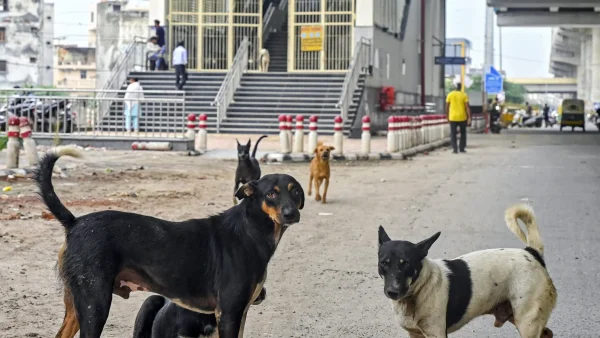
It is no exaggeration to say India’s dog bite problem has become a constitutional issue. The numbers from 2026 tell the story: 4.8 lakh bites and 42 lives lost in states like Tamil Nadu, Karnataka and Rajasthan. That is what prompted the order.
A three-judge bench of Justices Vikram Nath, Sandeep Mehta and N V Anjaria was having none of it. Reaffirming their stance from November 7, 2025, they said that leaving strays to run amok in our public spaces is a direct threat to the right to life and safety enshrined in Article 21. “The situation is deeply disturbing,” the court said, and called for an immediate change of course.
The focus is on institutional grounds where there have been reports of attacks. Even at places like Delhi’s IGI Airport, 31 dog-related incidents have been put on record since the start of the year. It shows the danger isn’t just out on the street.
What the Supreme Court ordered
So the court has given all states and Union Territories two weeks to put every school, hospital, bus depot and railway station on the map. Fencing, gates and whatever else is needed to make these places secure and hygienic is now a must.
Any stray on the premises is to be taken out, sterilised, vaccinated and put in a proper shelter. No re-releasing them in the same spot. Hospitals are to have anti-rabies vaccines and immunoglobulin in stock, while schools are to hold some awareness on first aid and how to stay safe.
Key directives at a glance:
– Remove stray dogs from institutional premises
– No re-release into the same institutional areas
– Identify all such premises within two weeks
– Secure campuses with fencing and gates
– Sterilise and vaccinate dogs in shelters
– Stock vaccines and immunoglobulin in hospitals
– Hold school awareness on bites and first aid
Looking at the data, the bench sees a problem of staggering proportions that can’t be left to chance. “Harm is not just a number; it has real human and societal costs,” they noted. They also pointed to some administrative failings and a lack of coordination, making it plain that the State has an obligation under Article 21 to see that no one-be it a child or an elderly person-suffers a preventable injury on public property.
Then there is the matter of the Animal Birth Control Rules, which the court says have not been followed as they should have been. What we’ve seen is a reactive approach, and inaction has only made things worse.
States under pressure: the 2026 surge
Take this year in Tamil Nadu and Karnataka. In four months alone, Tamil Nadu has had some 2.63 lakh cases and 17 deaths. You can see the pattern in the month-wise breakdown: around 62,000 in January and February, 71,000 in March and close to 68,000 in April. Karnataka is not far behind with over 2 lakh cases and 25 rabies deaths.
Add in the figures from Rajasthan and you get the 4.8 lakh total. In Sri Ganganagar, for instance, 1,840 cases were reported in three months in 2026. The court found that kind of spike to be nothing short of alarming. The numbers are hard to ignore. Udaipur has put in 1,750 cases on the books so far this year. In Bhilwara, 42 people were bitten in one day; in Sikar, there have been a number of attacks on kids.
Inside Karnataka’s numbers
Then you have Karnataka, where the trend has taken a turn for the worse since 2023. The state was at about 2.3 lakh cases then, and 5 lakh by 2025. This year alone, from January to April, they’ve seen over 2 lakh. According to what the court has been shown, we could be looking at 6+ lakh for the year.
You see it in the district data too. Vijayapura is up to 13,997, and the Greater Bengaluru Authority has 13,400-plus. Bengaluru Urban has the worst record for rabies in the state with six lives lost. The court has called it a steep and worrying pattern.
The ABC rules and the re-release dispute
At the heart of the matter is a legal issue: under the 2023 Animal Birth Control Rules, do you have to put a sterilised dog back in the same neighbourhood you took it from? Animal rights advocates say yes, and they point to a “vacuum effect” if you don’t. They make the case that moving dogs willy-nilly is a logistical nightmare-take 10 from every school and you’d need room for 1.5 crore canines. In their view, the problem isn’t the model, but how it’s being put into practice.
The Supreme Court has had other ideas. It won’t let hospitals, schools or airports be written off as no-go zones for community dogs. Reading the ABC Rules alongside the Prevention of Cruelty to Animals Act, the bench found nothing in the law that says you must keep strays on institutional property.
Human safety, constitutional duty and next steps
And when it comes to human life, the State has an obligation it can’t shirk, the bench made clear. You can’t hide behind cost or red tape. We have to have some public safety in these places, even while we do our duty to the animals.
So compliance is the order of the day. States and UTs have two weeks to get a handle on all the listed premises and put in place the protocols for removing, sterilising and vaccinating any dogs on campus. The court will be watching how the data and inter-agency work plays out.
What to watch next:
– State and UT compliance with the two-week timeline
– Shelter capacity, staffing and veterinary resources
– Updated data on bites, vaccination and rabies deaths
Service providers have their work cut out for them as well. Hospitals are to have anti-rabies stock on hand. Schools are being told to make sure staff and students know what to do in case of an injury, so it gets reported and dealt with right away.
What the judgment is saying is that an institution is something of a special case, and the people in them should be able to count on being safe. The bench is trying to separate animal management from the need to protect a campus, in a way that makes sense for long-term control.
It’s not just a local issue. What we’re seeing at airports and on campuses is a system-wide problem. The court is drawing a line in the sand for those kinds of spaces.
In the end, the figures are what brought us here. Tamil Nadu, Karnataka and Rajasthan have 4.8 lakh bites and 42 deaths to show for 2026. The message from the top is that you can’t compromise on safety in these institutions. We’ll see in the next couple of weeks if the ground reality is up to it.